Navigation Warning Issued After a Feeder Loses 46 Containers Off Batangas
Lashings loosened in heavy rolling 1.5 nautical miles off Hamilo Point, and one more box went over at anchor
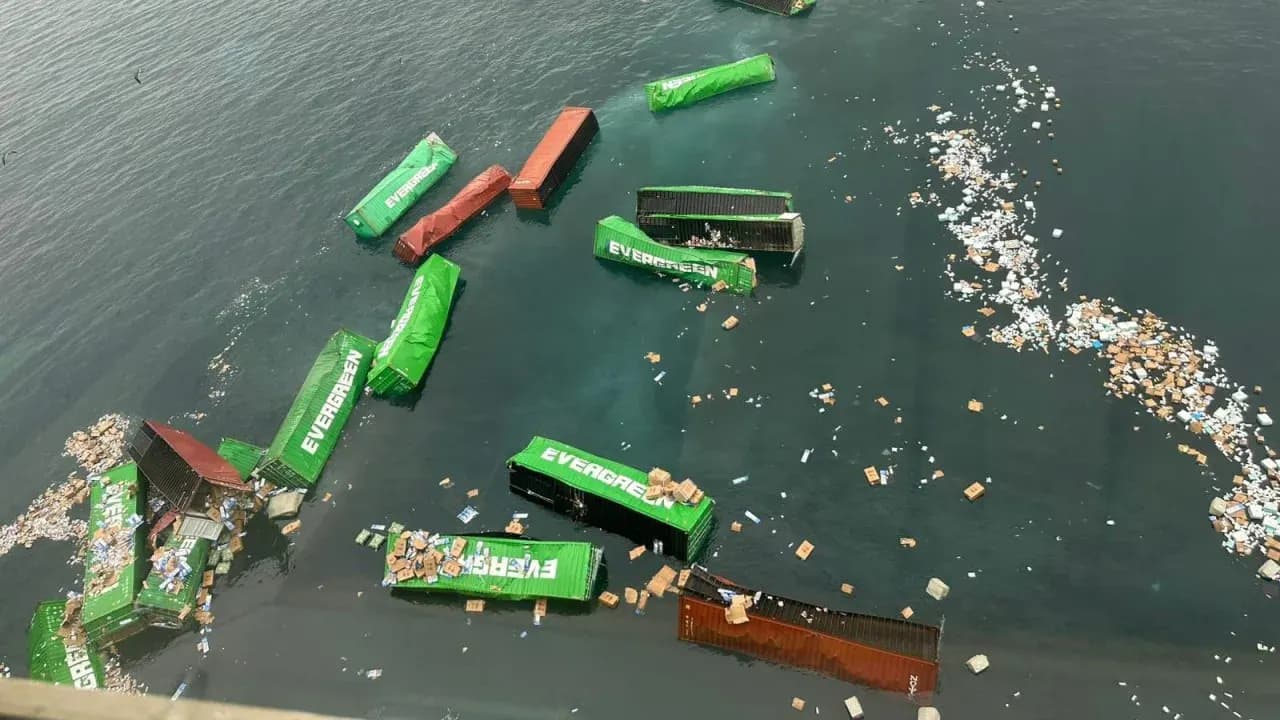
The Philippine Coast Guard has issued a navigational warning for one of the country's busiest shipping lanes after an interisland container ship lost 46 boxes overboard in the Batangas region, with surveys under way to locate them and at least one already washed ashore.
The 8,300 dwt Span Asia 39 reported the loss at around 11:00am local time on 3 September while approximately 1.5 nautical miles offshore near Hamilo Point. Built in 2006, the 115-metre ship has a capacity of 564 TEU and was acquired by Philippine Span Asia Carrier Corp, which described her as a step change for the Manila to Cebu, Cagayan de Oro and back service at a service speed of 15 knots.
The ship reported encountering rough sea conditions with heavy and continuous rolling on the Thursday morning, and said the container lashings loosened as a result. Thirty 20-foot containers, eleven 40-foot containers and five open containers went overboard. All of them were reported empty. The vessel had sailed from Davao International Container Terminal on 31 August carrying 332 containers.
The sequence did not end offshore. The ship proceeded into the North Manila Anchorage, and while manoeuvring there on Thursday afternoon reported another container falling overboard. That one was reported to have sunk.
The Coast Guard dispatched the cutter CGS Cavite to the area of the loss and deployed a drone, with the multi-purpose response vessel BRP Malapascua also proceeding to the scene to assist with the search and with drift tracking for any boxes still afloat.
An empty container is the most awkward kind to lose. It floats low and long, sits almost awash, and is close to invisible on radar and to a lookout in a seaway, which is precisely why a navigational warning follows a loss of this size in a lane used by ferries and small craft. Empty boxes also drift further than laden ones, so the search area widens quickly.
Lashing failure in heavy rolling is a recurring pattern rather than an unusual one, and the mechanism is well understood: rolling motion loads the lashing gear cyclically, gear that has slackened works loose, and the stack above the failure point follows. Cargo securing arrangements are governed by the ship's approved cargo securing manual, and the loading condition, freeboard and stack weights all feed the accelerations a stow has to survive. Container losses of this kind are also why route-based stowage planning has become a live topic among box operators.