Shipping Corporation Of India Tenders For Two LNG Dual-Fuel Boxships With Options
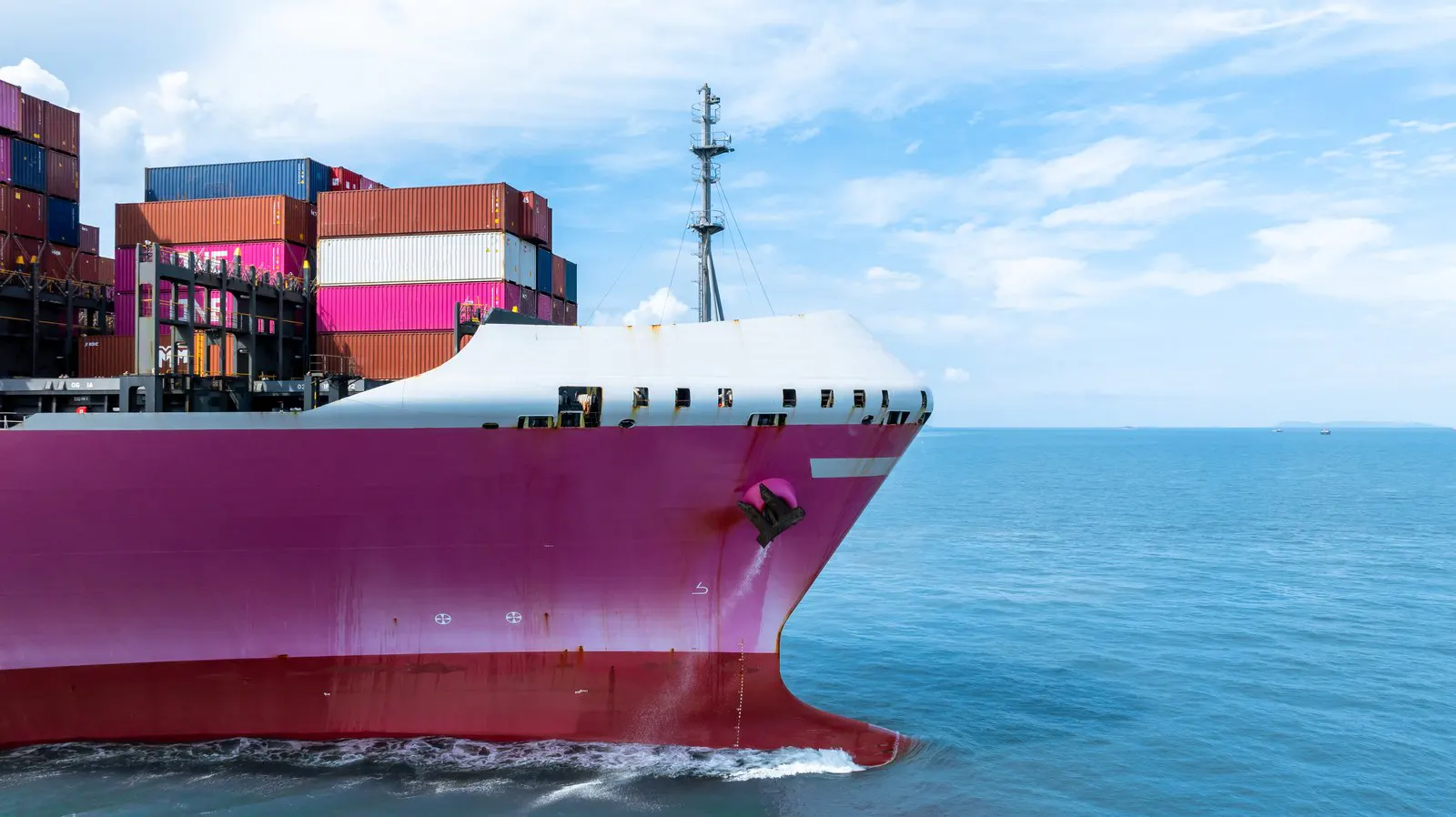
The Shipping Corporation of India has issued what it describes as its largest newbuilding tender, seeking two firm liquefied natural gas dual-fuel container ships of around 8,000 container capacity with options for four more. The tender was issued on 31 July with bids closing on 31 August and a pre-bid meeting scheduled for 18 August, and has been valued at around 720 million dollars.
The specification is significant for a state-owned carrier that has not ordered container tonnage on this scale before. Dual-fuel machinery adds cost and complexity against a conventional plant, and it commits the operator to securing gas bunkers at ports across the intended trading pattern, which for a vessel of this size means the main east-west routes rather than regional feeder work. One account describes the ships as liquefied natural gas ready rather than dual-fuel, a distinction that matters commercially because a gas-ready vessel defers both the cost and the capability to a later conversion.
The tender conditions are built around industrial policy as much as around ships. Foreign yards must have delivered at least two container vessels of 5,000 containers or more within the past decade to qualify, Indian yards must bid in partnership with a foreign builder, subcontracting is prohibited, and Indian yards hold a right of first refusal. Together these terms are designed to let an Indian yard win the work with foreign technical support rather than to exclude foreign builders outright.
The financial architecture behind the order sits in two government schemes, a shipbuilding financial assistance programme offering support of between fifteen and twenty-five percent of the cost per vessel, and a broader maritime development package. The scale of those commitments reflects a policy judgement that India's shipbuilding capacity, which is negligible in global terms, cannot be rebuilt by tender conditions alone and requires direct subsidy to close the price gap against Chinese and Korean yards.
Delivery dates have not been reported, and no official from the company or the ministry has been quoted on the tender, which leaves its commercial rationale to be inferred. Eight thousand containers is a size that suits the India-Europe and India-Far East trades rather than transpacific service, and the timing places any delivery well into the next decade at a point when the container orderbook is already heavy. For a national carrier the calculation is rarely purely commercial, and the significance of this tender may lie less in the two firm ships than in whether an Indian yard proves able to build them.