Royal T Shipyards advances battery-electric version of GADUS dry cargo series
Studies validate battery-electric missions of about 450 nautical miles on a Norwegian profile
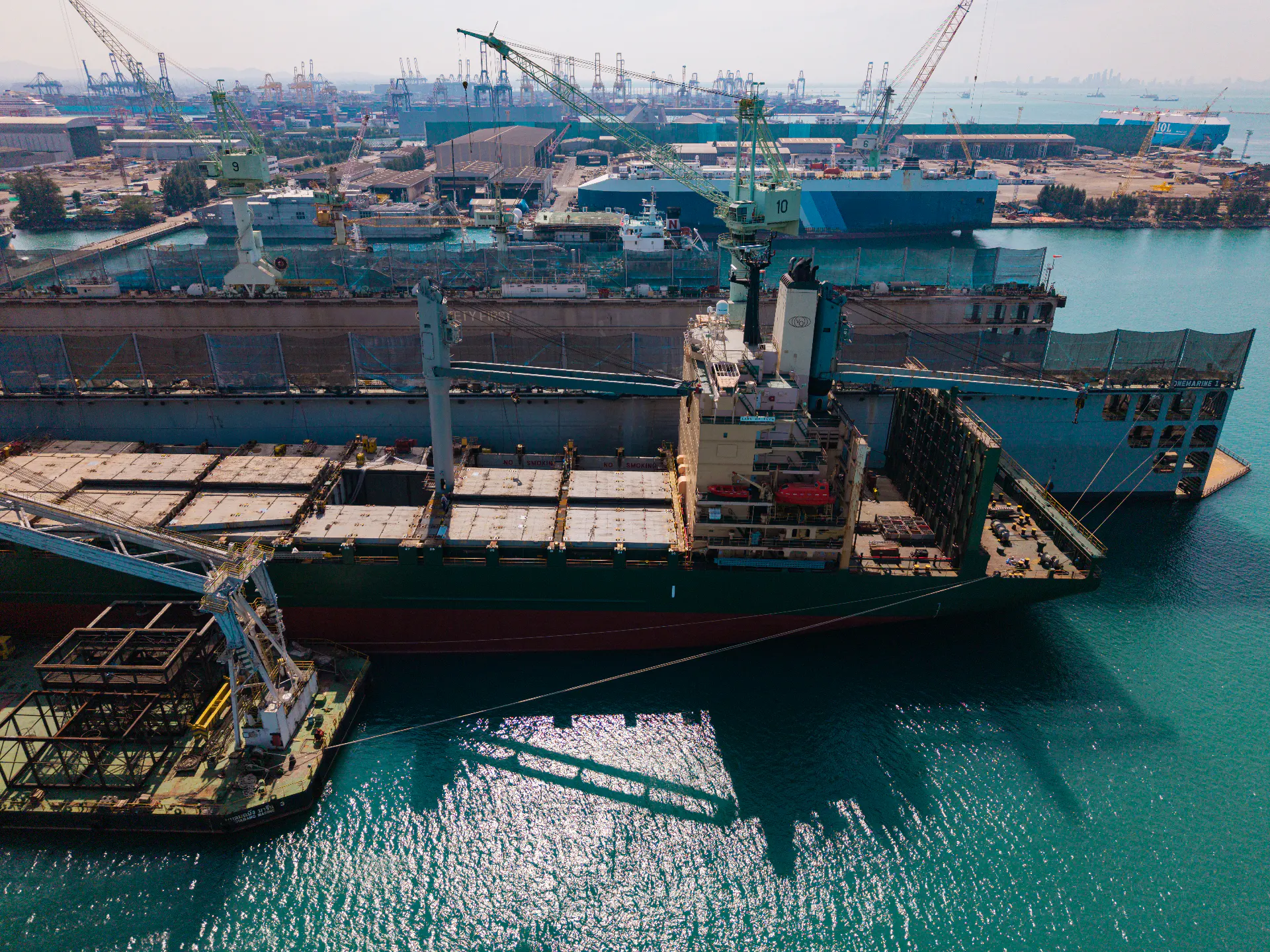
Royal T Shipyards is further developing a fully electric version of its GADUS dry cargo series, aimed at owners operating in the 5,000-6,000 tonne deadweight segment for short-sea and coastal work.
Rather than starting from a blank sheet, the GADUS Battery Electric builds on the platform behind the existing series. The first vessel, HAV LEITI, was delivered to Navigare Shipping in 2026 as the lead ship of a four-vessel programme. She combines a high-cubic cargo hold with diesel-electric propulsion and an electric self-discharging system built around an electrically driven excavator on a travelling traverse. A multi-input shore-power transformer lets the excavator and other onboard systems run on shore power, allowing emission-free and low-noise discharging where suitable facilities exist.
The battery-electric variant replaces conventional onboard energy generation with a large-scale battery installation configured around the intended route, operating profile, cargo requirement and available charging infrastructure.
Operational and energy-use studies covering complete route profiles, sailing distances, port calls, cargo requirements, charging opportunities, weather allowances and onboard consumption underpin the commercial case. For the analysed Norwegian trading profile, those studies validated battery-electric missions of up to approximately 450 nautical miles while retaining the required cargo-carrying capability. Depending on the operating cycle and available charging, up to 91% of the vessel's operation could be performed on electricity, corresponding to an estimated annual reduction of about 1,540 tonnes of CO2 against conventional operation.
Final battery capacity, installed power and charging configuration are set per project against the owner's actual trading profile. The yard says it is not aiming to install the largest possible battery but to balance payload, speed, range, charging time, operational reserve, redundancy and lifecycle cost.
"Zero-emission shipping must work not only technically, but also operationally and commercially," said Thecla Bodewes, CEO of Royal T Shipyards.
"Our approach starts with the transport requirement," said Wilco Smit, Project Development at the yard. "The sailing profile, cargo volume, required payload and available charging infrastructure determine the technical solution."
Depending on the route, the platform can be configured for fully electric propulsion or for a battery-dominant arrangement with a backup or range-extending source. Modular diesel-electric design knowledge from the GADUS, LABRAX and SALMO series provides the basis for integrating batteries. The hulls are built in the Netherlands, and further sister vessels are under construction there.