Horizontal Turbines in Containers Begin Sea Trials on an Iceland Feeder
Wind units housed in modified boxes with solar panels on the roof, on four voyages over three months

Sea trials have begun on a hybrid wind and solar power system designed to cut auxiliary engine emissions aboard a retrofitted container ship, using a horizontally mounted wind turbine to work around the problem that has held wind-assisted propulsion back on box ships.
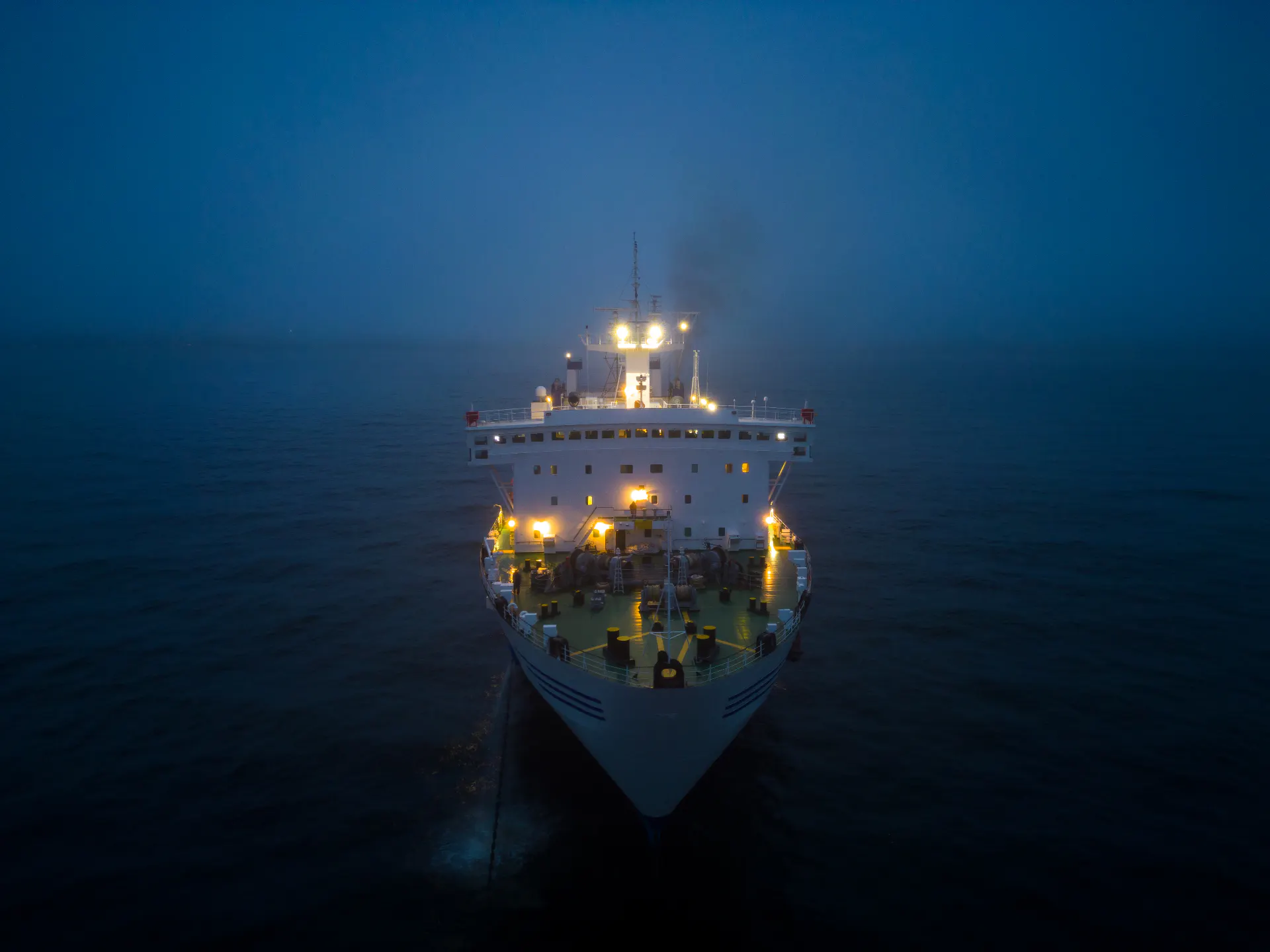
The installation was completed in late August in Aarhus, Denmark, aboard the container ship Helgafell. Built in 2005, the 11,143 dwt vessel is 137.5 metres long with a capacity of 909 TEU, and maintains a service to Iceland in all weather conditions.
The packaging is the innovation. SideWind's horizontal wind turbines are housed inside modified shipping containers, while Solbian's photovoltaic panels cover the container roofs. On a container ship, deck space is cargo space, and a vertical rotor sail or suction wing takes both slots and crane access with it. A unit that occupies a container footprint can be placed where a container would go, moved between ships and removed for a voyage that needs the slot, which changes the retrofit calculation from a structural project to a stowage decision.
For SideWind the trials mark the transition from onshore development to validation at sea. The sea trials will give us valuable real-world data on operation, control and performance, and help us take the next steps towards a scalable retrofit solution for commercial vessels, said chief executive Oskar Svavarsson. The custom photovoltaic modules were designed to fit the container roofs and to perform in demanding marine conditions, and will operate alongside the turbines through the trial.
Testing began immediately after installation, with the vessel sailing across the North Atlantic and arriving in Iceland on 24 August. The trials will run over four scheduled voyages across three months. It will provide valuable insight into how modular wind and solar energy technologies can contribute to more sustainable day-to-day shipping while maintaining the safety, reliability and quality of service our customers and crews expect, said Gudmundur Oskarsson, director of the logistics department at Samskip.
This is the second of two demonstrations under the WHISPER project, which began in January 2023 and runs to 31 December 2026, bringing together 13 partners from six European countries with funding from the European Union's Horizon Europe programme. The other demonstration retrofitted the same hybrid approach aboard the dry bulk carrier Maria Tipoc, combining solar cells on the hatch covers with OceanWing's rigid, tiltable sails.
The project targets around 30% fuel savings on a retrofitted bulk carrier and up to 15% on a retrofitted container ship. Those figures are the reason the segment split matters: a bulker has clear hatch covers and long steady legs, while a box ship has neither, which is why the container-mounted approach is being tested separately rather than assumed to transfer.