MacGregor Develops Ship-to-Well Bow Transfer System for Liquid CO2
Design draws 79% on bow-loading technology proven in oil and gas since the 1970s
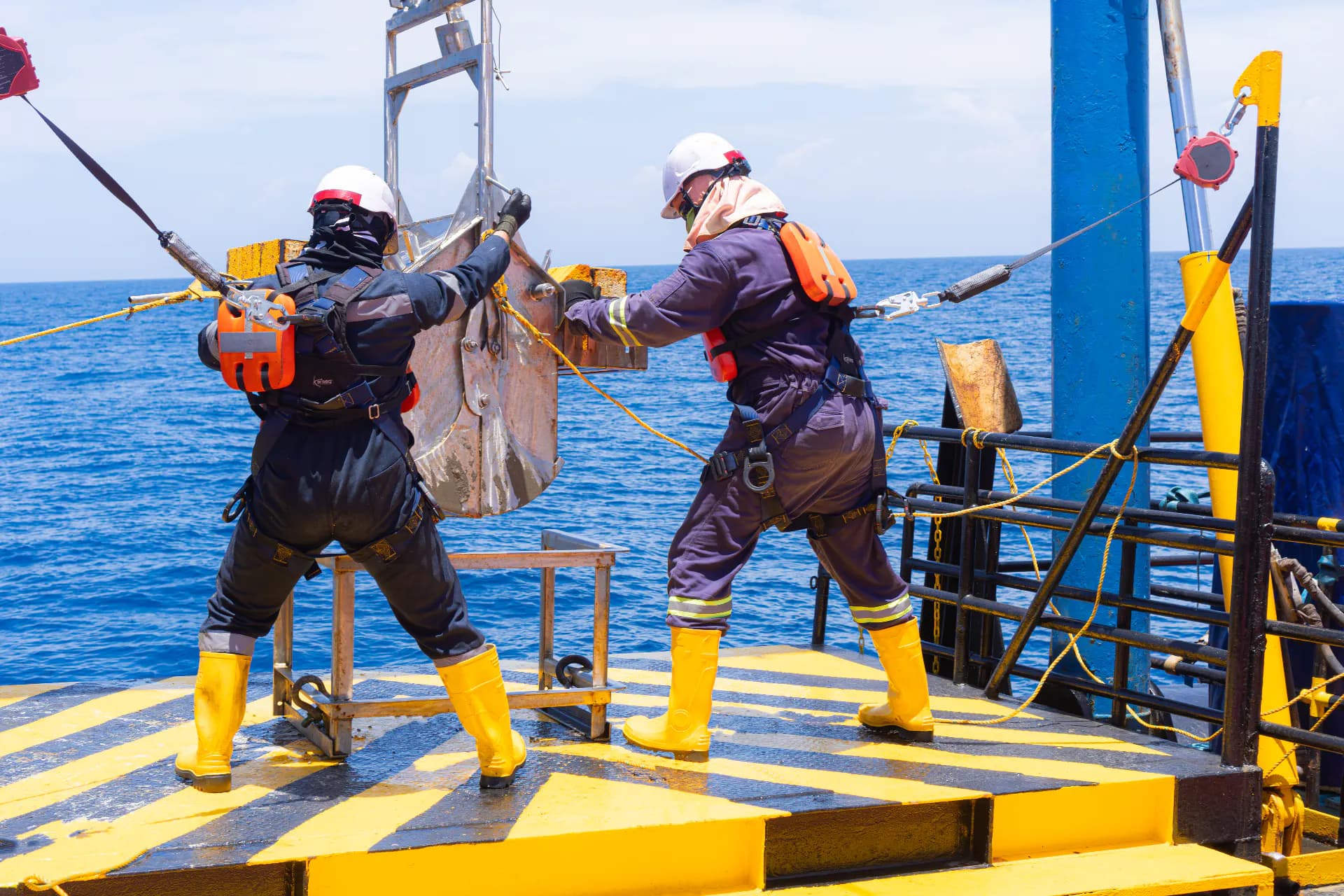
MacGregor has developed a liquid carbon dioxide bow transfer system to enable ship-to-well and ship-to-rig transfer of LCO2 across a wide range of operating conditions.
The system connects capture plants directly to offshore injection units, removing the costly intermediate onshore storage and conditioning facilities that current standards often require. That is the commercial argument for the design: an onshore buffer plant is a fixed cost applied to every tonne in the chain, and eliminating it changes the economics of a carbon capture and storage project more than any efficiency gain on the vessel itself.
The design builds on MacGregor's bow loading system, which has served the oil and gas sector since the 1970s. Around 79% of the new system draws on field-proven technology, with the remainder comprising targeted modifications and newly engineered components designed for the properties of LCO2.
The engineering challenge is the medium. Carbon dioxide cannot exist in a liquid state below minus 57 degrees Celsius, and rapid depressurisation during a transfer can drive temperatures toward that threshold. Seal materials have been tested with research organisation SINTEF under rapid gas decompression and LCO2 conditions, maintaining integrity through repeated pressure cycles and down to that temperature limit. The system is designed for uninterrupted handling in heavy sea states with wave heights of five to six metres, and to seal against water ingress at depths of up to 150 metres.
"Our robust new design solves the challenges of securing reliable and safe connection, transfer, and disconnection in all seasons, even in severe weather, without delays or interruptions," said Oyvind Solli, development programs manager at MacGregor.
The hardware is designed as the foundation for four distinct system architectures, spanning low and medium pressure at 30 to 60 bar and high pressure at 300 bar for direct reservoir injection via seabed swivels or disconnectable turrets.
MacGregor joined the EU-funded COREu research consortium in early 2025 and is in a technology qualification process with DNV. The planning phase is complete, comprising a qualification basis, technology assessment, threat assessment and qualification plan, with prototype testing and demonstration expected in mid-2027. "At this stage, we have successfully identified all risks associated with our equipment and its application for LCO2 transfer," Solli said. The system relies on the same classification society route that governs any novel marine transfer arrangement.