Kazimah III hit in Hormuz as tanker strikes reach six in a week and Yanbu is targeted
Kuwait Oil Tanker Company's second VLCC hit in four days, while a projectile briefly halted loading at Yanbu
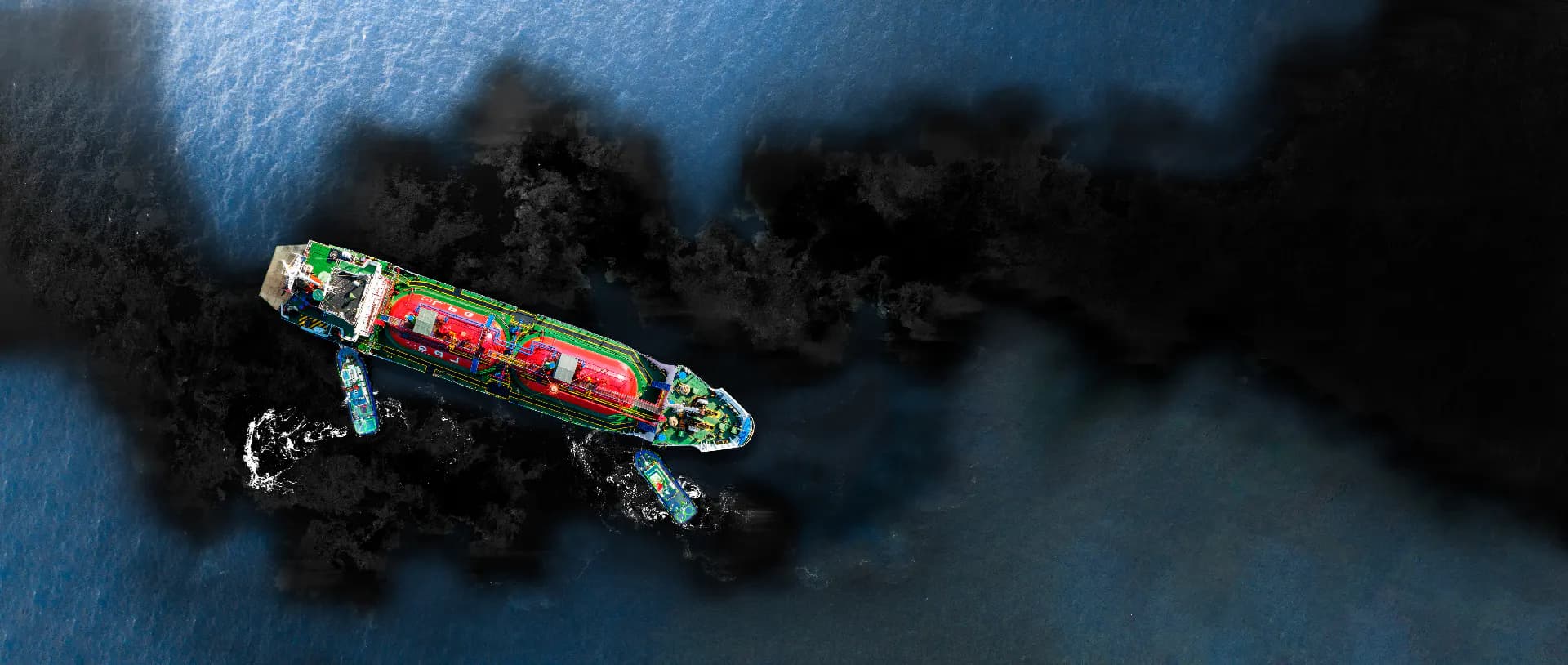
The Kuwait-flagged VLCC Kazimah III was struck by an unknown projectile while transiting the Strait of Hormuz on 1 October, the second tanker of Kuwait Oil Tanker Company to be hit in four days. A second tanker was struck the following day, bringing the number of ships hit in the strait to six in one week. UKMTO now counts 110 incidents directly related to the conflict between the United States and Iran.
UKMTO issued Warning 147-26 after a third-party report that a tanker had been hit at about 1750 UTC, starting a fire; the crew were reported safe. Security consultants identified the ship as the 317,250 dwt Kazimah III, built in 2006 and 333 metres long, which is owned, managed and operated by KOTC. One said all crew members were evacuated after the impact. Iran's Fars news agency reported that a supertanker "traveling through the Strait of Hormuz illegally" had been hit off the coast of Oman and was burning, without naming her. The first KOTC casualty, the VLCC Al Funtas, was struck on 28 September (Al Funtas and three more tankers hit in Hormuz).
Late on 2 October, the master of a second tanker told UKMTO that the ship had been struck. A fire was extinguished, but there were reports of a blackout on board. Security consultancy Ambrey identified her as a Panama-flagged crude oil tanker about 5.3 nautical miles off the coast of Oman, with smoke rising from the stern.
Iran's self-styled Persian Gulf Strait Authority said the ships targeted included vessels on its non-compliant list, which stood at 82 ships on 2 October. At least three of the tankers hit this week were UAE-controlled ships it accuses of repeated unauthorised transits: the small LR2 product tanker Al Ruwais, the Sinbad and the Mersin Prosperity. The two Kuwaiti ships were not on the list. All the strikes appear to have taken place in the southern channel of the strait, near the Omani coast. Before the 1 October strike, the Joint Maritime Information Center counted four confirmed attacks or disruptions in 96 hours and kept the regional threat level at severe.
On the same day a projectile landed inside the Saudi port of Yanbu on the Red Sea and started a fire. The master of a Liberian-flagged tanker reported the strike at 13:15, and her loading was suspended before resuming. Neither Saudi Aramco nor the port authorities have identified the projectile or its origin. Crude loadings at Yanbu had only recently resumed after the East-West Pipeline was restarted; it was shut after drone attacks damaged pumping stations on 10 September. Kpler estimates the line is carrying about 2.65 million barrels a day, with 3 to 4 million expected in the coming days, and says a return to its earlier capacity of about 5.5 million could take another month.
The strikes come as talks between Washington and Tehran have stalled. A third US carrier strike group and up to 10,000 troops are on their way to the region, and US Central Command says 125 vessels had been redirected under the blockade of Iranian ports by 30 September. Kpler analysts say Iran is cutting production and has stopped loading floating storage, as its stored crude outside the Gulf runs down.
This story is part of the Maritime Briefing of 5 October 2026.