Labor Shortage Caps Japan's Plan to Double Shipbuilding Capacity by 2035
Yards need 12,000 more workers as the birthrate hits a record low of 1.14
The Japanese government's plan to double domestic shipbuilding capacity by 2035 has drawn a wave of investment, drawn by a $6.5 billion package of funding and tax incentives. The plan, advanced by the government of Prime Minister Sanae Takaichi, seeks to reverse a decades-long decline and forms part of a wider strategy covering 17 security-related areas, alongside artificial intelligence and semiconductor design and manufacturing.
Japanese yards held 11 percent of the global market in 2024 on OECD figures, behind China at 71 percent and South Korea at 17 percent. Japan has held niche share in segments where vessels have to meet demanding compliance or technical requirements, while China has pursued a low-cost, high-volume model. In the 1970s Japan built about half of the world's ships; over the past two decades a gradual erosion in orders has pushed midsized yards to diversify into other sectors and into ship repair.
Parts of the plan are visible on the ground. Namura Shipbuilding is planning a dry dock for large vessel construction at its Imari Bay site on the northwestern coast of Kyushu, north of Nagasaki, for completion by 2035. In the interim Namura intends to revive LNG carrier construction, with Imabari Shipbuilding on Shikoku and Kawasaki Heavy at Kobe planning the same, taking Japan to between three and five LNG carriers a year.
That expansion competes for the same scarce yard labour as naval work. Mitsubishi Heavy Industries has taken three-ship orders for Mogami class frigates this year from both the Royal Australian Navy and the Japan Maritime Self-Defense Force. Japan Marine United is rolling out new Sakura class offshore patrol vessels, and a well-funded programme keeps the JMSDF fleet of more than 100 vessels refurbished and replaced.
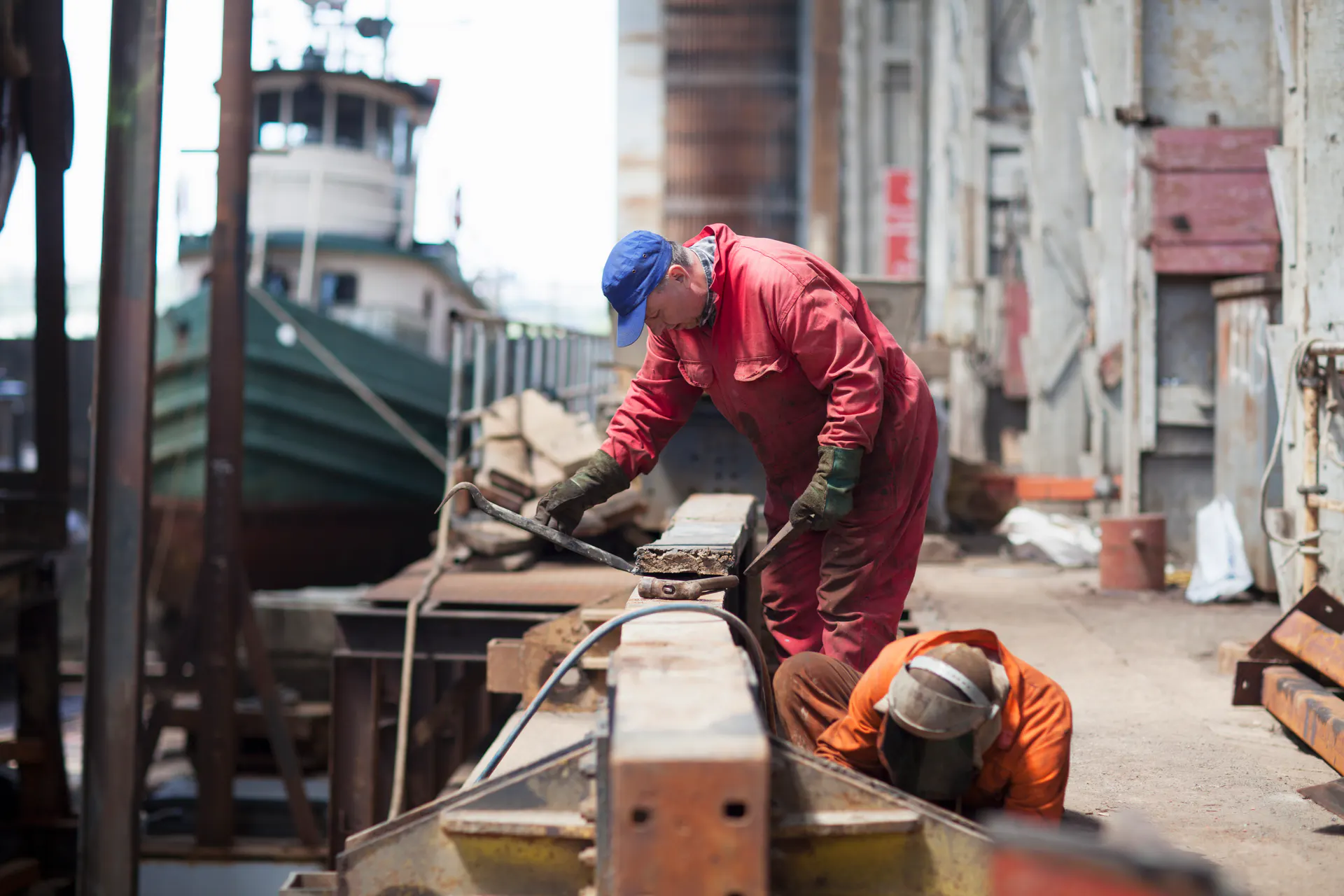
The shortage of skilled workers is behind a 15 percent fall in shipbuilding orders this year, despite the push from Tokyo. Imabari Shipbuilding president Yukito Higaki has said his yards are struggling to meet Japanese replacement orders, let alone take up rising demand for export orders. His company, like others, is intensifying its search for labour-saving technology and recruiting skilled workers from overseas.
Estimates put the additional workforce required to meet the doubled tonnage target at 12,000. Japan's birthrate hit a record low of 1.14 in 2025, shrinking the available workforce every year. Labour supply, rather than capital or newbuilding berth capacity, is emerging as the binding constraint on the expansion, a point already visible in the sector's return to LNG carrier construction.