House Votes to Strip Two California Maritime Emissions Rules
At-berth shore power went 216-211 on Tuesday, harbour craft the next day; both now go to the Senate
The House of Representatives has passed two resolutions overturning California's maritime emissions rules, one on Tuesday covering ocean-going vessels at berth and one on Wednesday covering commercial harbour craft. Both now go to the Senate.
The at-berth resolution passed 216 to 211. It nullifies the Environmental Protection Agency decision authorising the California Air Resources Board to extend its at-berth regulation, which requires ships alongside at the state's busiest terminals to shut down auxiliary engines and take shore power or use a capture-and-control system. The second resolution, on the Commercial Harbor Craft Rule, passed the following day with 210 Republicans and three Democrats voting to nullify the authorisation.
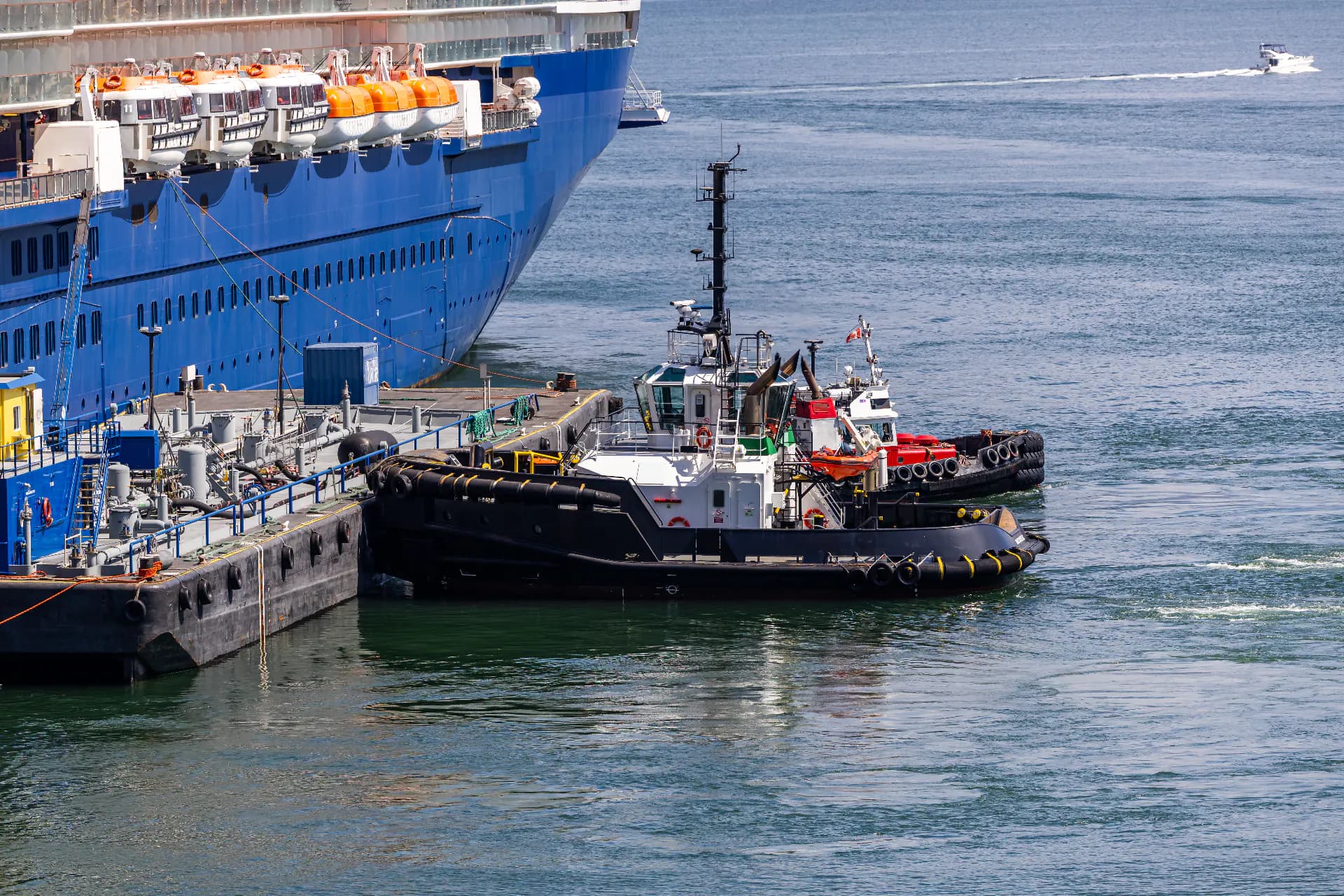
The harbour craft rule is the one the towage industry has fought hardest. It requires tug and workboat operators to run EPA Tier IV engines, and goes further than any other regulator by requiring local harbour tugs to fit a level 3 Verified Diesel Emission Control Strategy — a system cutting particulate emissions by at least 85 percent. In practice that means a low-emission newbuild, or a diesel particulate filter retrofitted to an existing hull.
Operators and the Coast Guard have both been sceptical, and the objection is a fire-safety one rather than a cost-only one. The filters collect soot and need a regeneration cycle to burn it off, which runs internal temperatures above 900 degrees Fahrenheit and leaves the exhaust system far hotter than a conventional design. In the confined engine room of a harbour tug, operators argue, that introduces a risk that did not previously exist. No such system exists in class-approved form in the United States: the technology is established on European inland workboats meeting EU Stage V limits, usually as part of an integrated propulsion package, and in the yacht market for aesthetic reasons.
CARB's case is the health one. Its analysis puts the harbour craft rule's effect at roughly 530 avoided early deaths among California residents over the coming decades, in a basin whose air quality is the reason the state has held a carve-out from federal preemption since the 1970s.
The federal argument underneath both votes is procedural and larger than shipping. The EPA approved the harbour craft authorisation in the final days of the Biden administration in January 2025. Eighteen months later the agency reclassified California waivers as reviewable rules and referred them to Congress under the Congressional Review Act, breaking with fifty years of practice in which it deferred to California on California-specific standards. The state attorney general obtained an injunction against that reclassification and the litigation is still running, which means the Senate is being asked to act on a referral whose legality is itself in dispute.
Sacramento has already shown it is not uniformly behind the rule. In 2024 both houses of the state legislature passed a bill adding an emergency bypass provision and a longer compliance timeline to the particulate filter requirement. The governor vetoed it.
For operators at Los Angeles and Long Beach, where the largest concentration of affected harbour craft works, nothing changes yet. A Congressional Review Act resolution needs the Senate and the president, and the compliance clock under CARB keeps running in the meantime. What has changed is that capital decisions on tug renewal now sit between a state rule that may not survive and a federal process that may not hold.
The at-berth resolution is H.J.Res. 210.
This story is part of the Maritime Briefing of 20 September 2026.