Maersk Confirms 26 Ships, Well Short of the 40 the Market Expected
No 24,000 teu tonnage in the Danish order, while CMA CGM is linked to twelve megamaxes at Yangzijiang
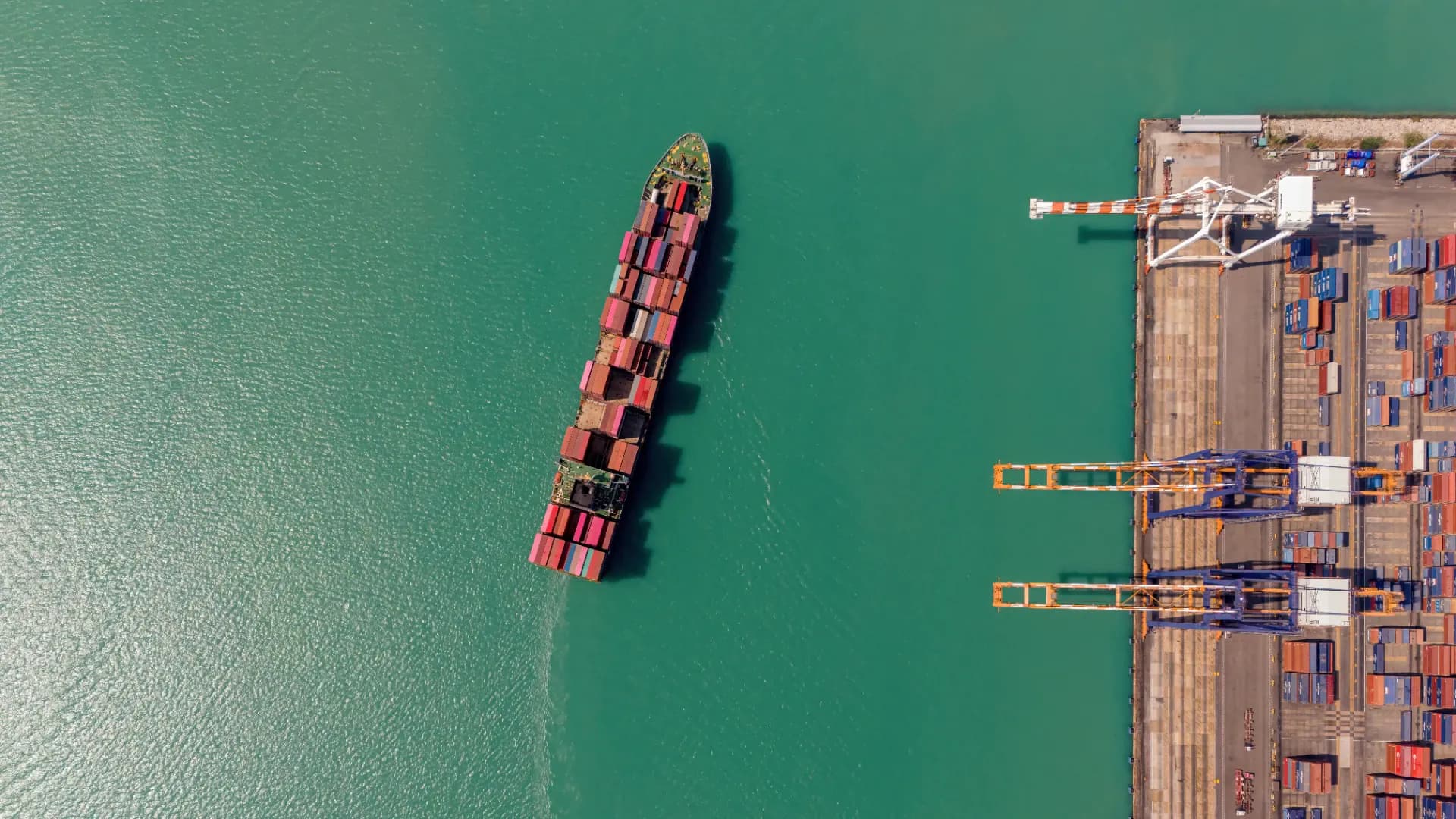
A.P. Moller - Maersk has confirmed an order for 26 large container ships, a programme equal to roughly ten percent of its current capacity but materially smaller than the one the market had been describing. The vessels are of 18,600 teu with dual-fuel engines able to burn conventional bunkers or liquefied gas, for delivery in 2029 and 2030.
Alphaliner and Linerlytica had both put the programme at 40 or more vessels worth upwards of $9 billion, including twelve ships of 24,000 teu. The confirmed order contains none of that class. Maersk's largest ships remain the Triple E series at between 18,270 and 20,568 teu, and the carrier is now the only one of the top five without a megamax on the water or on order.
The 26 ships extend a series rather than open a new one. In February the carrier contracted eight vessels of the same 18,600 teu design with New Times Shipbuilding, on top of 20 dual-fuel ships ordered across three yards in 2024. Chief executive Vincent Clerc framed the additional tonnage as buying growth and flexibility, which is the language of a carrier that has run out of headroom rather than one chasing a rival's headline capacity.
It has run out of headroom for a reason. Through the pandemic boom Maersk held its fleet between about 4 million and 4.4 million teu and ordered mainly to replace ageing ships, on the strategy that integrated logistics would smooth out the volatility of the ocean business. That did not happen: the land and air divisions did not offset freight-rate swings as expected, and the overhead was real. MSC passed Maersk in early 2022 when both stood slightly above 4.2 million teu and now operates close to 7.4 million. CMA CGM sits roughly 350,000 teu behind Maersk with a larger orderbook, and has said it expects to take second place in 2027.
CMA CGM is meanwhile understood to be behind a letter of intent at Yangzijiang Shipbuilding for twelve ships of 24,000 teu with LNG dual-fuel propulsion, for delivery in 2029 and 2030 at a price put at between $245 million and $250 million each, or around $3 billion for the series. The French carrier already ordered ten megamaxes at the same yard in 2023, the first of which delivered in May. If the letter converts, its fleet of LNG-powered ships of that size would reach 35.
The wider contracting wave is running with it. MSC added five ships of 21,700 teu at Zhoushan Changhong as options on an earlier order, and signed for ten 20,000 teu LNG dual-fuel vessels at Hengli Heavy Industry in June. Cosco committed around $3 billion in late August for 18 ships, twelve of them 21,700 teu megamaxes from Shanghai Waigaoqiao for delivery between 2028 and 2030.
The containership orderbook now stands at close to 14 million teu, about 41 percent of the fleet in service, which has itself grown some 42 percent since 2020 to around 34 million teu on heavy deliveries and almost no recycling. Some owners are reported to be looking at designs above 27,000 teu, a size the industry has treated as beyond the practical limit. Maersk's confirmed order says nothing about whether they are right, and a good deal about what the second-largest carrier is prepared to commit to while the question is open.
This story is part of the Maritime Briefing of 20 September 2026.