Espino de Marotta Takes Charge of a Panama Canal Running Short of Water
The first woman to lead the waterway inherits a seventh straight monthly fall in Gatun Lake and 32 transits a day
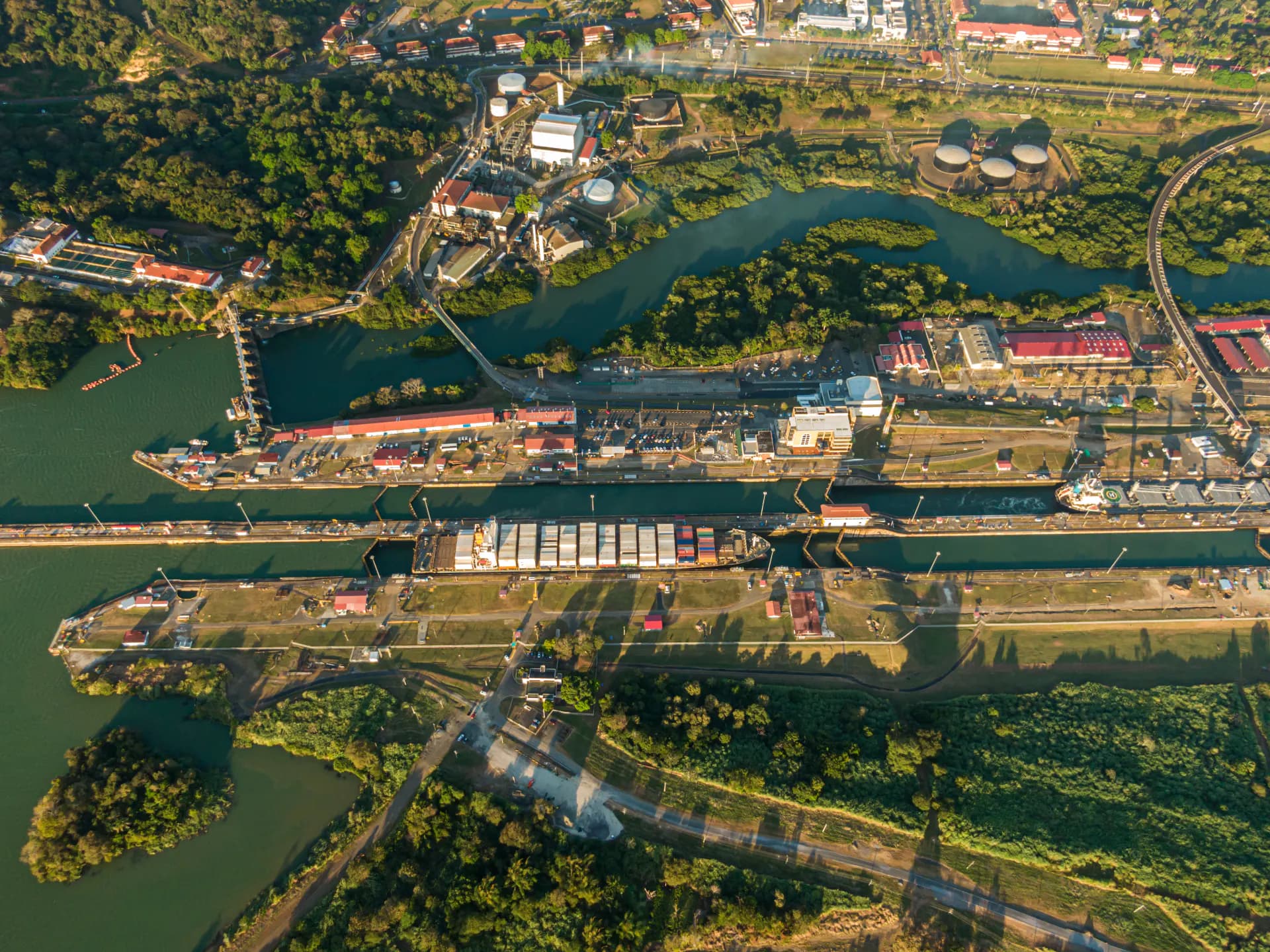
Ilya Espino de Marotta has become the first woman to take charge of the Panama Canal, formally taking office on Monday for a seven-year term. The 65-year-old engineer has spent more than four decades at the waterway, working across engineering, operations and sustainability, and played a leading role in delivering the expansion project that cost more than $5bn.
Her immediate problem is meteorological rather than structural. Rainfall across the canal watershed from May through August ran 34% below its historical average, while inflows were 44% below normal. Gatun Lake averaged 84.2 ft in August, down 4.6 ft since January and a seventh consecutive monthly decline. The levels have continued to fall through what is normally Panama's wet season.
The outlook points the same way. The US Climate Prediction Center puts the chance of a very strong El Nino event through the northern autumn and winter above 90%, and Panama has declared a nationwide state of emergency over the developing pattern. Daily transit capacity fell to 34 ships last week and drops to 32 from 15 September, against roughly 40 in unrestricted conditions. Officials have warned that disappointing rainfall through September, October and November could force another reduction early next year.
There was one piece of relief on Friday, when the authority postponed a planned cut in maximum neopanamax draft from 48 ft to 47.5 ft after an improved short-term assessment of lake levels.
Unlike the drought of 2023-24, the shortage now coincides with a reshaping of energy trades caused by the war in the Middle East. With Hormuz flows disrupted, more US LPG, LNG and refined products are moving west through Panama towards Asia. Broker BRS reports tankers above 34,000 dwt waiting around three days on the Pacific side and 4.2 days on the Atlantic side, close to double the levels seen earlier this year, with MR2s particularly exposed at around ten transits a day.
Gas shipping is under more pressure still. Analysts at SEB note that operators are resorting to improvised cargo transfers and month-long diversions around South America or the Cape rather than pay auction premiums or wait in line. South Korea's SK Gas paid a record $5.3m late last month to secure a 1 September transit for the LPG carrier G. Spirit, beating a $4.6m record set weeks earlier.
Dry bulk shows what happens when the arithmetic stops working. Ursa Shipbrokers counted 162 bulk carriers transiting in August, down 32.5% year on year. A US Gulf grain cargo from New Orleans to Qingdao takes about 35 sailing days through Panama at 12 knots; around the Cape of Good Hope it takes almost 54 days, adding 5,395 nautical miles.
Espino de Marotta's answer is water security. Her strategic plan includes the long-discussed Rio Indio reservoir alongside new Atlantic and Pacific port terminals, an energy corridor and a logistics corridor. Rio Indio is designed to supply both canal operations and the Panamanian population for decades, and will take years to deliver.
This story is part of the Maritime Briefing of 9 September 2026.
Ships in this story