Drewry Puts Worsening Port Congestion Down to Utilisation, Not Capacity
Average ship waiting times have nearly doubled since 2019 while terminal capacity at nine major ports grew 21%
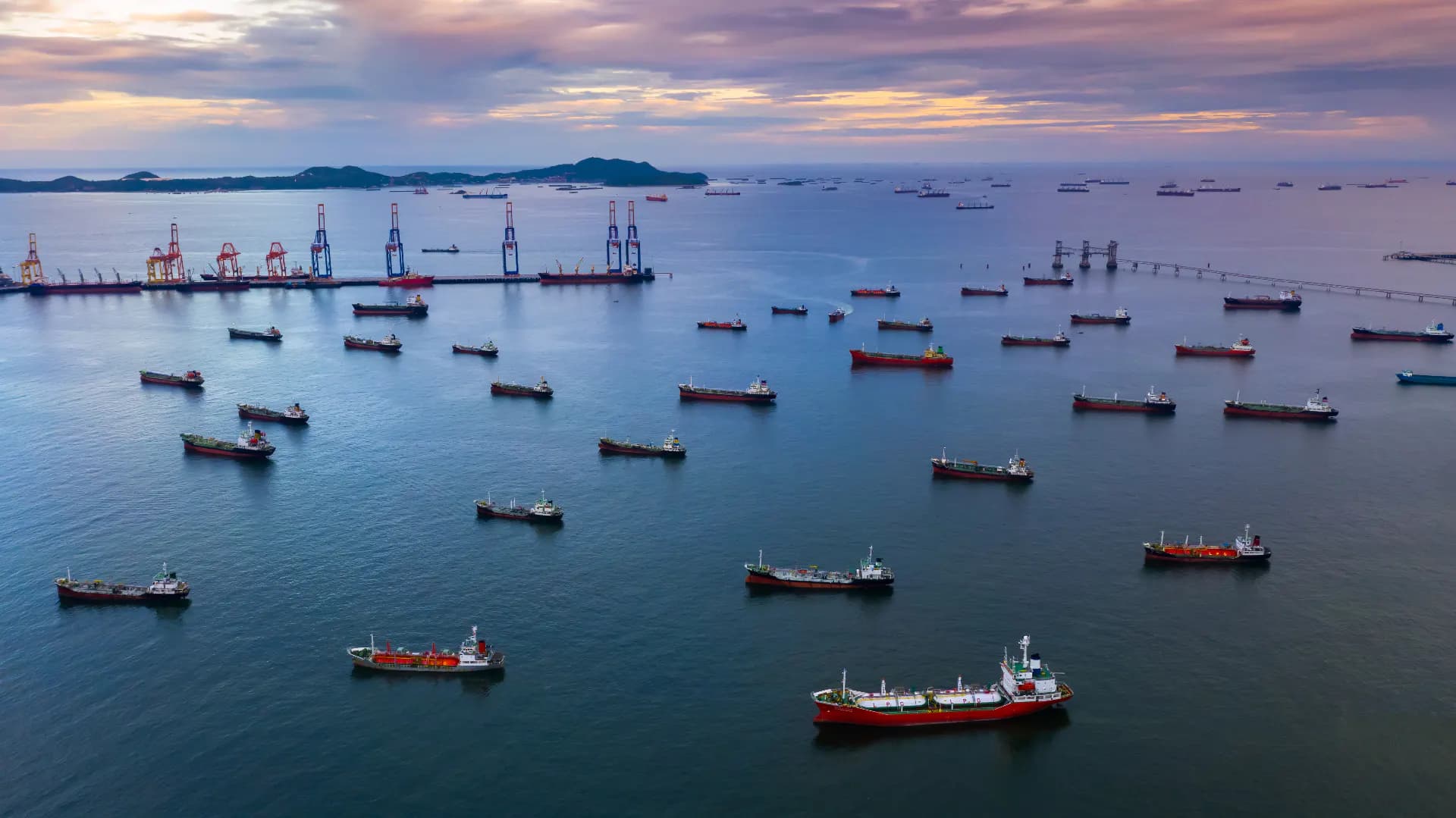
Container port congestion is getting worse despite continued terminal investment, and Drewry has rejected the argument that a broad shortage of port capacity is what is causing it.
The numbers set the scale of the deterioration. Average ship waiting times nearly doubled between the first seven months of 2019 and the same period in 2026, while the average time a containership spends in port rose 31%. In early August, typhoons in China pushed average berth waiting times to 3.6 days.
The consultancy attributes that to high asset utilisation, operational disruption and carrier practices that create sharp peaks in terminal demand, rather than to a single global pattern of underinvestment. That conclusion cuts against A.P. Moller-Maersk chief executive Vincent Clerc, who said during a 13 August financial presentation that insufficient port capacity was contributing to congestion in Europe, the east coast of South America, West Africa and the Middle East, pointing to about 15 years of terminal investment lagging since the financial crisis.
Across nine major container ports examined, terminal capacity grew by an average of 21% between 2019 and 2026, against 28% growth in volumes. Singapore expanded capacity slightly faster than volumes; capacity growth lagged cargo growth at Shanghai, Santos, Jawaharlal Nehru Port and Qingdao. At Santos the congestion is linked to delays involving the STS10 concession, landside transport constraints and very strong demand growth. Rotterdam kept capacity broadly static after a smaller container terminal closed in 2020, as volumes declined and larger terminals took share.
The mechanism that matters is what high utilisation does to recovery time. A terminal operating at 90% berth utilisation takes about a week to recover from a one-day disruption, against roughly two days at 75%. Blank sailings, ad hoc sailings and extra loaders compound that by concentrating arrivals, congesting yards and lengthening berth queues.
The effects are visible in current operational updates: severe congestion at Casablanca, congestion at Koper, berth delays of up to eight days at Abidjan and four to six days at Tema.
Drewry's position is that terminal operators in most regions continue to invest but cannot be expected to finance large volumes of spare capacity that earn little return in normal conditions. "The container shipping ecosystem is currently built to optimise cost – not resilience," the consultancy said. That framing puts the record queue measured last week down to how the system is designed rather than to how much concrete has been poured.