Denmark Awards Two Offshore Wind Sites After Rewriting Its Auction Terms
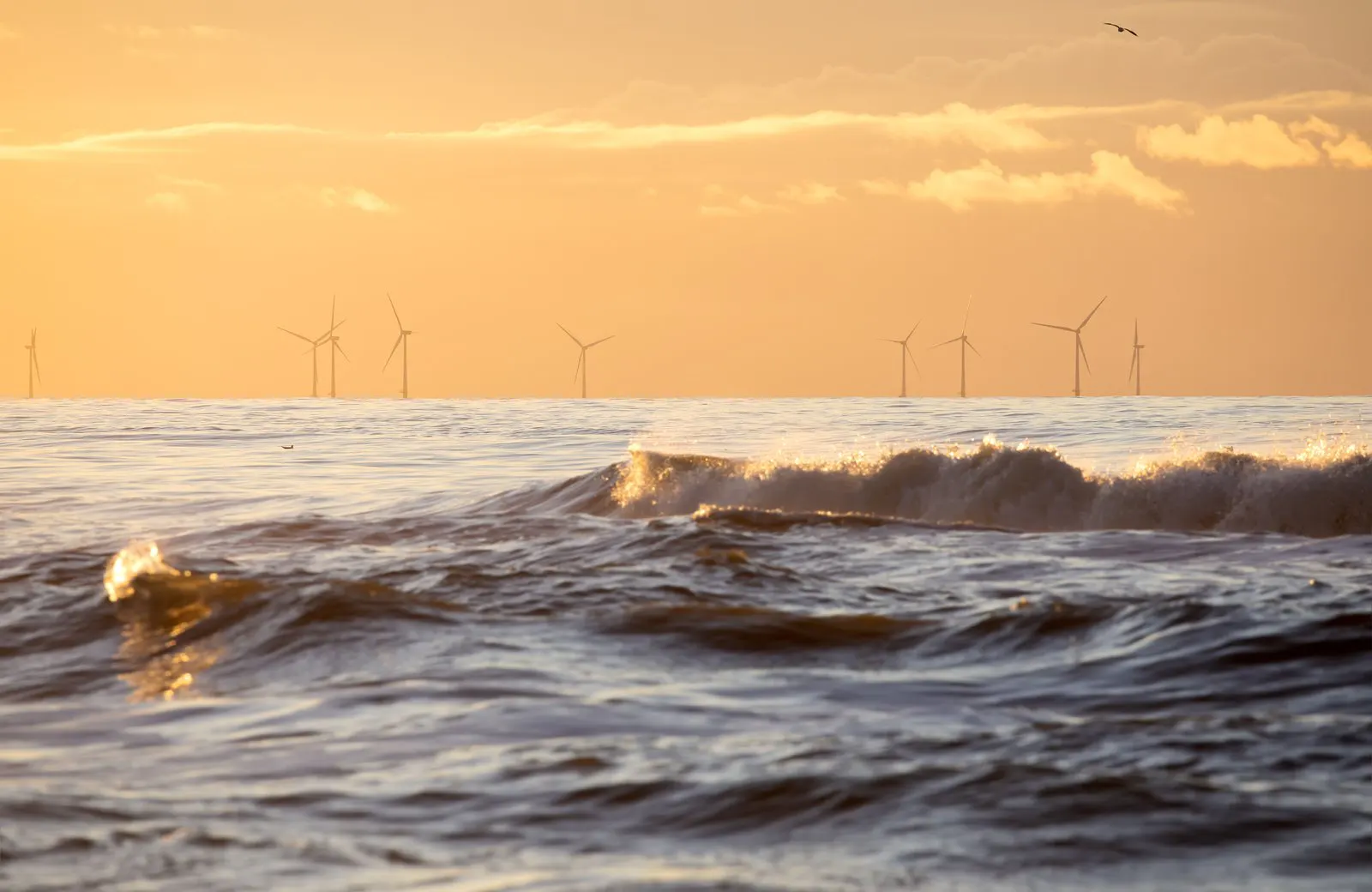
Denmark has awarded contracts for two new offshore wind farms to Vattenfall, completing a tender successfully for the first time in two years after rewriting the terms that caused an earlier round to collapse. The Danish Energy Agency confirmed the awards after a tender relaunched in November 2025 under a contract-for-difference model that replaced the subsidy-free approach which had attracted no bids at all.
The failure that prompted the change was total. A tender launched in 2024 covering six areas was cancelled after no bids were received for the first three sites by the deadline, an outcome that shook confidence in European offshore wind auctions more broadly because Denmark had been regarded as the market least likely to produce one. Political negotiation through 2025 produced two agreements and the adoption of a contract-for-difference structure, under which the state guarantees a fixed electricity price, pays a subsidy if the market price falls below it, and receives a payment back if the price runs above.
The relaunched tender drew genuine competition. The agency reported on 4 August that it had received two bids for Hesselø, an 800 megawatt site in the Kattegat around nineteen miles from shore, and five bids for Nordsøen Midt, a North Sea site of one gigawatt roughly twelve and a half miles offshore. Vattenfall submitted the lowest bid at each location, at 504 kroner per megawatt hour for the North Sea site and 542 kroner for the Kattegat, equivalent to about 77.75 and 83.60 dollars respectively.
The awards carry conditions beyond price. Bids had to include sustainability and social responsibility components, with a requirement to recycle turbine blades, and the Kattegat project must incorporate what the agency terms nature-inclusive design. Leases run for twenty years from completion, projects must be finished by the end of 2032, and grid connections have been reserved with consent granted for thirty years and an option to extend by ten more.
The context is a country that has been running out of room to add capacity. Denmark commissioned the world's first offshore wind farm in 1991 and has 2.7 gigawatts installed today, with one further gigawatt under construction for 2027. Adding 1.8 gigawatts across these two sites is a substantial increment against that base. A third site, Nordsøen Syd, with a minimum capacity of one gigawatt, carries a bid deadline of October 2028 and will test whether the revised model holds once the immediate backlog of interest has been absorbed.