Algeciras Lines Up EUR 1.4 Billion to Hold Its Position at the Strait
The port targets more than 6m teu a year by 2030 as Moroccan capacity grows 30 km across the water.
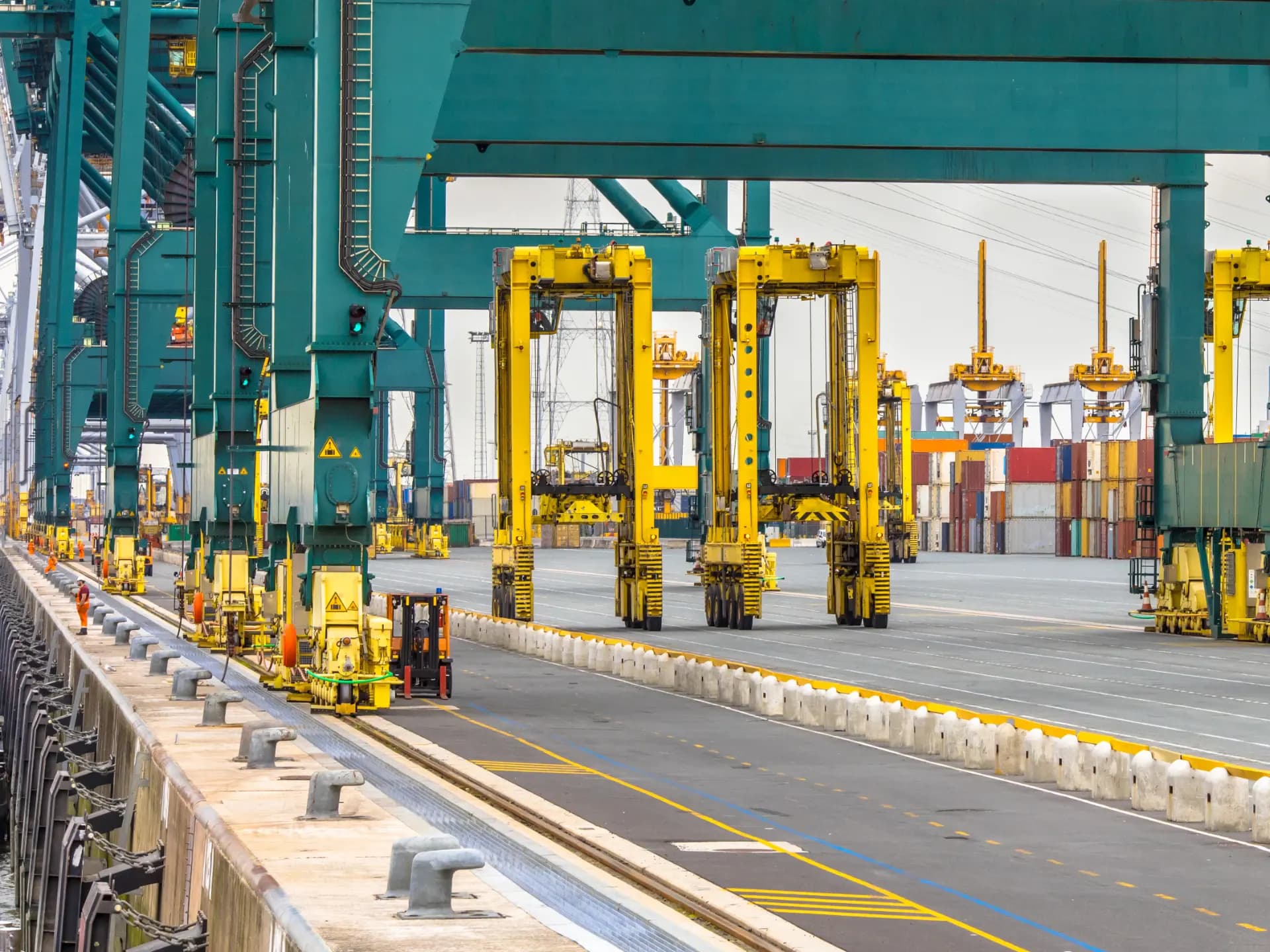
The Port of Algeciras has set out close to 1.4 billion euros ($1.62 billion) of combined public and private investment through 2030, in a programme aimed squarely at keeping the Spanish side of the Strait of Gibraltar competitive with what is being built 30 km away in Morocco.
The Algeciras Bay Port Authority has approved 677 million euros ($792 million) of its own spending for 2026 to 2030, with a further 711 million euros ($831.7 million) expected from private investors on strategic projects around the bay. Together the programme targets annual traffic of more than 6 million teu and 125 million tonnes by the end of the decade.
Within the authority's own budget, around 156 million euros ($182.5 million) goes to port infrastructure, including further expansion of the Galera quay and its link with Isla Verde. Another 124 million euros ($145 million) is allocated to road and rail access. Roughly one euro in every six the authority invests will fund sustainability and energy projects, with onshore power supply the largest item.
The capacity plan runs further out than the spending plan. The strategic target is installed container capacity of 7.5 million teu by 2030 and 9 million teu by 2035, underpinned by completion of phase B at Isla Verde Exterior and by draft and infrastructure upgrades at APM Terminals Algeciras. HMM is separately pushing a major expansion of Total Terminal International Algeciras, lifting capacity from about 1.6 million teu to 2.1 million by 2028, with headroom to reach 2.8 million.
Port authority president Gerardo Landaluce framed the constraint as being outside the fence rather than inside it. “Expansion inside the port needs to be matched by improvements beyond the gates, particularly greater road and rail capacity and sufficient electricity supply for both shore power and planned green hydrogen developments,” he said.
That is the harder half of the programme. Quay metres and cranes are a procurement problem; grid capacity and rail paths are a national one, and they determine whether the terminal capacity can actually be used. It is also why a sixth of the budget is going into energy rather than handling equipment.
The push sits inside the largest Spanish port investment cycle in decades, with more than 7 billion euros ($8.17 billion) planned across the state-owned system through 2030.