Washington Readies New Iran Sanctions and Presses China Over Hormuz
Treasury says the package will target ship registries, exchange houses and front companies.
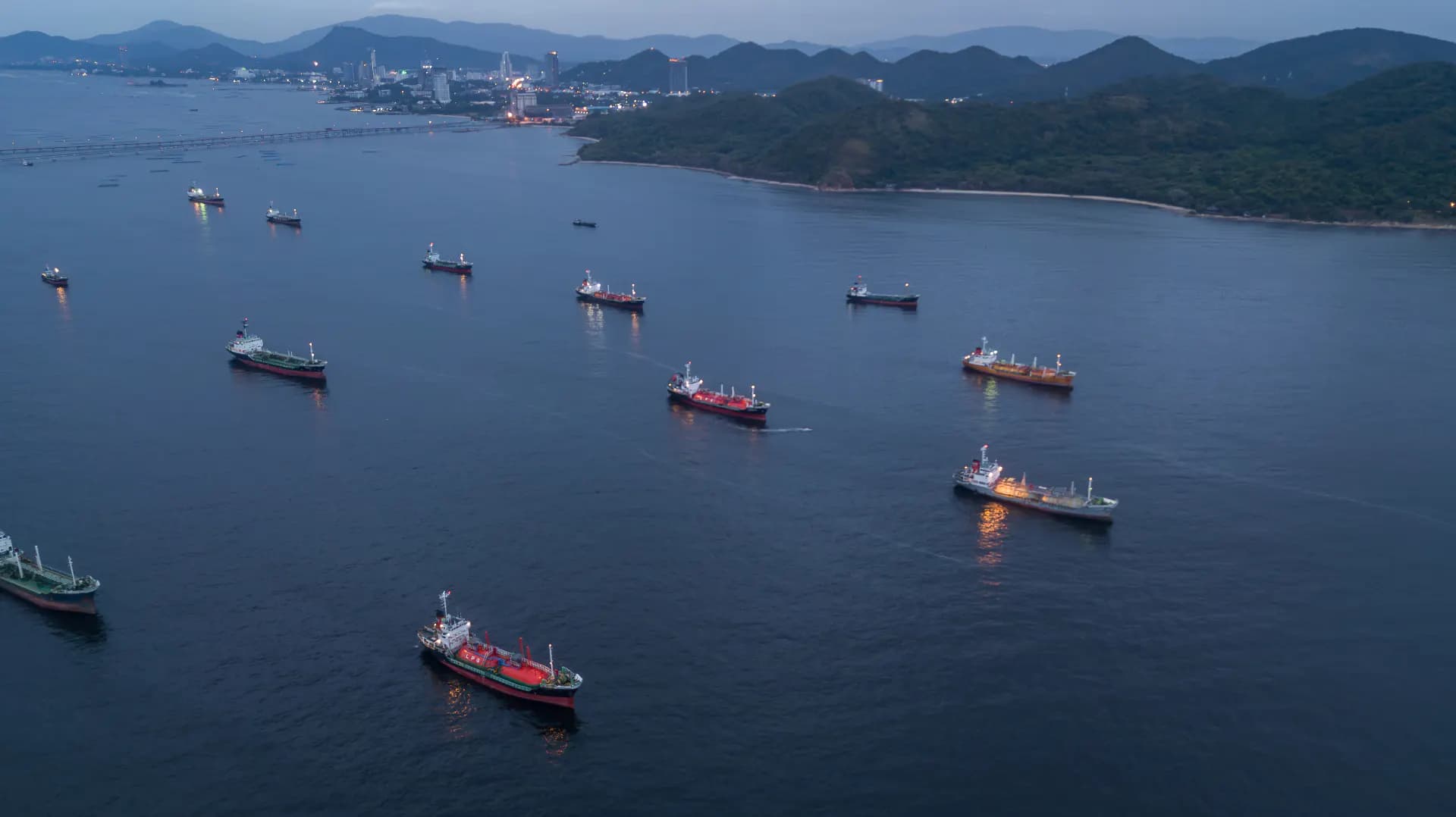
The United States is preparing a fresh sanctions package against Iran that Treasury Secretary Scott Bessent has described as the toughest in history, to run alongside the existing naval blockade.
“It is a one-two punch. We have the blockade, and we are going to have the toughest sanctions in history,” Bessent said, arguing that the combination could avoid a return to large-scale military action. He said the measures would be explained in detail at a news conference on Monday. Oil prices moved to more than three-week highs on the comments.
The maritime content of the package is what matters commercially. President Donald Trump, calling the effort an economic D-Day, said the campaign would go after the machinery that keeps Iranian barrels moving: the smuggling operations themselves, the exchange houses and money transfers behind them, the front companies that hold the assets and the registries that flag the ships. Countries offering Tehran financial, commercial or governmental support, he warned, could face what he called tremendous economic consequences. Registries and front companies are the two mechanisms that make sanctioned tonnage tradeable, so naming them signals enforcement aimed at the paper rather than only at the hulls.
Bessent also called on China to cooperate in reopening the Strait of Hormuz and bringing energy prices down, saying everyone wants the strait open. Roughly half of China's energy comes out of the Gulf, he noted. China is also the main buyer of Iranian crude, and Kpler data put its share of Iran's shipped oil in 2025 at more than 80 percent.
On whether Chinese entities that keep trading with Iran could themselves be targeted, Bessent declined to be drawn, saying certain conversations belong in private. Any move against Chinese companies carries its own exposure, given China's position as a major supplier to the United States including of critical rare-earth minerals.
Beijing rejected the approach. A spokesperson for the Chinese embassy in Washington countered that pressure and sanctions resolve nothing, and called on every party to behave responsibly and look for a political and diplomatic route.
Iran also pushed back. Foreign Minister Abbas Araghchi accused Trump of using the campaign to divert attention from US economic problems including rising debt and interest costs, and said further sanctions would produce only defeat and Iranian enmity. The Iranian foreign ministry went further, characterising the measures as economic terrorism and as crimes against humanity, and calling for prosecutions.
Washington has sanctioned Iran in successive waves since the 1979 revolution. What distinguishes this round, on the stated terms, is that it is being paired with a physical blockade rather than substituting for one.