Van Oord completes rock installation at Hollandse Kust West VI wind farm
The contractor deposited 300,000 tonnes of rock, including the heaviest blocks ever laid by a subsea rock installation vessel, to protect turbine foundations
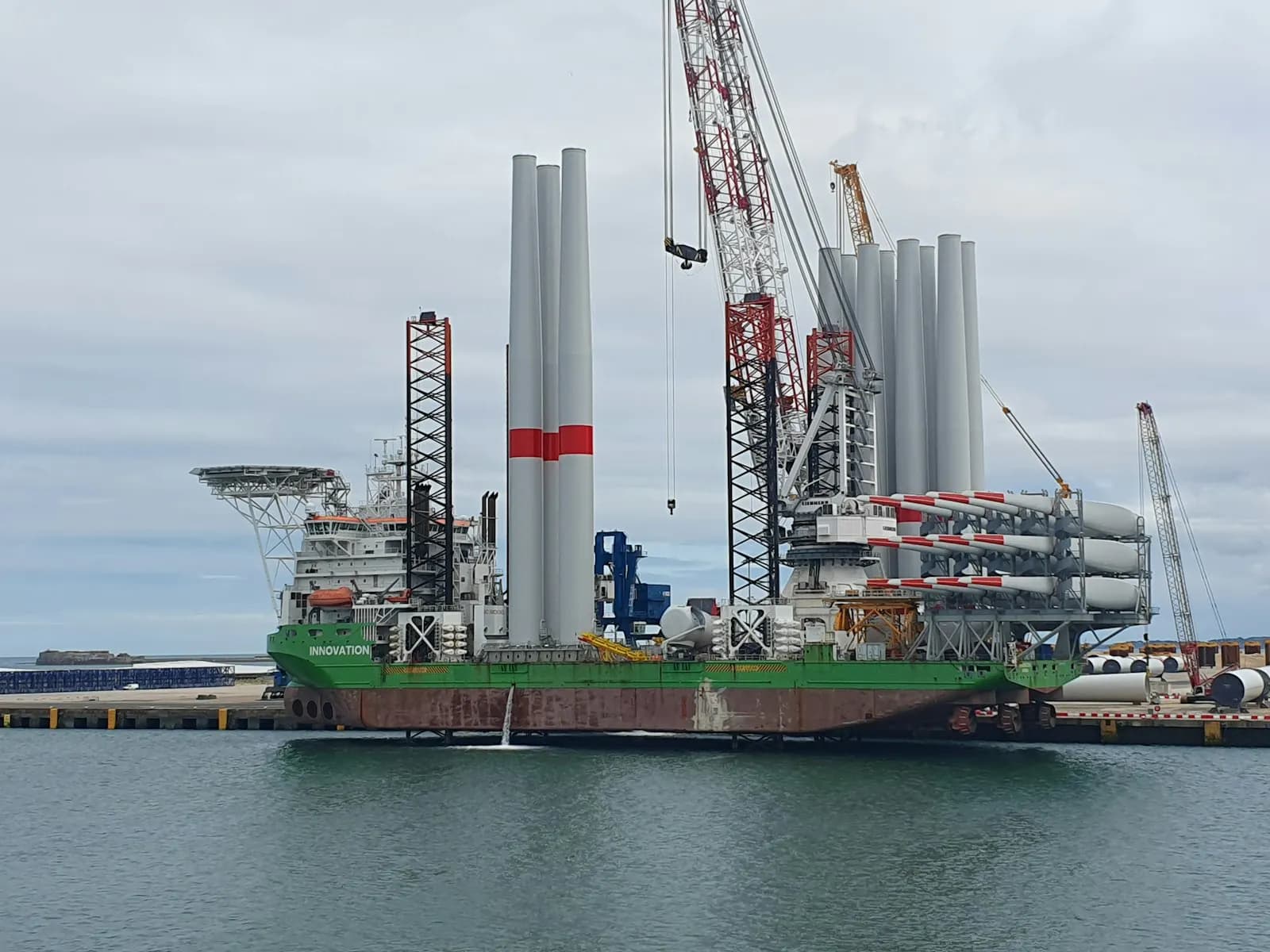
Van Oord has completed rock placement operations at the Hollandse Kust West VI offshore wind farm off the Dutch coast, wrapping up a scour protection campaign that began last September. The project is owned and developed by Ecowende, a joint venture between Shell, Eneco and Chubu Electric Power, and sits roughly 53 kilometres off the coast near IJmuiden.
The contractor used its vessels Bravenes and Nordnes to deposit 300,000 tonnes of rock designed to shield turbine foundations and cable systems from erosion. The scope of work included stabilising all cable protection and building eco-rock berms using rocks weighing up to 450 kilograms, which Van Oord said represents the heaviest rock ever deployed by a subsea rock installation vessel, describing the milestone as a new benchmark for combining infrastructure protection with marine habitat enhancement.
The nature-inclusive design incorporates ecological bays, crevices intended to foster marine habitats, and a deliberate range of rock sizes to support biodiversity around the turbine foundations. The work forms part of a wider biodiversity protection plan for the project, under which Van Oord is also responsible for transporting and installing foundations and turbines and for laying inter-array cables.
The 760 MW wind farm delivered its first power to the Dutch grid earlier this month following installation of its initial turbine, and is expected to be fully operational by the end of the year, ultimately supplying around three percent of the Netherlands' current electricity needs. Once complete, it will feature 52 Vestas V236-15.0 MW turbines, seven of which will carry a single red-painted blade as part of a trial to assess whether the colour contrast reduces bird collision risk during rotation.
Additional above-water measures being tested at the site include a designated bird corridor, wider turbine spacing, elevated nacelles, adaptive curtailment during high-risk periods and AI-assisted radar monitoring for birds and bats. Combined with the ecological scour protection now complete, the project is being positioned as one of the most ecologically considered offshore wind developments built to date.