Ukraine sinks Russian-flagged boxship in Black Sea
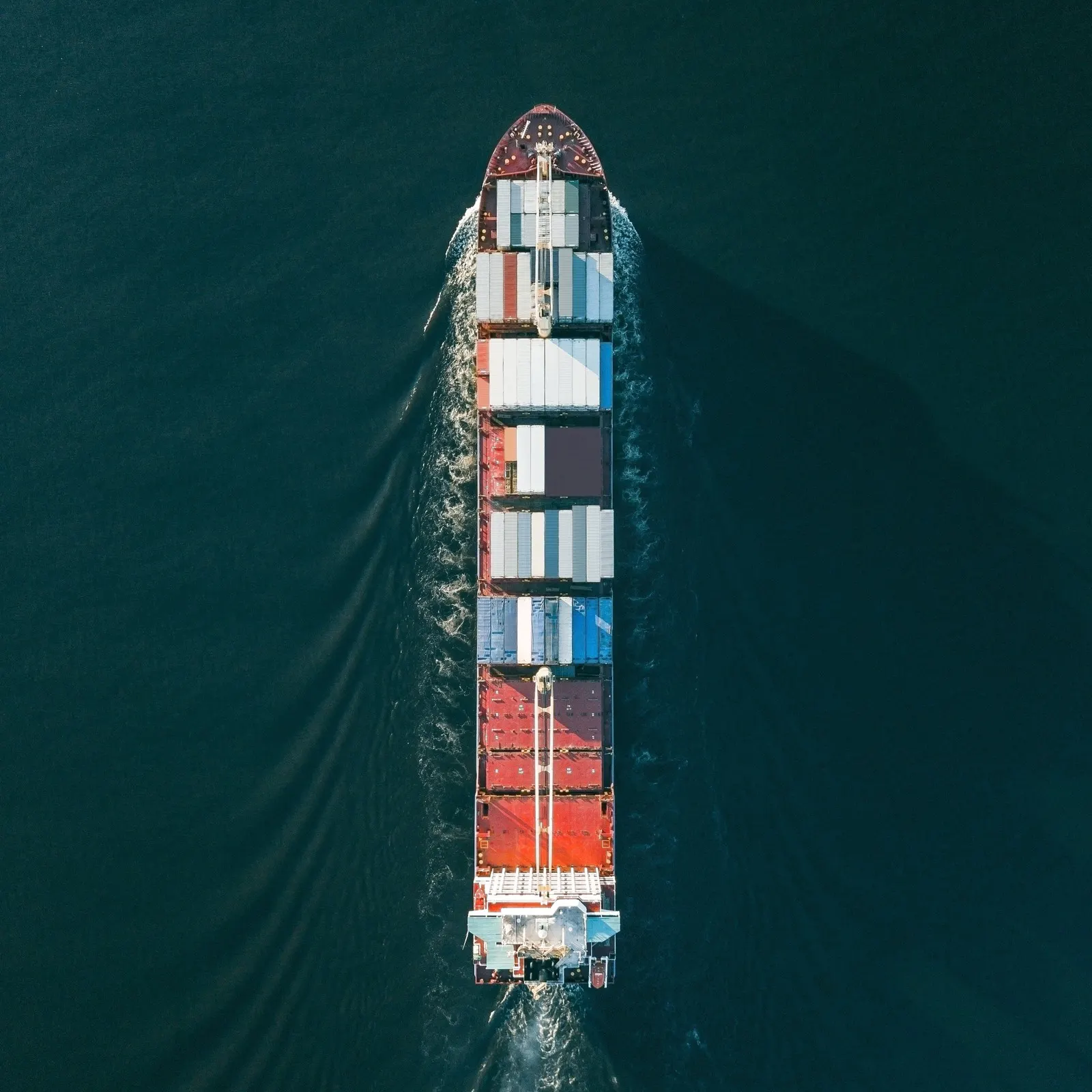
Ukraine has widened its campaign against Russia-linked commercial shipping, sinking a Russian-flagged containership in the Black Sea, striking a Greek-owned tanker and hitting three refineries deep inside Russia. The 962 teu, 2005-built Yanina, operated by FESCO, was sunk overnight between 31 July and 1 August roughly 130 nautical miles from Novorossiysk. All seventeen crew members were rescued, sixteen of them by the Turkish-flagged Delphinus.
The choice of target says more than the tonnage involved. FESCO is controlled by Rosatom, the Russian state nuclear corporation, which places the vessel squarely inside the state-owned economy rather than in the commercial grey area occupied by much of the shadow fleet. Rosatom chief executive Alexey Likhachev described the attack as piracy, a framing that will carry limited weight while the vessel's ownership runs back to a sanctioned state entity.
A second ship was hit in the same period. The 105,600 dwt, 2006-built tanker Bourda, owned by the Greek company IMS, was struck, though details of the damage were not immediately available. The involvement of a Greek-owned vessel matters commercially as much as militarily: Greek owners carry a substantial share of the tonnage still lifting Russian-origin cargo, and each incident narrows the pool of owners prepared to accept that trade at any price.
The maritime strikes came alongside a coordinated attack on refining capacity. Ukrainian forces struck the Bashneft-Ufaneftekhim, Bashneft-Novoil and Bashneft-UNPZ refineries at Ufa in Bashkortostan, some 1,600 km from the Ukrainian border, with a combined capacity exceeding 23m tonnes a year. President Volodymyr Zelenskyy said Ukraine had targeted facilities sustaining Russia's military campaign. Reaching that far inside Russian territory suggests a delivery capability that changes the risk calculation for infrastructure previously considered beyond range.
Taken together, the sinking and the refinery strikes describe a strategy aimed at the export chain rather than the front line. Refineries that cannot process crude and ships that cannot lift it produce the same result from opposite ends, and the vessels caught in between are increasingly ones whose owners believed distance from the conflict offered protection. For operators still working Black Sea ports, the practical consequence is that a Russian flag, a Russian charterer or a Russian-linked cargo now carries a measurable probability of attack, and war-risk cover is being priced accordingly.
Ships in this story