China's Sea Legend Launches Regular Container Service Through the Arctic
The route to Europe cuts up to 40% off the journey but faces ice, insurance and diplomatic hurdles.
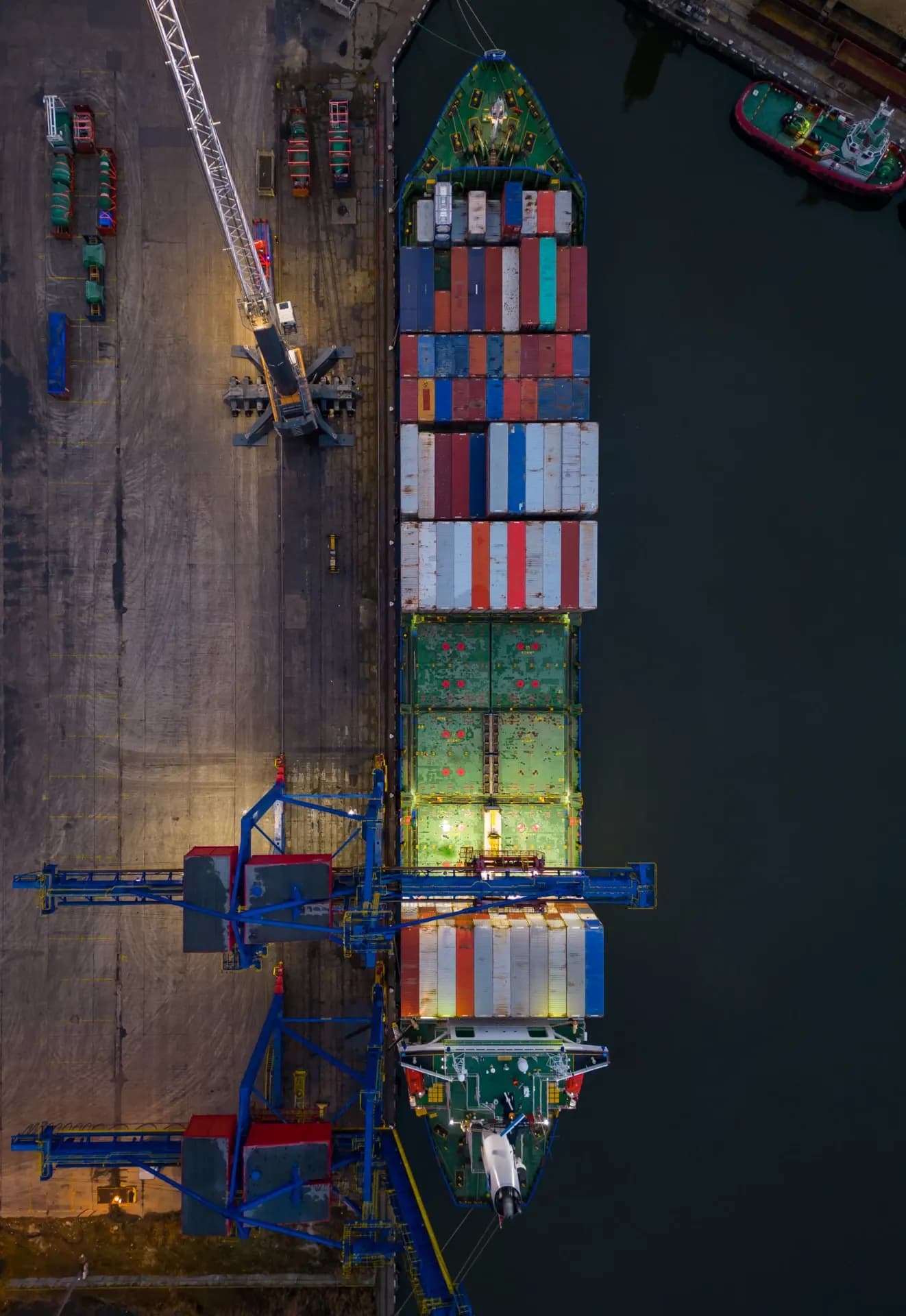
Chinese shipping line Sea Legend has begun a regular container service between China and Europe via the Arctic, moving the northern sea route from isolated trial voyages toward something closer to scheduled trade.
The launch follows a 2025 trial crossing in which a container ship sailed from Ningbo-Zhoushan in eastern China to Felixstowe in the UK in 20 days. The route can shave up to 40 percent off the conventional Asia-Europe passage, a saving that has taken on new weight since the Iran war sharply elevated the risk premium around the Red Sea without formally closing the Suez Canal to traffic.
The idea itself is not new. Soviet planners began surveying Russia's northern coast after 1917, and the route was judged vital first for Arctic industrial expansion and later, through the Cold War, for military installations. Mikhail Gorbachev proposed opening it to foreign ships in 1987, and a subsequent Japanese-Norwegian-Russian research programme concluded the route faced severe physical bottlenecks: shallow eastern straits and floating ice capped viable ships at roughly 20,000 to 50,000 tonnes deadweight, well below the 70,000 to 80,000 tonne vessels entering other global routes by the late 1990s.
Climate change has reshaped that calculus. The Arctic has warmed at almost three times the global average, with scientists estimating an ice-free day as early as 2030 — a shift with severe consequences for Arctic wildlife, infrastructure and the region's 400,000 to 500,000 indigenous inhabitants, but one that has also widened the seasonal window in which larger ships can transit. China, Japan and South Korea have all referenced the route in official Arctic policy, and each can build the icebreakers the passage still requires, a capability the United States has struggled to maintain amid decades of shipbuilding decline. South Korea passed legislation this year to position Busan as an Arctic shipping hub and announced plans to trial the route with a container ship in September, a move that requires coordinating with Russian authorities and has drawn attention from European diplomats.
China has been the most proactive non-Arctic state. The route offers an alternative to the Malacca Strait, through which China currently moves about 80 percent of its imported oil and views as a strategic vulnerability. The 2018 Polar Silk Road initiative, linked to the wider Belt and Road programme, laid the policy groundwork; Sea Legend's regular service marks the shift from isolated China-Russia test transits to a scheduled link with Europe.
The obstacles have not gone away. The route stays open only in a narrow late-summer window that varies sharply year to year, ships need reinforced hulls, specialised crews and permits, and Russian icebreaker escort remains a legal requirement for part of the passage. Insurance premiums run high given sparse emergency infrastructure along the route, and European operators have largely stayed clear given the reputational weight of association with Russia. The northern sea route remains, for now, less a Suez alternative than a seasonal option shaped as much by geopolitics as by ice.