Sanctioned Russian Ship Delivered Armoured Vehicles To Mali Through Togo
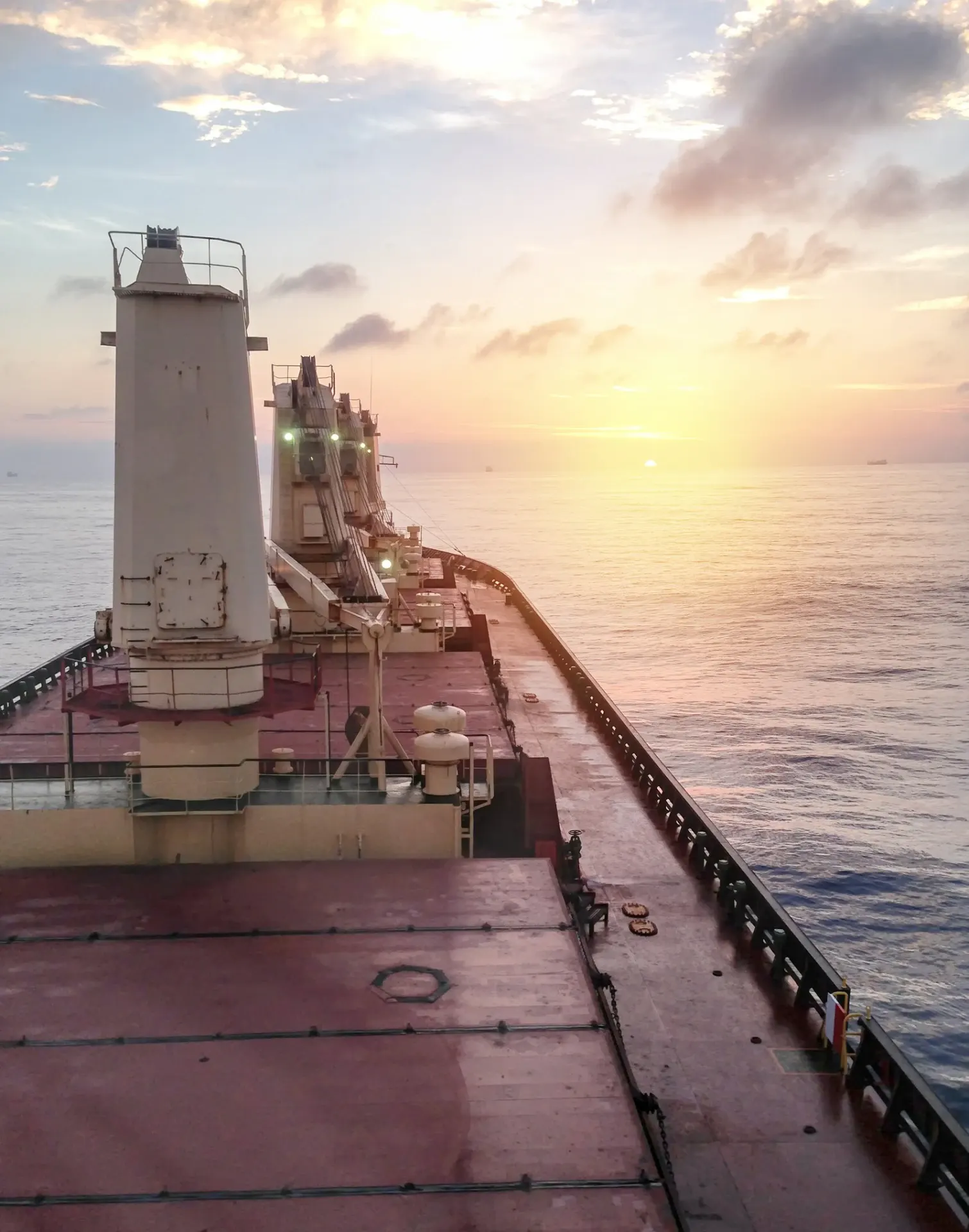
A sanctioned Russian cargo ship delivered a large consignment of military vehicles to Mali via the West African port of Lomé, in a documented sealift that reinforces government forces fighting rebels in the north of the country. Open-source investigators established the route after Malian state television broadcast footage on 25 July showing a convoy of armoured vehicles arriving in Bamako, with reporters saying the column had travelled from Togo.
The vessel involved, the Mikhail Britnev, docked at Lomé on 9 July. Satellite images reviewed by analysts indicated it carried trucks, armoured personnel carriers of a type derived from the BTR family, and light infantry vehicles. The ship had left the Russian Baltic port of Baltiysk on 18 June and was escorted through the English Channel by a Ropucha-class warship, an unusual level of protection for a commercial hull on a commercial voyage.
The Mikhail Britnev was designated by the United States in 2024. Tracking data shows it switched off its transponder after clearing the Channel and did not reappear until it was preparing to dock in Togo, a gap of several weeks across the length of the West African coast. That behaviour is the operational signature the designation was intended to make costly, and its persistence indicates how little friction the measure has generated in practice.
The vehicles were subsequently moved overland through Burkina Faso, another state under a Moscow-aligned military government, before reaching Mali. Analysts assess that they are suitable for both logistics and combat roles. Russia has backed the Malian junta since French forces withdrew in 2022, initially through Wagner and now through the Africa Corps structure that absorbed much of that organisation. Malian forces have suffered a series of reverses, with rebels attacking Anefis and other northern towns and the junta facing advances led by an al-Qaeda-aligned coalition and by Tuareg separatists. Amnesty International has called for a war crimes investigation into the alleged execution of nineteen soldiers.
For the shipping industry the case is instructive on two counts. It shows a designated vessel completing a long, politically sensitive voyage with a naval escort at one end and a permissive port at the other, and it shows how a transhipment point in a third country breaks the chain of custody that sanctions enforcement depends on. Baltiysk has served as a staging point for other shipments to West Africa this year, including vessels calling in Guinea, which suggests a route being used repeatedly rather than opportunistically.