Remontowa Cuts Steel For Fifth Battery-Electric Ferry In Scottish Series
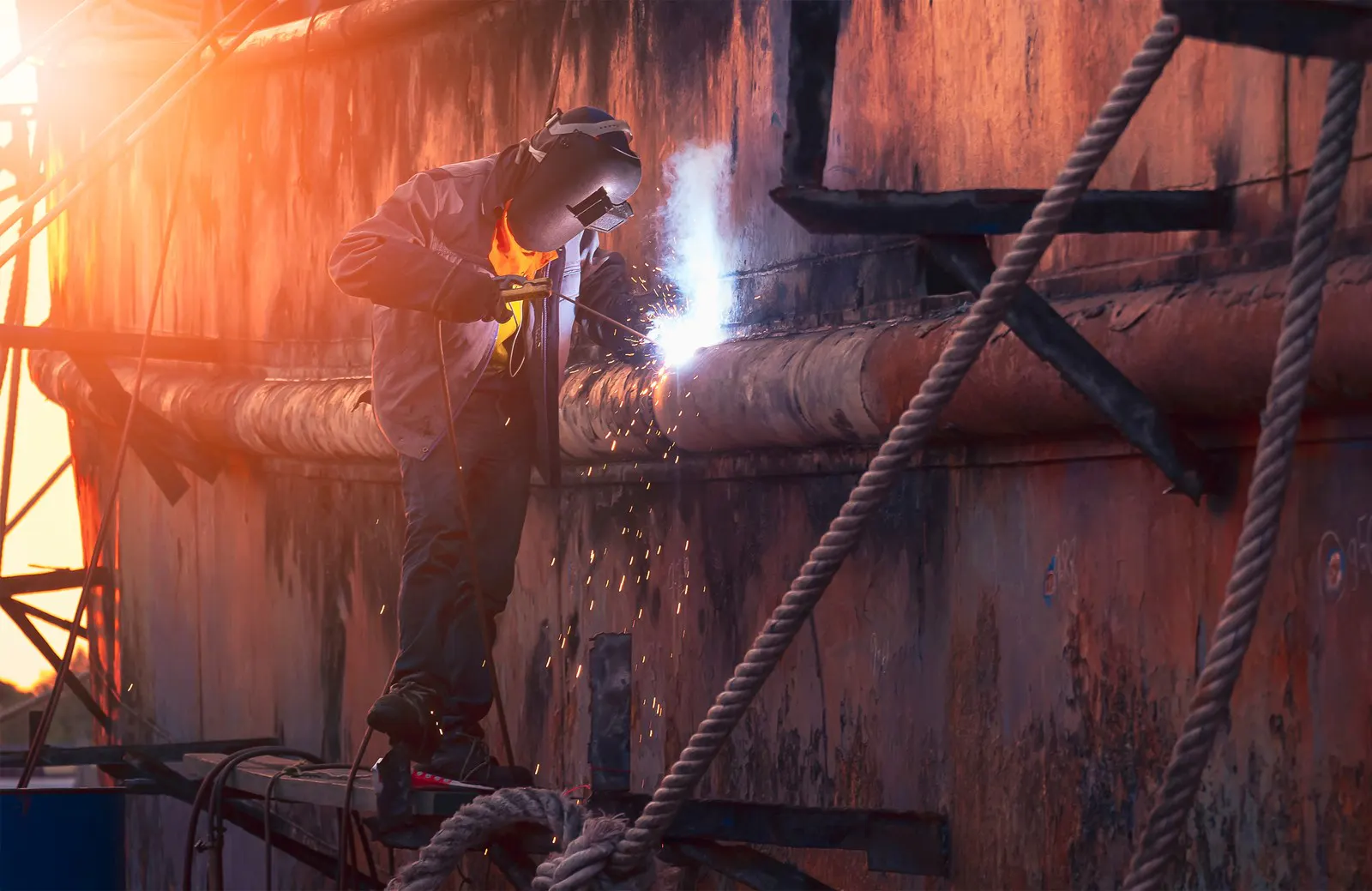
The Polish builder Remontowa Shipbuilding has cut first steel for the fifth of seven battery-electric ferries ordered by Scotland's state-owned ferry asset company, in what is the largest passenger ferry series in the yard's history by both vessel count and contract value. Construction of the hull began at the Gdansk yard on 6 August under a contract worth 147.5 million pounds, or around 198.4 million dollars, signed in March last year.
The order forms the core of the first phase of a small vessel replacement programme backed by 160 million pounds of Scottish government investment. The double-ended ferries are 49.9 metres long and 12.48 metres wide with a design speed of nine knots, and carry battery systems of 5,746 kilowatt hours, decentralised direct-current electrical distribution, four azimuth thrusters of 187 kilowatts each and two backup generating sets of 430 kilowatts. Six vessels will carry 150 passengers and twenty-four cars, while a seventh variant takes 250 passengers and sixteen cars.
The design work is being carried out by a Norwegian naval architecture practice alongside the yard's own design arm. Delivery runs from 2027 to 2029, with the first vessel due in the third quarter of 2027 and the contract completing in the first quarter of 2029. The ships are intended for seven short crossings in western Scotland and have been named after Scottish lochs following a public vote. The asset company's director of vessels described the steel cutting as another important milestone.
The technical interest lies in the route profile rather than the batteries themselves. Electric propulsion works on short, frequent crossings where a vessel returns to the same berth many times a day and can charge in the minutes between sailings, which is exactly the pattern these routes follow. It does not work where a ship is away from shore power for hours. That is why battery-electric tonnage has established itself in Norwegian and Scottish island ferry service while making almost no impression on deep-sea shipping, and why the constraint on such programmes is usually shoreside electrical capacity rather than vessel technology.
For the yard the significance is a return to a customer it served two decades ago, having delivered three ferries to the same operator between 2005 and 2011. European shipbuilding has retained a foothold in exactly this kind of work: complex, low-volume, publicly funded vessels for domestic operators, where the specification changes between hulls and the price premium against an Asian yard is politically tolerable. Seven ferries built to two designs over three years is a good example of the niche, and of how narrow it has become.