Petrobras Amazon Basin Find Opens Brazil's Last Offshore Frontier
Hydrocarbons logged 175km off Amapa in nearly three kilometres of water
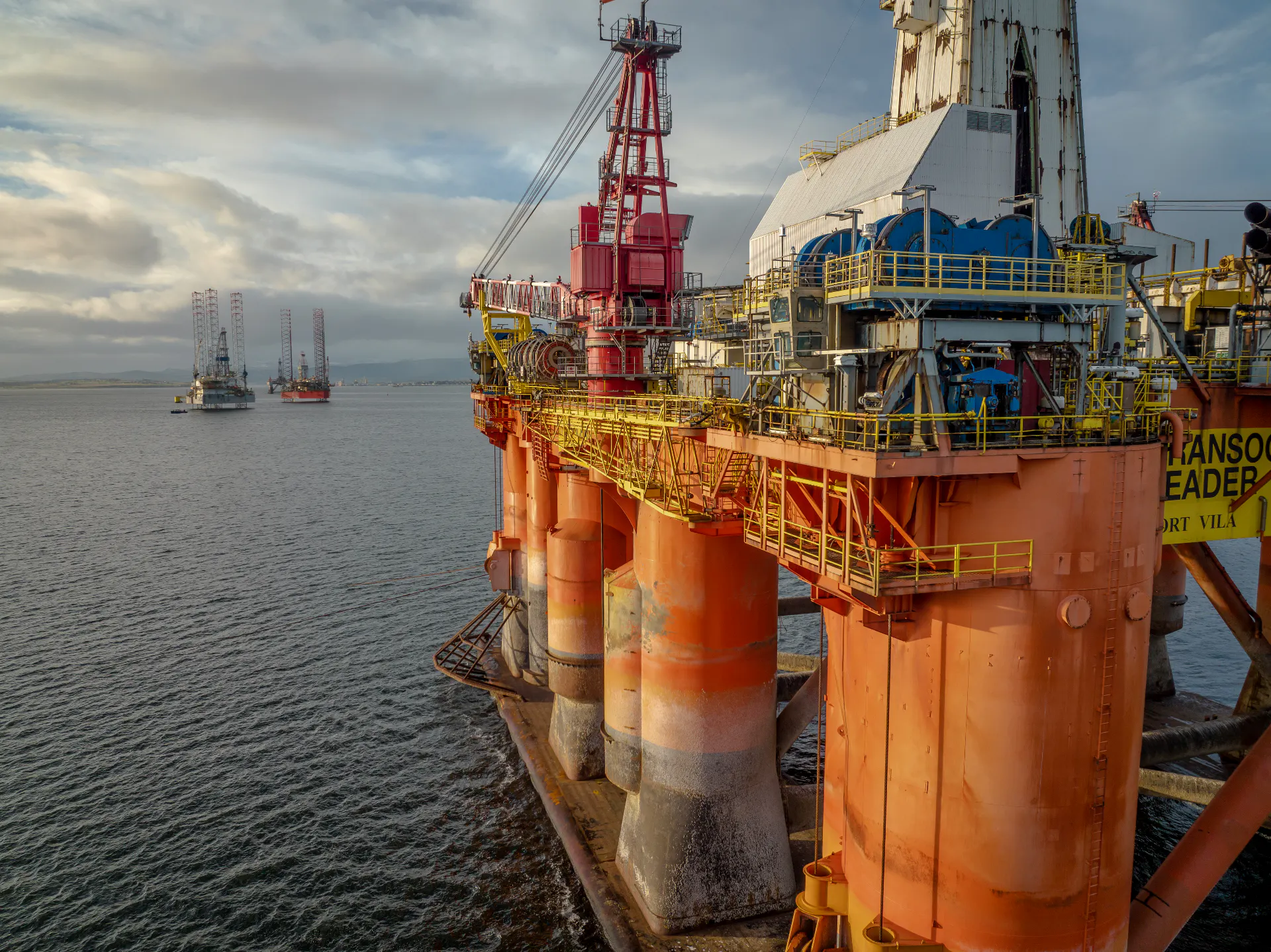
Petrobras has found indications of hydrocarbons 175 kilometres off the coast of the Brazilian state of Amapa, beneath almost three kilometres of water, opening what the government regards as the country's last major unexplored petroleum frontier.
On 14 August, rock samples and electrical logging indicated the presence of hydrocarbons in the Atlantic, some 500km from the mouth of the Amazon River. The discovery took place in the Foz do Amazonas Basin in Brazil's Equatorial Margin, a vast offshore region stretching along the northern and northeastern coast.
The commercial picture remains undefined. Petrobras has yet to estimate the size of the reserve, how much oil could ultimately be recovered, or whether developing it would be commercially viable. Even under a favourable scenario, production would be unlikely to begin before 2033.
President Luiz Inacio Lula da Silva travelled to Oiapoque three days after the announcement and boarded the NS-42 drillship, which is drilling the Morpho well. He compared the moment to the 2007 announcement of the pre-salt discoveries that transformed Brazil into a major oil producer.
The environmental question centres on ocean conditions rather than on distance alone. "The greatest challenge raised during the licensing processes in the region is the strength of the ocean currents, which are considered very intense," said Joao Victor Marques Cardoso, a researcher at FGV Energia. Those conditions make planning for an accident more demanding, since a spill would have to be contained and recovered, vulnerable areas protected and affected sites cleaned.
Petrobras says its models indicate that leaks at the drilling site would be carried towards the open ocean rather than the Brazilian coast. "The oil dispersion modeling presented by Petrobras shows that the oil does not reach the coast and instead moves out to sea," Cardoso said. Spill models can estimate how oil is likely to move under a range of conditions, but cannot predict the course of a future accident with certainty.
The combination of strong currents, distance from shore and environmental sensitivity led the Brazilian Institute of the Environment and Renewable Natural Resources to require Petrobras to demonstrate disaster response capacity before drilling was authorised. The regulator rejected a drilling licence application in May 2023; the company appealed and expanded the emergency response structure. In August 2025 more than 400 people took part in a pre-operational assessment involving helicopters, large vessels, wildlife rescue teams and the drillship. A licence for a single exploratory well was granted on 20 October 2025, without authorisation for commercial production.
Scientists and environmental groups have focused on the Great Amazon Reef System, a large biogenic formation beneath waters influenced by the Amazon plume, and on Amapa's extensive mangroves. Cardoso pointed to artisanal fishers, quilombola communities and coastal Indigenous peoples as groups that could be affected by an accident or by increased vessel and aircraft traffic and underwater noise.
The strategic driver is reserve replacement. With the pre-salt expected to reach peak production in 2034, and an average of seven to 10 years for a discovery to become a producing system, the Equatorial Margin is the government's route to maintaining output through the 2030s.