US Navy plans carrier deployments beyond seven months as Iran conflict runs on
Theodore Roosevelt families told to plan for eight months as Epic Fury continues
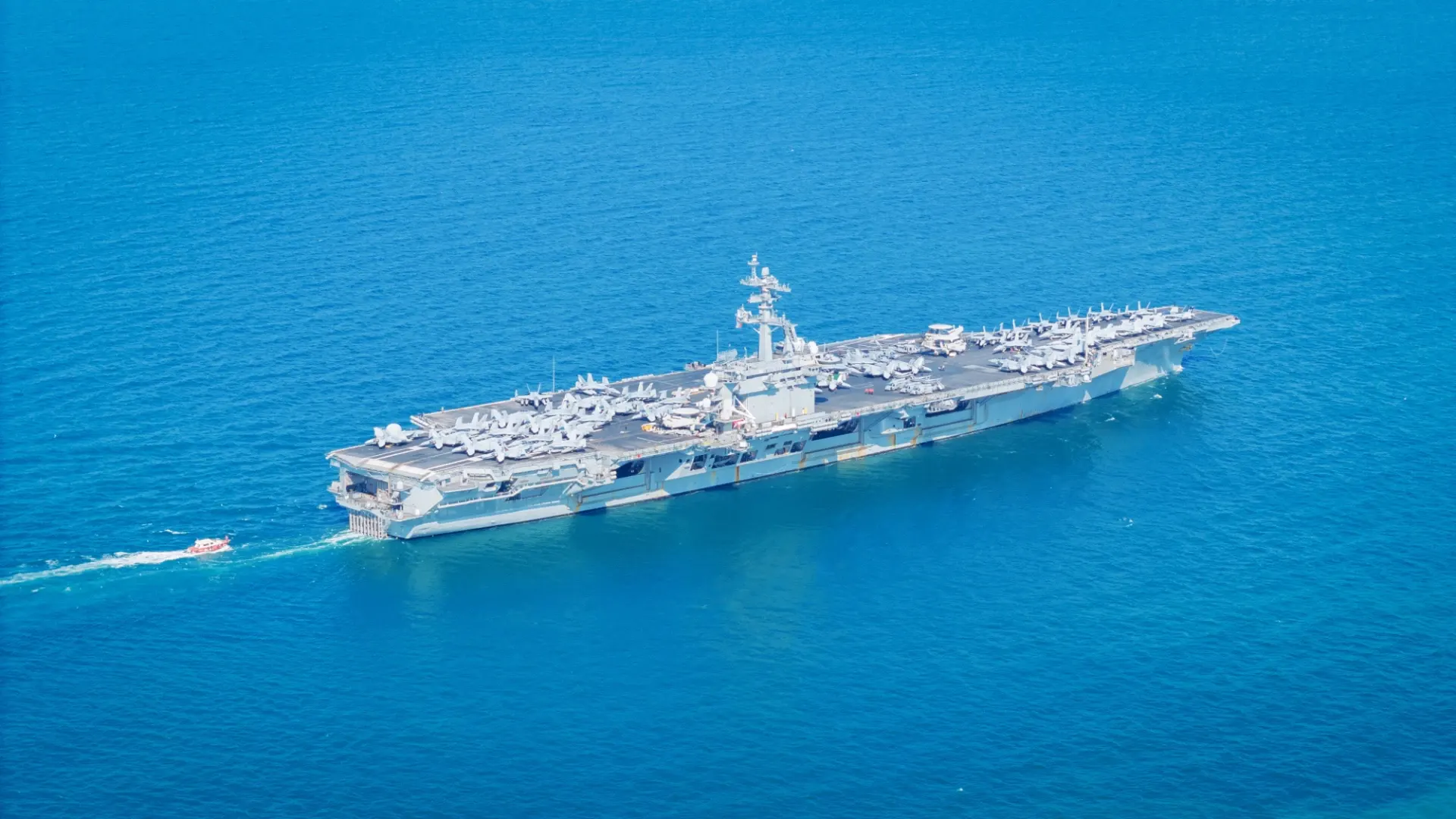
Families of sailors assigned to the Theodore Roosevelt Carrier Strike Group are preparing for a deployment lasting more than seven months as the US conflict with Iran continues.
When USS THEODORE ROOSEVELT (CVN-71), its escorts and the embarked Carrier Air Wing 11 leave San Diego in the coming weeks, the strike group is expected to move to US Central Command to relieve the Japan-based USS GEORGE WASHINGTON (CVN-73), which entered US 5th Fleet last week. Since Operation Epic Fury began on 28 February, the US has maintained a carrier presence in the Arabian Sea, launching strike missions over Iran and enforcing a subsequent naval blockade of Tehran.
Chief of Naval Operations Adm. Daryl Caudle and Master Chief Petty Officer of the Navy John Perryman, each one year into the job, said the commitment shows no sign of stopping.
"We've been in conflict pretty much the whole time I've been in the seat, and that's certainly stressed the force," Caudle said. "If we know we're going into harm's way, we should be able to project with a little bit more fidelity how long the carrier and the strike group is going to stay on station. We do these extensions in little chunks, and the families don't see any endpoint so they can plan their own lives."
Perryman said Roosevelt families are already planning for more than seven months. "They know they're going to be there longer than seven months. Their commanding officer is giving them eight months to plan on," he said.
USS GERALD R. FORD (CVN-78) returned in May from a 326-day deployment, the longest since the Cold War, while USS ABRAHAM LINCOLN (CVN-72) is on track just behind it at more than 300 days. Since the October 2023 Hamas attack on southern Israel and the subsequent threat to commercial shipping from Houthi forces in Yemen, carrier deployments have averaged 8.5 months.
The difference between those two deployments was ashore, not at sea. Ford's year was broken up by port visits in the Caribbean and Mediterranean; Lincoln spent eight and a half months without one.
"It's not the operations, they're nearly identical in the combat sortie process that they were conducting. It's really the port calls and the ability to reset and take a knee," Caudle said.
The Navy has since established a logistics chain to sustain two carrier strike groups on station in the Arabian Sea, drawing parts through Diego Garcia, Singapore, Japan, the Philippines and the United States. Caudle is working with 5th Fleet commander Vice Adm. Curt Renshaw to identify port call opportunities, with locations in Africa, India and as far as Singapore under consideration.
The service is waiting on Congress to pass a supplemental funding bill covering money pulled from the operations and maintenance account. "The Fiscal Year 26 budget did not have Epic Fury baked into it. So there's a supplemental out there and that number keeps growing, but for me that's probably between $6 to 8 billion," Caudle said.