North Korea Commissions the Kang Kon, Second of Its Largest Destroyers
The 5,000-tonne warship righted after a failed 2025 launch entered service at Wonsan on 6 September
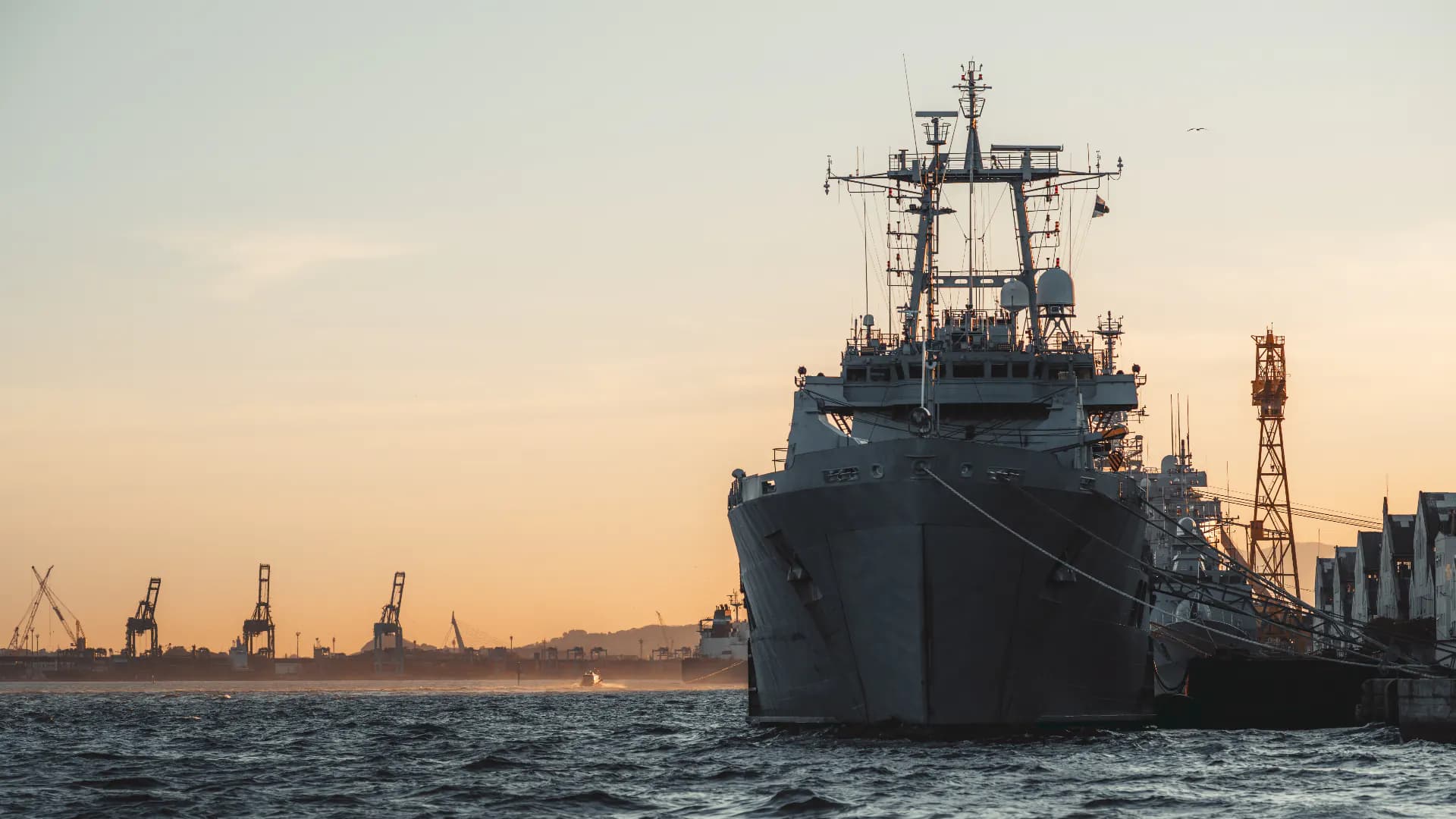
North Korea has commissioned the second of its new class of destroyers, the largest and most heavily armed warships in the history of the state. The ceremony took place at Wonsan Port on 6 September, with no Western journalists invited.
The 5,000-tonne displacement destroyer Kang Kon follows the Choe Hyon, commissioned in June. Analysts put the length of the class at 145 metres and, from photographic analysis, describe a weapons fit of five vertical launch systems capable of supporting anti-ship, anti-aircraft and land-attack cruise missiles, along with additional vertical missile launchers, a 127mm naval gun, a six-barrel 30mm close-in weapon system, torpedo launchers and decoy launchers. It is assessed as the most heavily armed and most advanced warship the country operates. Speculation is that Russia assisted with construction and that China may have helped with the weapons systems, at a point when naval shipbuilding capacity across the region is being expanded on both military and commercial accounts.
The ship was test platform for nuclear-capable cruise missiles in July. It is also the same hull that suffered a failed launch during a ceremony in 2025, when the launch mechanism did not release and the vessel toppled onto its side with reports of hull damage. The yard was ordered to right the ship within weeks and to carry out full repairs.
Kim Jong Un attended with a teenage daughter referred to as Je Ae, and used the occasion to set out further naval ambitions. "The time has come for us to exercise our sovereignty at sea and underwater," he said, describing an "eye-opening transformation in strengthening" the country's naval forces and a commitment to build an ocean fleet. He said the navy had until recently lacked warships befitting its mission.
He also signalled that a "significant advancement" would be ready to unveil in eight months, which analysts read as a reference to a nuclear-powered submarine. North Korea has separately indicated plans for guided-missile cruisers roughly twice the size of the Choe Hyon class.
The programme marks a shift in emphasis after years in which the country's military development centred on missile systems and its navy on coastal defence. Building and commissioning two ships of this size inside four months, from yards that had not previously produced hulls at this scale, is the practical measure of that change.