Korean Shipbuilders Take Different Routes Into The American Market
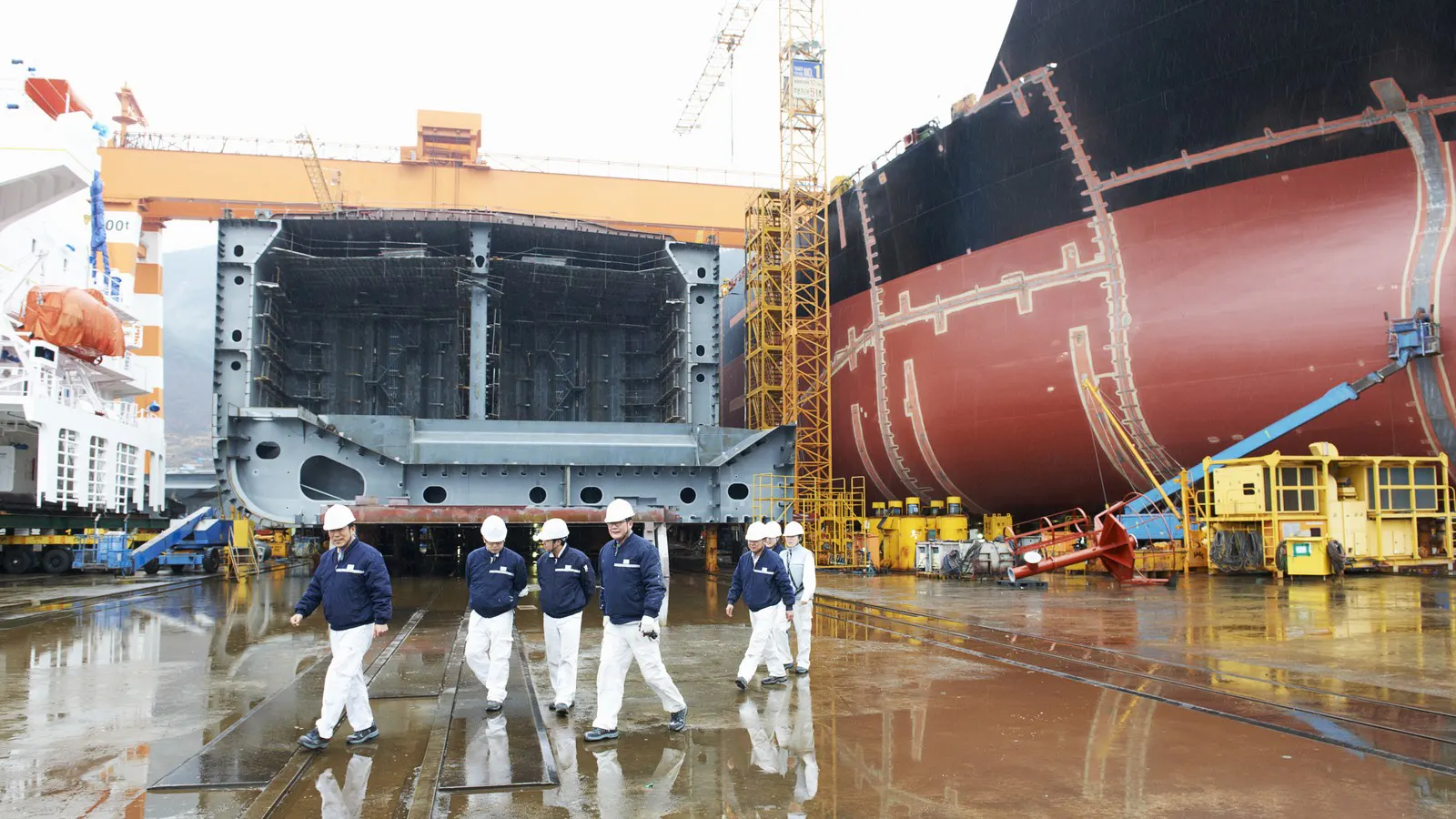
Two of South Korea's largest shipbuilders are pursuing sharply different strategies for entering the United States market, with one signing an agreement to supply modernisation expertise to an established American yard while the other has bought a shipyard outright and committed to a multi-billion-dollar expansion. The contrast illustrates two competing views of how a foreign builder can profit from American efforts to rebuild its shipbuilding capacity.
The first approach involves a memorandum of understanding with a yard on the Great Lakes, founded in 1890, covering modernisation of its facilities and processes. This is an export of intellectual property and method rather than capital. Korean yards have spent thirty years refining block construction, digital planning and production flow to a standard that American commercial yards have not matched, and that knowledge can be licensed without the risk of owning the asset or employing the workforce.
The second approach is ownership. The other builder acquired an American shipyard for one hundred million dollars and has announced expansion plans running to five billion, which places it directly inside the domestic industrial base and eligible for work reserved to American-built and American-owned tonnage. That eligibility is the prize. Legislation reserving domestic coastwise trade to American-built ships, and the naval work that follows political commitments to expand the fleet, are only accessible from inside the fence.
The risk profiles diverge as sharply as the capital committed. Licensing expertise generates modest returns but cannot lose much; if the American yard fails to modernise, the Korean party has been paid for advice. Buying a yard means inheriting an aging facility, a unionised workforce, a depleted local supply chain and the obligation to fund the losses through a rebuild measured in years. The five billion dollar figure is a statement about how long and how expensive that path is expected to be.
Both bets rest on the same assumption, which is that American commitment to rebuilding shipbuilding capacity will outlast a change of administration. Industrial policy of this kind requires sustained procurement over a decade or more to pay back, and the history of American shipbuilding revival programmes is not encouraging on that point. The licensing model survives a policy reversal comfortably. The ownership model does not, which is why the two companies have effectively taken opposite positions on the same question.