Japan's 2027 Budget Request Points to Submarine-Launched Hypersonic Missiles
The wording leaves open a vertically launched glide vehicle or a scramjet fired from a torpedo tube
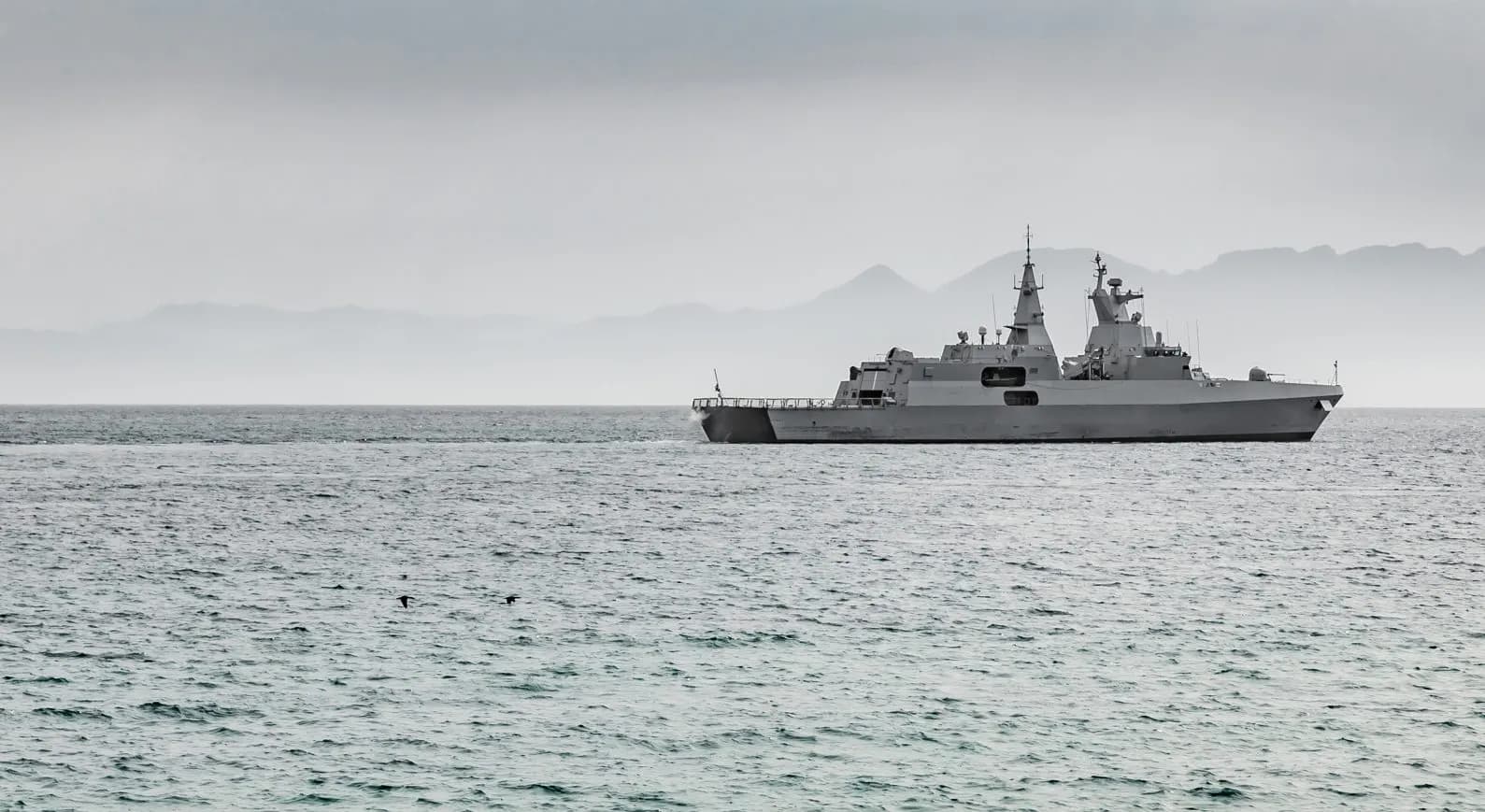
Japanese Prime Minister Sanae Takaichi has presented a preliminary fiscal year 2027 defence budget request to the Diet that refers to an intention to equip Japanese forces with an underwater-launched, high-survivability missile capable of being fired at an early stage and at long range.
The wording is deliberately ambiguous and admits two readings: a vertically launched hypersonic ballistic missile, or a scramjet-powered hypersonic cruise missile fired from a torpedo tube. What the two have in common is very high speed over long range, leaving a target little time to react or evade, and the ability to manoeuvre in flight to complicate tracking and interception.
Neither element exists in Japanese service today. The Maritime Self-Defence Force has neither the necessary submarines nor the hypersonic missiles, so the budget intent is likely to have a long gestation. Japan has previously described development work on both types: the Type 25 hyper-velocity gliding projectile, whose Block 2B version has a planned range of 1,620 nautical miles at Mach 5 and faster, and a less advanced scramjet-powered cruise missile project.
The current submarine force sets the constraint. The latest attack submarine class being deployed is the Taigei, equipped with six 533mm torpedo tubes and already able to launch subsonic cruise missiles such as the Harpoon UGM-84. Five Taigei class boats have been commissioned, the most recent launched in March 2026. The class was designed from the outset as an operational test bed, with each successive hull an upgraded variant, but incorporating vertical launch tubes into that profile is probably a stretch too far. Kawasaki Heavy Industries has been working on a new diesel-electric attack submarine design since December 2023, and Defence Minister Shinjiro Koizumi has openly discussed the case for nuclear-powered submarines, which would push any future vertical-launch design towards something conceptually similar to the AUKUS boats.
The driver is regional. Takaichi was elected with an unusual super-majority on a platform of strengthening Japan's defence posture against rising threats from China, Russia and North Korea. The submarine-launched element has particular relevance to North Korea's growing nuclear arsenal and to the likelihood that Pyongyang is working towards a submarine-launched ballistic missile capability.
Kim Jong Un has been photographed inspecting an 8,700-tonne submarine under construction, with analysts unclear whether it is nuclear-powered or carries vertical launch tubes in a dorsal fin large enough for the purpose. There is concern in Japan and South Korea that help with that capability has been the price paid by Russia for North Korean support in the war against Ukraine.
For shipbuilders the programme matters as much as the weapon. A new attack submarine class means a decade of design and construction work at a moment when Japan is putting public money into yard capacity, a programme set out in the first shipbuilding tranche.