Investigators Blame Pilot's Phone Call For Fatal Houston Ship Channel Collision
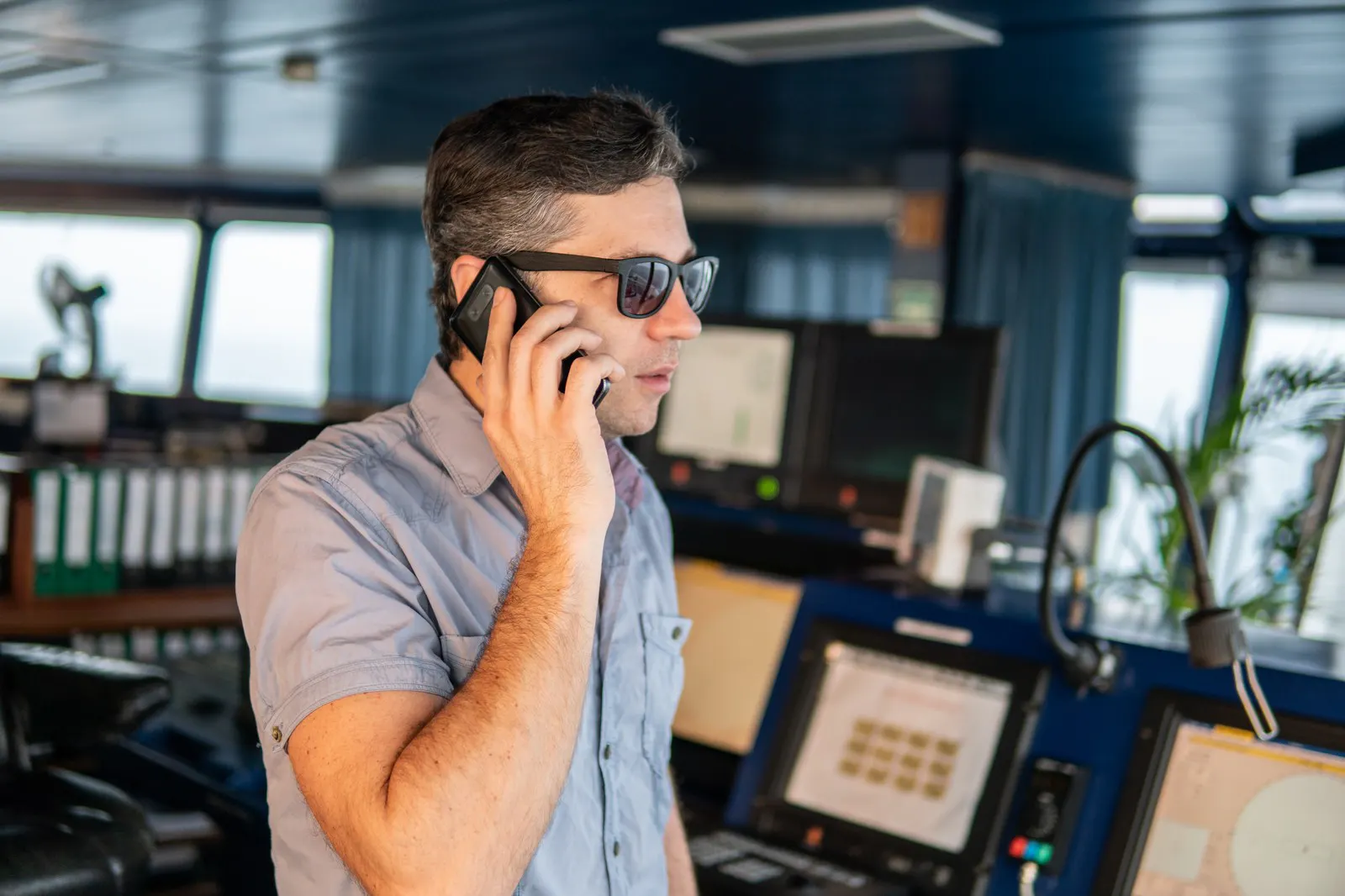
American accident investigators have concluded that a pilot's use of a personal mobile phone, combined with failures of lookout by several crew members, caused a collision in the Houston Ship Channel that killed a deckhand. The bulk carrier Yangze 7 struck the towing vessel Miss Peggy near Lynchburg, Texas, on 19 July 2024, capsizing and sinking the towboat with five people aboard.
The sequence is documented minute by minute. The pilot answered a call at 13:22 from another pilot aboard an outbound tanker. The call lasted thirty-nine minutes and ended two minutes and sixteen seconds before impact, and throughout it the pilot continued to give rudder and heading orders. Vessel traffic services had advised of two downbound vessels, and a tug following one of them broadcast a radio warning that the bulk carrier was closing on the towboat. A bosun aboard the bulk carrier reported a vessel twenty to thirty metres ahead. The pilot did not see her.
At 14:03 the bulbous bow struck the towboat's stern, rolling her to starboard and capsizing her. Around thirty seconds later the tug's crew told the bulk carrier it had overturned a towboat. Four of the five aboard were recovered, one with serious injuries and one with minor injuries; the fifth, a deckhand, was found dead inside the wreckage after the vessel was salvaged some days later. Two crew were in the galley when the boat rolled, one of whom lost consciousness but reached the surface through an open door. Salvage and pollution cleanup were estimated at 3.7 million dollars, and the bulk carrier was undamaged.
The investigators issued two recommendations. They asked the coast guard to prohibit non-operational use of personal electronic devices by anyone directing vessel movements on waters under its authority, and asked the pilots' professional association to develop guidance to the same effect. Neither recommendation is binding.
The finding is uncomfortable because it concerns a professional group whose competence is rarely questioned. Pilotage exists precisely because local knowledge and undivided attention are worth paying for in confined waters, and a pilot conducting a thirty-nine minute conversation while conning a bulk carrier through a busy channel is not exercising either. The wider point is that mobile phones have become normalised on bridges in a way that would have been unthinkable for any other distraction, and that no rule currently prohibits it for the one person aboard whose attention the whole arrangement is built around.
Ships in this story