Hapag-Lloyd Secures Long-Term African Terminal Capacity in DP World Agreement
Dakar, Luanda and Dar es Salaam are covered, with infrastructure support at Banana and Maputo
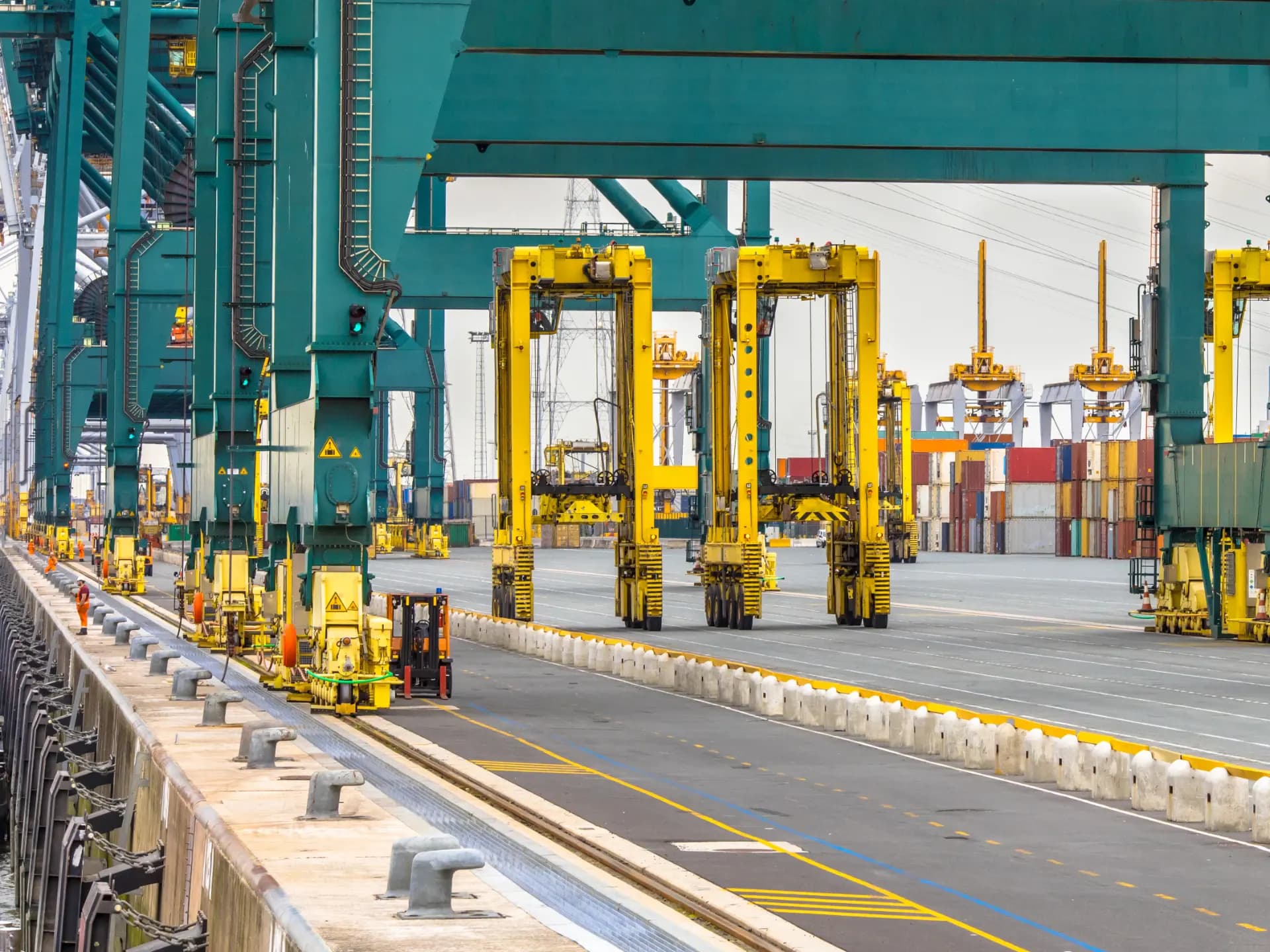
Hapag-Lloyd has signed an agreement with DP World to expand a long-standing cooperation in Africa, securing long-term terminal capacity at three ports and backing infrastructure development at two more. The capacity covers Dakar in Senegal, Luanda in Angola and Dar es Salaam in Tanzania, while the two companies will support port infrastructure development at Banana in the Democratic Republic of the Congo and Maputo in Mozambique.
The German carrier expects its African transport volumes to exceed 1m TEU in 2026. "Africa is one of Hapag-Lloyd's most important growth markets, and we see significant long-term potential across the continent," said chief executive Rolf Habben Jansen. "To support this growth, we need reliable infrastructure, sufficient terminal capacity and a network that can scale with our customers."
DP World brings an established footprint to each of the five. It operates the Dakar container terminal and is developing the deep-water port at Ndayane; in Dar es Salaam it is modernising Terminal 1 under a 30-year concession; in Luanda it runs a multipurpose terminal under a 20-year concession; in Maputo it is expanding the container terminal to more than double capacity, to 530,000 TEU; and in the Democratic Republic of the Congo it is developing Banana Port. Its African network also spans Egypt, Rwanda and Somaliland.
For Hapag-Lloyd the agreement forms part of a wider terminal strategy. A direct interest in terminals gives a carrier influence over berth availability, equipment, vessel turnaround and operational process, all of which feed schedule reliability. The Gemini Cooperation with Maersk has been running at around 90% schedule reliability, which the partners attribute in part to tighter network coordination and greater control over terminal operations.
The carrier said it will continue to work with a diversified portfolio of terminal operators while also expanding its own portfolio through Hanseatic Global Terminals. That business now holds interests in 26 marine terminals across 13 countries, spanning Europe, the Mediterranean, the Americas, India and Africa, with a target of more than 30 terminals by 2030.
The move fits a pattern among the large lines of investing in the infrastructure behind their African networks rather than simply calling at it. MSC has built a broad presence through Terminal Investment Limited and Africa Global Logistics, including Lomé Container Terminal in Togo and facilities in Abidjan and San Pedro in Côte d'Ivoire, and in March 2026 signed a 45-year concession to develop a dedicated container terminal at Snake Island Port in Lagos as part of more than $1bn of group investment in Nigeria. APM Terminals has entered exclusive negotiations on a new deepwater port at Badagry, also in Nigeria.
This story is part of the Maritime Briefing of 16 September 2026.