Hapag-Lloyd Adds Central Europe Congestion Surcharge on Low Rhine Water
€50 per container or per teu on inland moves routed through Antwerp or Rotterdam
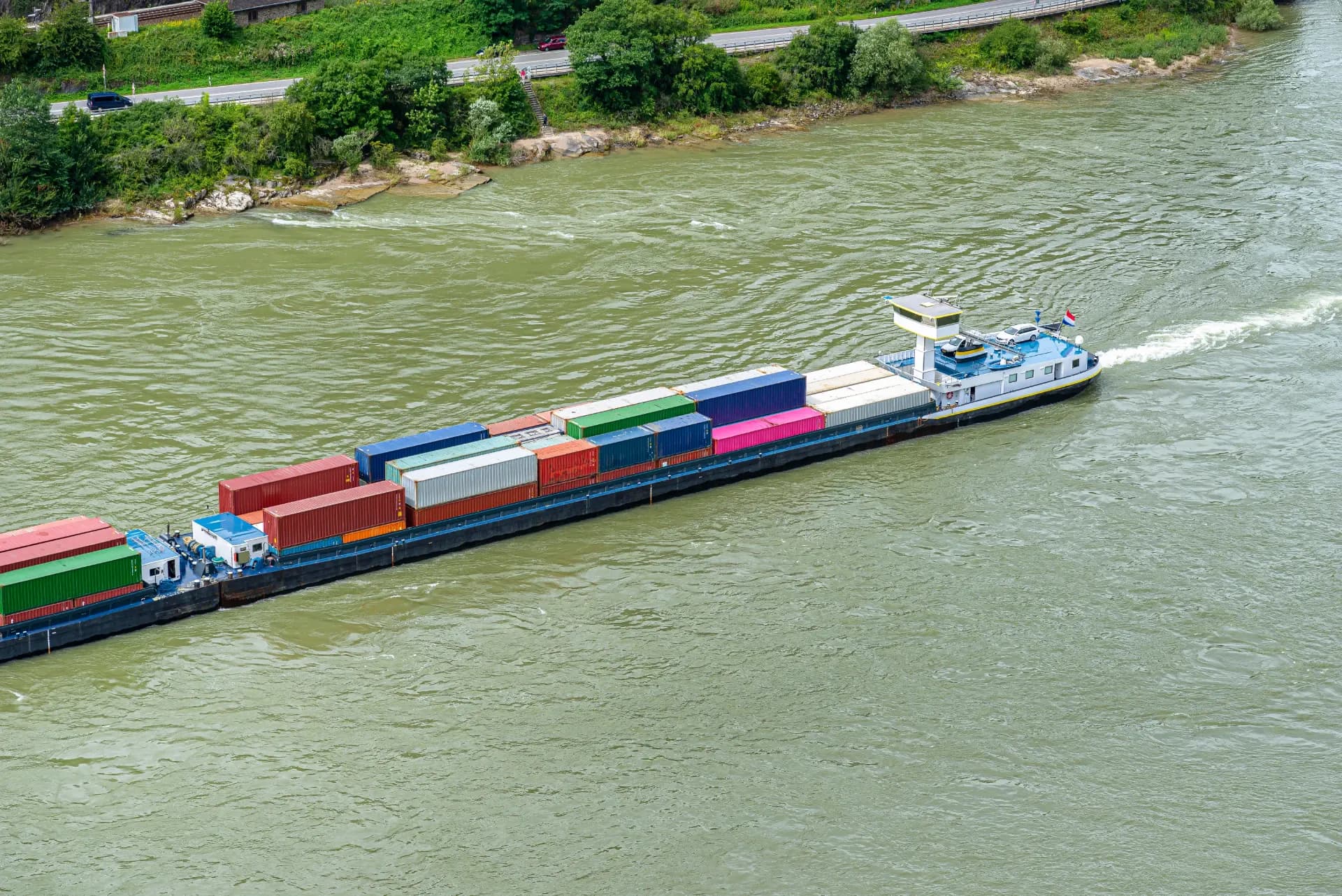
Hapag-Lloyd will introduce a congestion surcharge for inland shipments routed through Antwerp or Rotterdam, attributing the measure to low water levels on the Rhine.
Reduced barge capacity has increased demand for alternative truck and rail transport, and overall inland transport capacity has become limited as a result. The surcharge is the carrier's response to the additional cost of moving boxes to and from Central Europe when the river cannot carry a full load.
The charge applies to all inland transport modes. It covers shipments to or from specified Central European countries when routed through the two North Sea gateways, applied under the carrier's PCS or OCS codes.
The levels differ by market. Shipments to or from Belgium, the Netherlands and Luxembourg attract €50 per container. Shipments to or from Germany, France, Austria, the Czech Republic, Slovakia, Hungary and Switzerland attract €50 per teu, which for a 40-foot box doubles the charge relative to the Benelux rate.
The effective dates are staggered by regulatory regime. The surcharge applies to non-FMC cargo from 1 September 2026, while for FMC-relevant shipments it takes effect on 20 September, reflecting the notice period required for US-regulated trades.
The underlying constraint is well documented. Rhine levels have spent weeks well below those needed for fully loaded freight operations, cutting vessel carrying capacity to a fraction of normal on some sections and pushing the same tonnage onto substantially more vessels. Steel and chemicals producers, the energy sector and construction and bulk cargo businesses have been among those most exposed, and cargo has been shifted to smaller vessels, additional rail services and trucks.
For container lines with deep-sea services calling at Antwerp and Rotterdam, that inland disruption reaches back into the ocean product. A box discharged on schedule at Rotterdam that then waits for barge capacity carries a door-to-door transit time no better than a delayed vessel would have produced, and the surcharge is the mechanism by which that cost is passed on rather than absorbed.