First Wind-Assisted LNG Carrier Enters Sea Trials With Twin 49m Sails
Hanwha Ocean newbuilding for MOL heads to a long-term Chevron charter after delivery
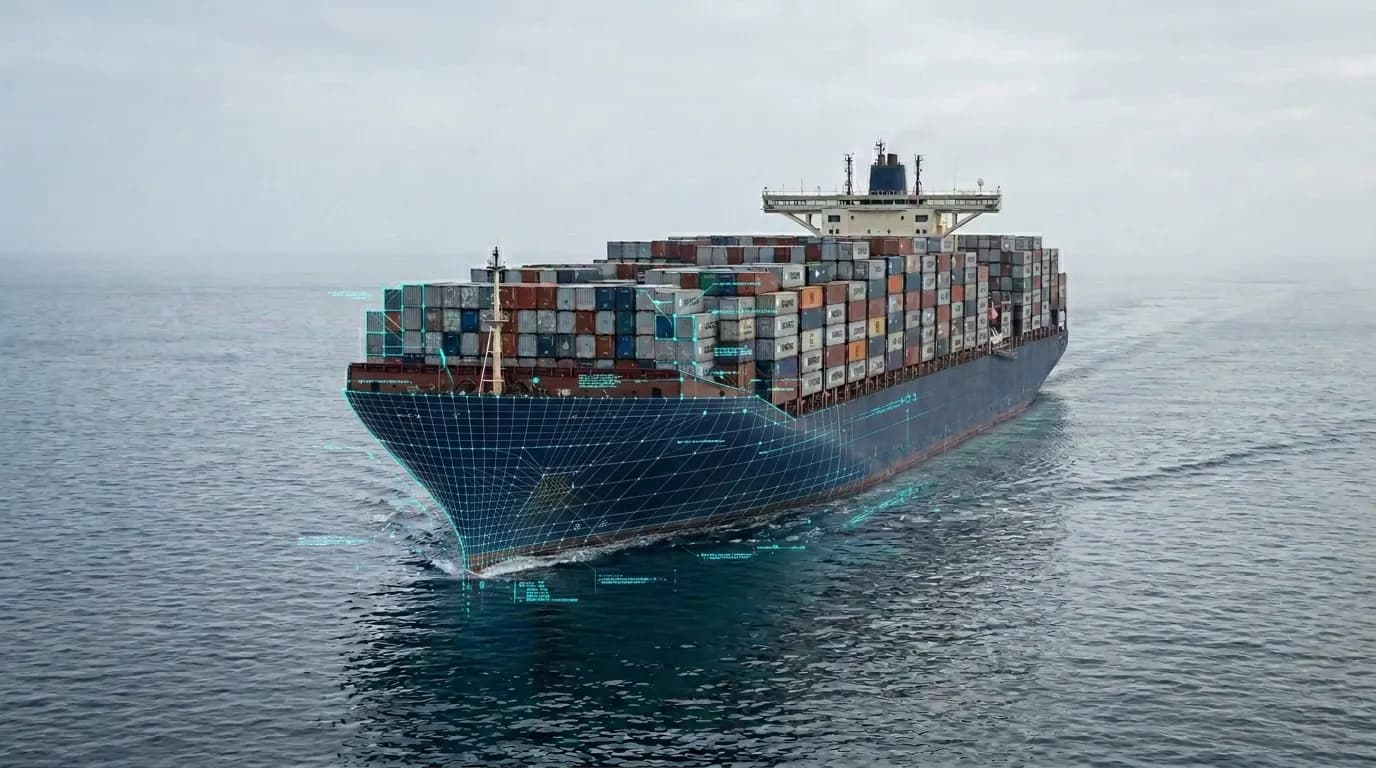
A 174,000 cu m LNG carrier equipped with two telescopic hard sails has entered sea trials, marking the first commercial application of wind-assisted propulsion on a gas carrier. Built by Hanwha Ocean for Mitsui O.S.K. Lines, the vessel will be delivered in the second half of MOL's 2026 fiscal year and then operated under a long-term charter with Chevron.
The Wind Challenger system, developed by MOL with Oshima Shipbuilding, uses wind to generate additional propulsion, reducing the load on the main engine and lowering fuel consumption and emissions. The two units are installed forward of the cargo tanks. Each adopts a three-stage telescopic structure, reaching approximately 49 m in height and around 15 m in width when fully deployed, with the sail structure made primarily from fibre-reinforced plastic. The sails extend, retract and rotate under automatic control depending on wind conditions.
The vessel is being built at Hanwha Ocean's Geoje yard, with a length of around 286 m and a breadth of approximately 46 m, the mainstream size for a modern large gas carrier. After delivery it will be owned by MOL Encean Pte Ltd and operated under charter by Chevron Asia Pacific Shipping.
The technology arrives on gas carriers from the bulk trades. MOL and Oshima introduced Wind Challenger in 2022 on the 100,000 dwt bulker Shofu Maru, which subsequently completed around 18 months of commercial operation including seven round voyages from Japan. Operational data showed a maximum daily fuel reduction of about 17% in favourable conditions, with average voyage savings of roughly 5% to 8%, on a methodology verified by Lloyd's Register. MOL has not yet disclosed fuel-saving results from the LNG carrier's trials.
Installing large sails on a gas carrier is not a straightforward transplant. Aerodynamic loads have to be transferred safely into the ship's structure, and the units sit close to the cargo containment system. MOL, Hanwha Ocean and ClassNK conducted safety assessments covering sail arrangement, navigation visibility, emergency operations and structural integrity, while GTT evaluated the additional loads on the containment system and confirmed it could maintain structural safety. ClassNK granted approval in principle in August 2024. To limit the effect of the sails on bridge visibility, the ship adopts a fully enclosed bridge design with additional lookout arrangements at the bow.
MOL is already working on 174,000 cu m designs with four Wind Challenger units, developed with HD Hyundai Heavy Industries and Samsung Heavy Industries, with the bridge moved forward to create space. Preliminary calculations indicate a four-sail vessel on a North America to Europe route could achieve up to around 30% fuel savings on individual voyages, with annual averages of approximately 15% to 20%. MOL's target is 25 Wind Challenger vessels by 2030 and 80 by 2035.
Ships in this story