CMA CGM Adds Inland Emergency Fee as Low Rhine Levels Cut Barge Capacity
A surcharge of 50 euros per container applies to Benelux moves and 75 euros to Germany, Switzerland and France.
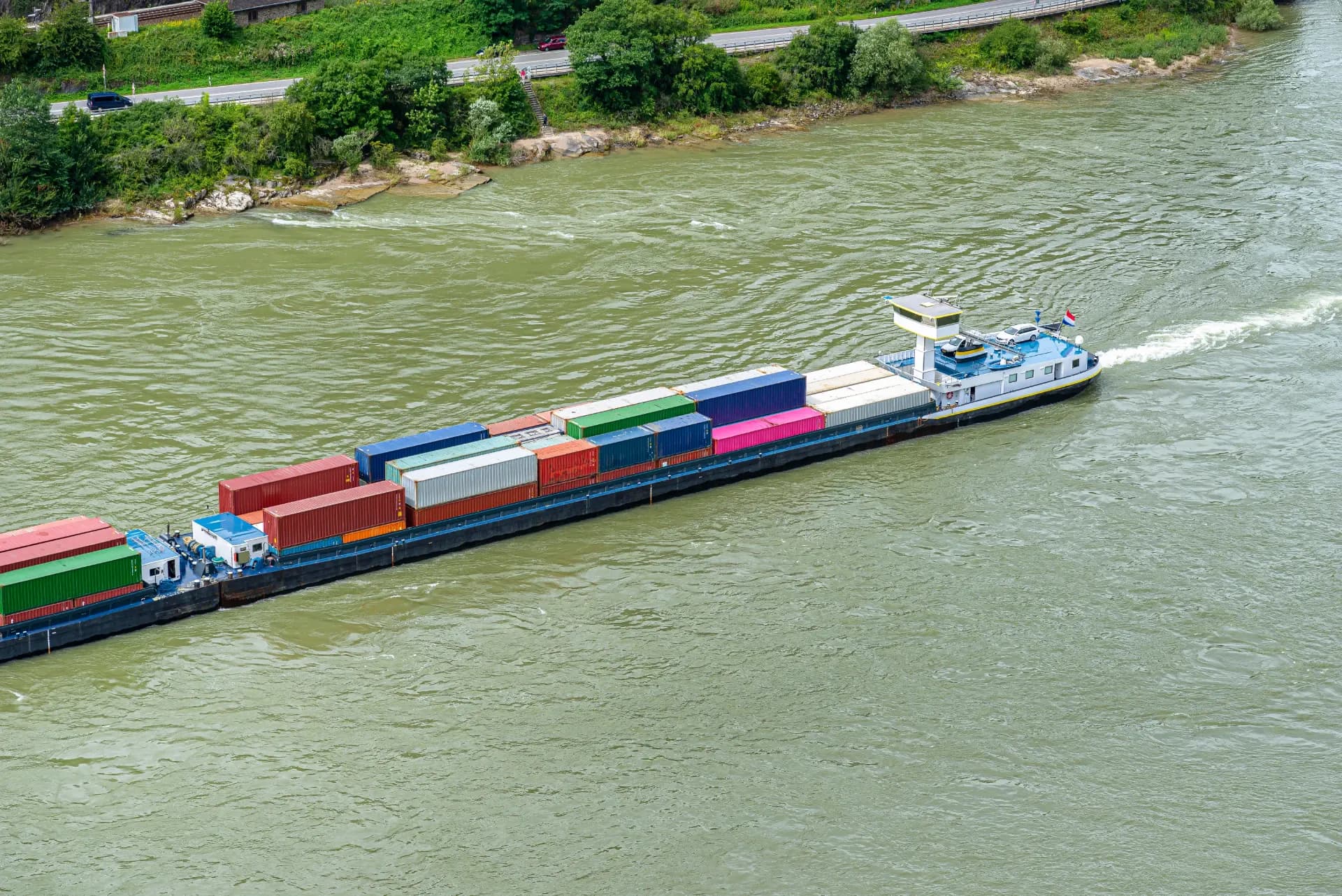
CMA CGM will apply an inland emergency fee on European hinterland moves, as low water on the Rhine and other rivers forces barges to sail part-loaded and pushes containers onto road and rail.
The carrier said the low waterline has cut transport capacity, created congestion, extended terminal dwell times and raised operating costs. The fee applies to all transport modes for inland shipments routed to or from locations served through Antwerp, Zeebrugge and Rotterdam.
The rates are tiered by distance from the coast. Shipments to or from locations in Belgium and the Netherlands carry 50 euros ($58.40) per container. Shipments to or from Germany, Switzerland and France carry 75 euros. The split reflects where the water problem actually bites: the upper Rhine loses usable draught first and recovers last, so a box bound for a Swiss or south German inland terminal absorbs more of the disruption than one dropped in Brabant.
The mechanism behind the cost is simple arithmetic and hard to work around. A barge that cannot load to its marks carries fewer boxes per trip, so the same volume needs more trips, more crews and more slots at inland terminals that were already scheduled around full loads. Containers that cannot wait move by truck or rail at several times the unit cost. None of that is optional for a shipper with a fixed delivery date, which is why the surcharge lands rather than the volume moving elsewhere.
The Rhine's descent toward historic lows has been visible for weeks, and the effects have already reached the passenger side of the river trade. What changes with a formal emergency fee is that the cost stops being absorbed inside the inland operator's margin and appears on the shipper's invoice as a named line.
Seaside operations at the three ports are unaffected. The constraint is entirely on the landside leg, which is also the part of the chain with the least spare capacity to substitute into.