China installs world's largest offshore wind converter station
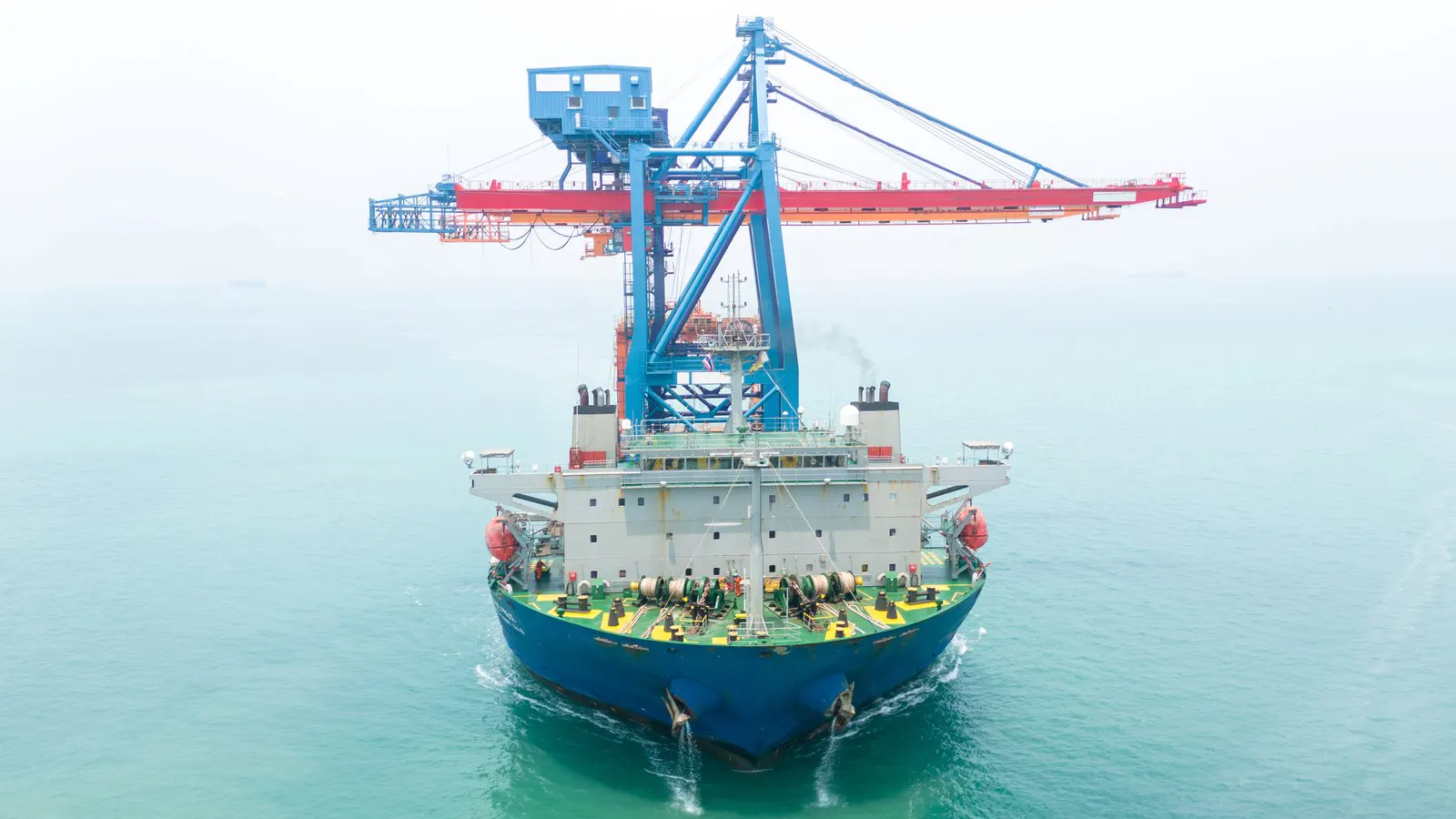
China has installed what it describes as the world's largest offshore converter station, a structure intended to carry offshore wind power to the mainland and supply around 6 billion kWh of clean electricity a year once it enters commercial operation. The facility, named the Heart of Offshore Wind, sits about 100 km off the coast of Yangjiang in Guangdong province. It is described as the world's first flexible direct current offshore converter station operating at plus or minus 500 kV with a capacity of 2,000 MW.
The scale of the structure explains the method used to install it. The station consists of a seven-storey steel superstructure and a jacket foundation fixed to the seabed. The upper platform measures 85.5 m long, 82.5 m wide and 44 m high and weighs about 25,000 tonnes, which is beyond the lifting capacity of any available domestic heavy-lift vessel. It rests on a jacket foundation 82 m long, 57 m wide and 69 m high, weighing roughly 17,000 tonnes and secured to the seabed by eight piles designed to withstand strong winds, large waves, currents, corrosive seawater, dense sea fog and frequent typhoons.
With a conventional lift ruled out, engineers used a float-over installation. The semi-submersible heavy-lift vessel Xing Tai Kou carried the platform over the jacket foundation and set it down using tidal movement and the vessel's dynamic positioning system. The clearance between platform and foundation during the operation was about 150 mm on each side. Rubber fenders and specialised coupling devices absorbed the impacts and aligned the structure before it was secured.
A tolerance of 150 mm on a 25,000-tonne load is what makes the operation notable. Float-over installation removes the need for a crane large enough to lift the module, but it substitutes a different problem: the platform must be manoeuvred into position while both it and the vessel beneath it are moving with the sea. Project teams monitored forecasts from several weather services before selecting a window with suitable wind and sea conditions, and the operation itself took around seven hours from a start shortly after 7 a.m.
The project has now entered its final stage, with subsea cable installation and combined offshore and onshore testing under way before commercial operation begins. Once commissioned it is expected to transmit power from offshore wind farms to the Guangdong-Hong Kong-Macao Greater Bay Area and to reduce carbon dioxide emissions by nearly 5 million tonnes a year. The combination of the highest voltage and the largest transmission capacity yet achieved in an offshore wind flexible DC project makes it a reference point for how far from shore such installations can now be placed.