Bulker Owner Orders Four Multi-Fuel Ships On Twenty-Five Year Charters
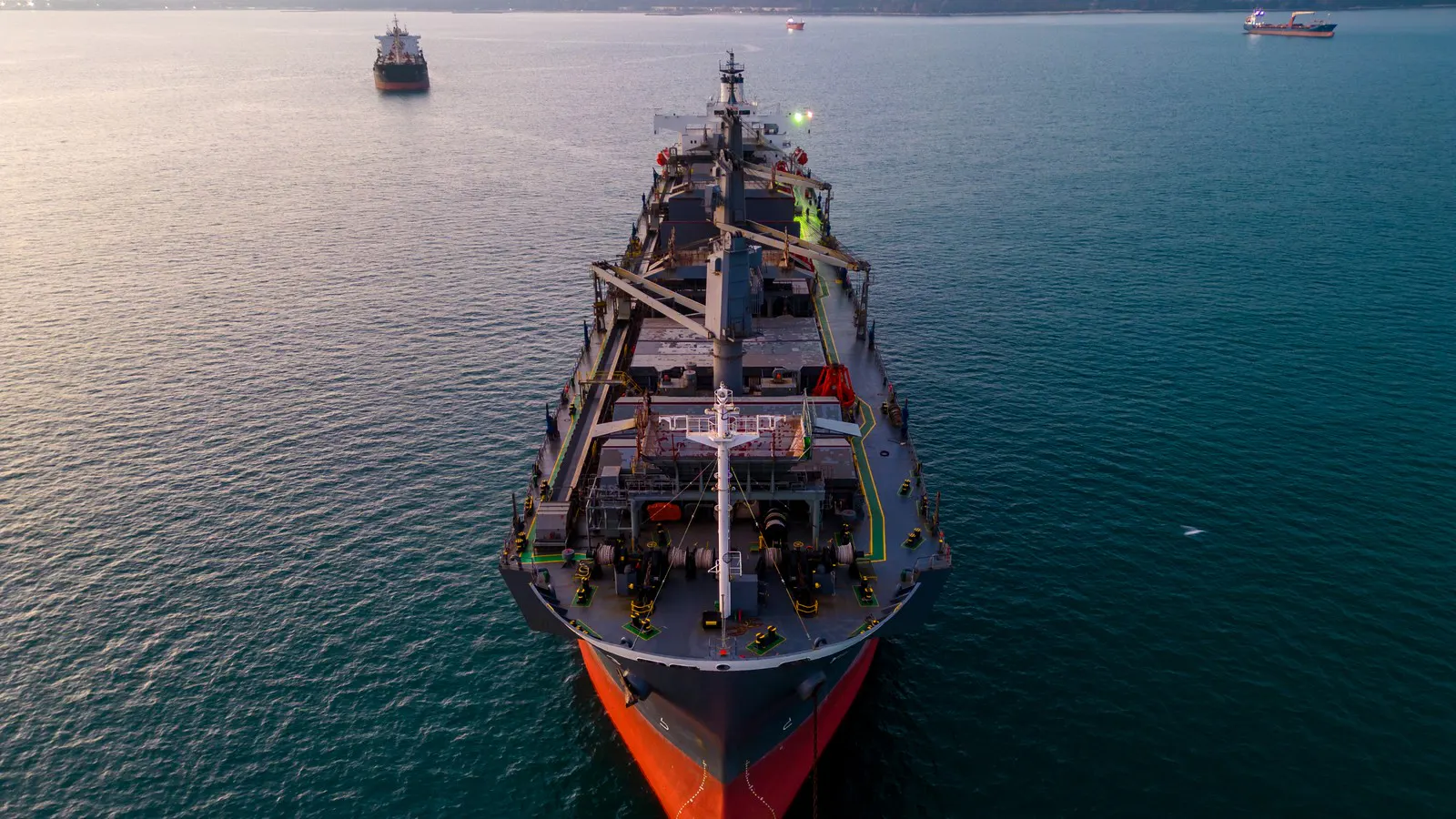
A Korean owner has ordered four bulk carriers capable of running on ethanol and methanol at a Chinese state yard, fitted with multi-fuel engines and committed to twenty-five year charters with a Brazilian mining group, with deliveries beginning in 2031. The combination of alternative fuel capability and an exceptionally long charter is what distinguishes the order.
Twenty-five years is close to the entire economic life of a bulk carrier and is far beyond the norm even for long-term business. A charter of that length effectively converts the shipowner into a financier: the vessel is built to the charterer's specification, employed by the charterer for its whole career, and the owner's return is a spread over the cost of capital rather than a bet on the freight market.
That structure is what makes the fuel choice possible. Ethanol and methanol capability adds cost to the engine and to the fuel system, and the alternative fuels themselves are more expensive than conventional bunkers with far thinner supply infrastructure. No owner trading in the spot market would accept that penalty voluntarily. A charterer with emissions targets and a twenty-five year horizon can, because it captures the regulatory benefit and controls the fuel supply.
The mining group behind the charter has particular reasons to care. Its ore moves from Brazil to Asia on some of the longest routes in the dry bulk trades, which makes shipping a substantial share of the emissions attributed to its product. Steelmakers buying that ore face their own reporting obligations, and a supplier able to demonstrate lower transport emissions has an advantage that will grow as those obligations tighten.
Ethanol as a marine fuel is at an earlier stage than methanol and considerably earlier than gas, and its supply chain is largely agricultural rather than industrial. Brazil, however, is among the world's largest ethanol producers, which makes the choice less speculative here than it would be elsewhere. Whether the arrangement becomes a template or remains a special case depends on whether other charterers with the same structural position reach the same conclusion. The requirements are demanding: a cargo owner large enough to charter directly, a route long enough for emissions to matter, a domestic fuel supply and a willingness to commit for a quarter of a century. Few combinations of those conditions exist, which suggests the model will spread slowly if at all.