Bulk Carriers Are Spending Almost 20% Longer at Sea Than They Did in 2020
Average laden voyages ran to 22.42 days in June while laden speeds fell to 10.67 knots
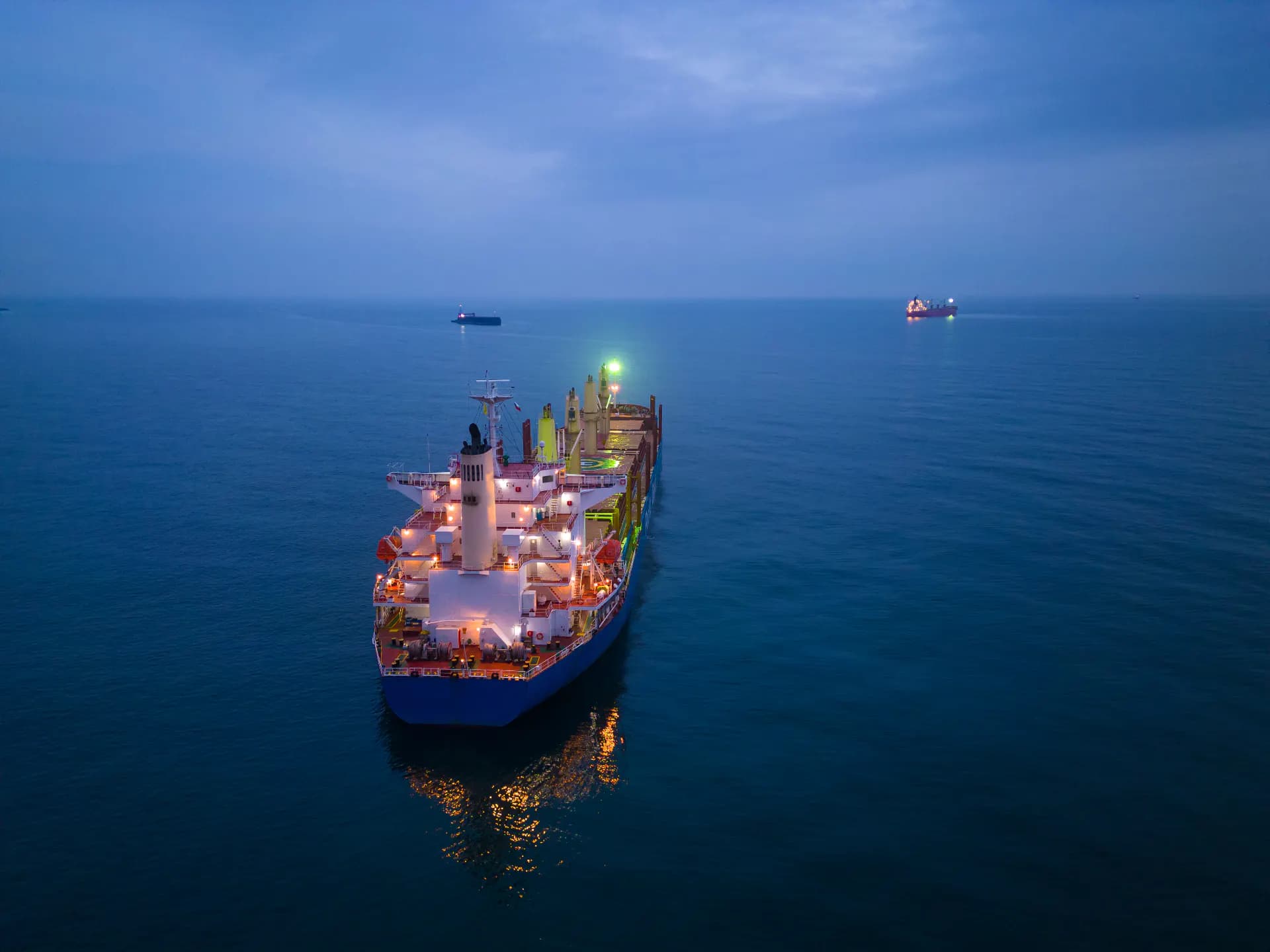
The dry bulk fleet is growing, but each ship in it is doing less transport work than it used to. Analysis by Greece's Ursa Shipbrokers, using AXSMarine tracking data for bulk carriers above 20,000 dwt, shows the average laden voyage lasted 22.42 days in June. That is 5.3% longer than a year earlier and 19.1% longer than in January 2020. Every monthly reading in the first half of 2026 was longer than the corresponding month in each of the previous six years.
Ships are also moving more slowly while they do it. Average laden speed stood at 10.67 knots in June, down 2.2% on January 2020 and 9.4% below the peak reached in August 2021. Ballast speeds averaged 11.37 knots, 6.7% below their October 2021 peak. Longer voyages at lower speeds compound: the same cargo occupies a ship for more days, and the fleet delivers fewer cargoes a year at any given size.
The lengthening of trading distances accelerated from 2023, when drought restrictions at the Panama Canal and attacks on merchant shipping in the Red Sea pushed vessels onto longer routes. What began as a detour has since been reinforced by wars, sanctions and shifts in where commodities are sourced, and much of the dry bulk fleet has settled into routings that were exceptions three years ago. The Suez Canal has only recently begun to attract liner traffic back, and the bulk trades have been slower to follow.
The effect is a quiet withdrawal of capacity that does not appear in fleet statistics. Deadweight tonnage on the water keeps rising, while effective supply, measured in cargoes moved rather than tonnes floated, does not keep pace. That gap is arriving at the same time as the strongest dry bulk freight market in years, with capesizes moving above $55,000 a day this month.
For owners, the arithmetic is favourable while it lasts, because the inefficiency is on the demand side of the ledger rather than the cost side. For charterers it means planning around voyage times that have drifted by roughly three and a half days over six years on an average laden leg, and around a fleet that is no longer as fast as its nominal capacity suggests.
This story is part of the Maritime Briefing of 16 September 2026.