Bangkok Maersk Makes First Suez Transit With 190,000-Tonne Cargo
The 17,200-TEU boxship led a northern convoy from Italy to Singapore on its debut passage through the canal.
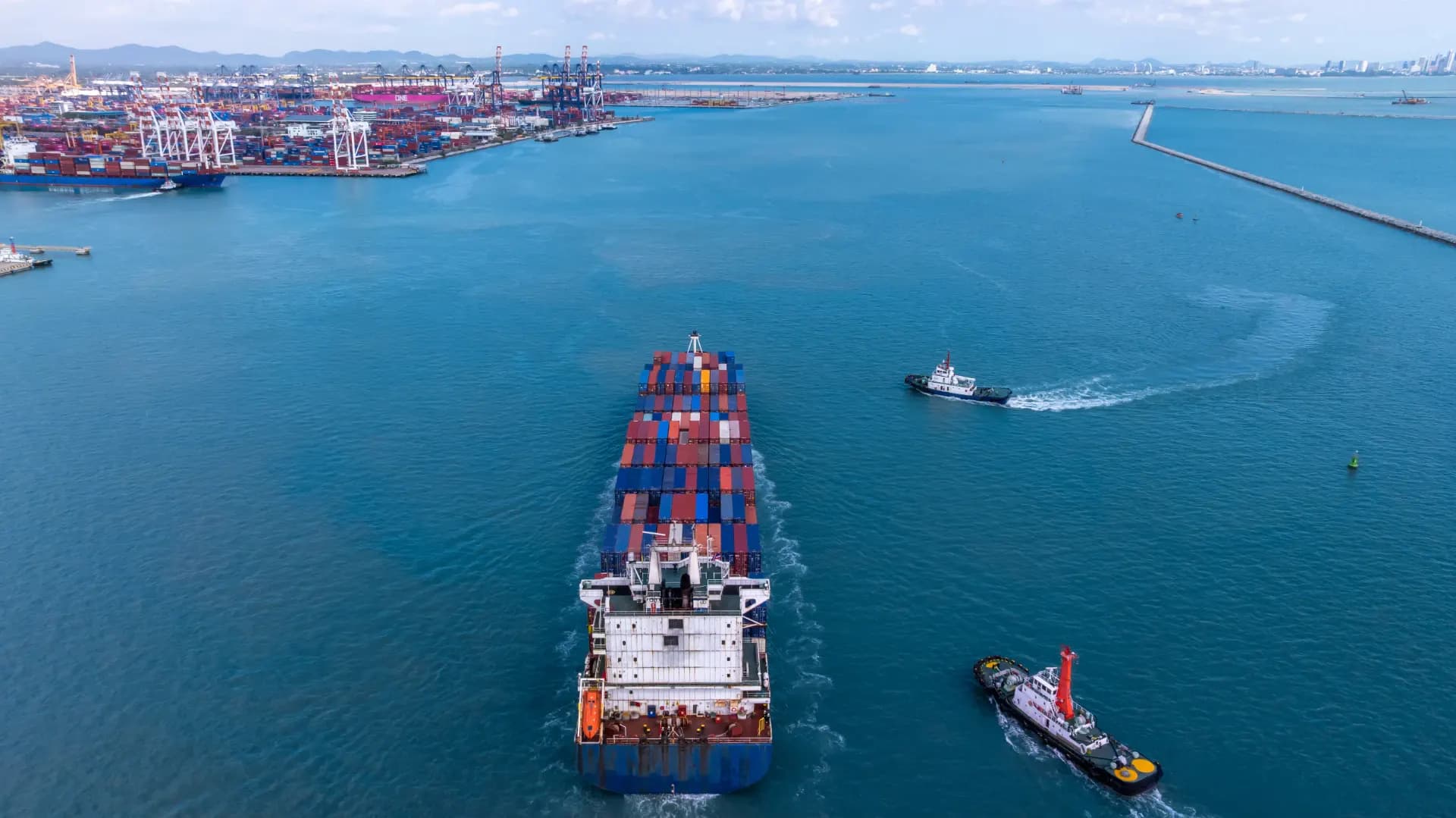
The container ship Bangkok Maersk made its first transit of the Suez Canal on 22 August, sailing north to south from Italy toward Singapore as part of a convoy the canal authority said carried 57 vessels and 2.8 million net tonnes that day.
At 350 metres long with a 56-metre beam, the ship carries up to 17,200 TEU and is fitted with a dual-fuel engine capable of running on green methanol. It sails as part of Maersk's AE7 service, which links major Asian ports directly with northern Europe and the Mediterranean.
Bangkok Maersk was not the only Maersk-affiliated ship in the convoy. The canal authority said Mathilde Maersk led the day's traffic at 200,000 tonnes, with Bangkok Maersk close behind at 190,000 tonnes, putting two AE7 vessels through the canal on the same day.
Suez Canal Authority chairman Osama Rabiee said the transit reflects a broader recovery in Europe-Asia services routed through the canal, and that daily traffic figures now show a marked increase in Maersk-linked container tonnage specifically. Shipmaster Pata Radu, aboard one of the vessels, put a number on the commercial case for the canal route over sailing around Africa: roughly 14 days saved, with the corresponding fuel and schedule benefits that implies.
Radu credited the canal authority's guides for smooth handling of the transit and pointed to the completed southern sector development project as a factor in the improved margin of navigational safety. The New Suez Canal project, expanding capacity along the waterway, has been part of Cairo's pitch to shipping lines weighing the canal against the longer Cape of Good Hope route.
The presence of two large Maersk boxships in a single convoy is a small but concrete data point in a return that has been building gradually since the Red Sea security situation began easing. Each transit of this size, at nearly 200,000 tonnes of ship and cargo, is also revenue the canal authority has been working to recover after two years in which many operators diverted south around Africa instead.
Ships in this story