BAE Lays Keel for Australia's First Hunter-Class Frigate at Osborne
Construction under way on 20 of the lead ship's 22 structural blocks, delivery in the early 2030s
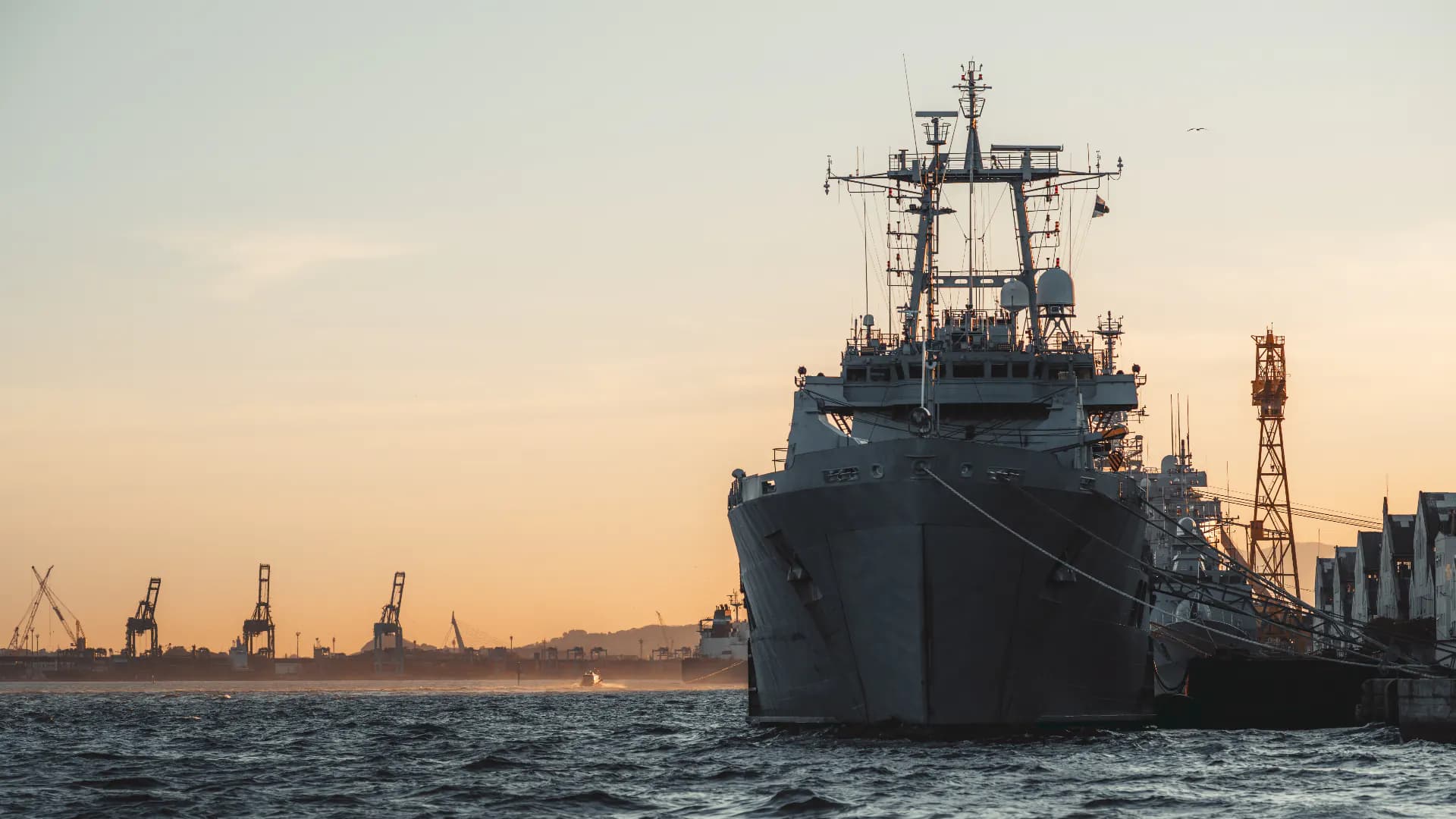
BAE Systems Maritime Australia has laid the keel for the Royal Australian Navy's first Hunter-class frigate at the Osborne Naval Shipyard in South Australia, marking a milestone in the modernisation of the service's surface fleet.
Derived from the British Type 26 Global Combat Ship design, the lead vessel is set to enter service in the early 2030s and will form the backbone of Australia's next-generation anti-submarine warfare capability, integrating Australian-made CEAFAR radar technology and US combat system elements.
The ceremony followed naval tradition, with a commemorative coin placed beneath the ship's keel, and the hull will be classed and certified in line with the practice of every classification society working on the programme. Minister for Defence Industry Pat Conroy addressed BAE Systems Australia workers and defence representatives at the event.
Progress on the lead vessel is further advanced than the keel-laying alone suggests. Construction is already under way on 20 of the first ship's 22 structural blocks, and delivery to the Royal Australian Navy remains on schedule for the early 2030s.
The Hunter-class programme is a cornerstone of the continuous naval shipbuilding strategy, aimed at building a larger and more capable surface force. The frigates are optimised for anti-submarine warfare, a capability treated as critical for safeguarding Australia's maritime approaches, and are designed to operate in high-threat multi-domain environments alongside allied and regional navies.
Industrially the programme is a substantial commitment for South Australia. Shipbuilding operations at Osborne currently support over 2,500 direct jobs, including nearly 600 skilled tradespeople, with a further 5,000 jobs across the national supply chain. Deputy Prime Minister and Minister for Defence Richard Marles said the milestone represented tangible progress in bolstering national defence capabilities and enhancing maritime security, while Conroy pointed to the programme as evidence of sovereign capacity to manage complex defence infrastructure projects and to sustain a pipeline of skilled manufacturing careers.
The sensor fit is built around the Thales CAPTAS-4 variable depth sonar, which completed factory acceptance testing late last year and combines active and passive low-frequency arrays for long-range undersea detection. That operates alongside the sovereign active phased-array CEAFAR radar developed by CEA Technologies and the US Navy's Aegis Combat System through an Australian-specific interface, giving a multi-mission combatant capable of anti-submarine warfare, air defence and fleet escort duties.