Asian Port Congestion Pushes Container Lines Back Towards The Red Sea
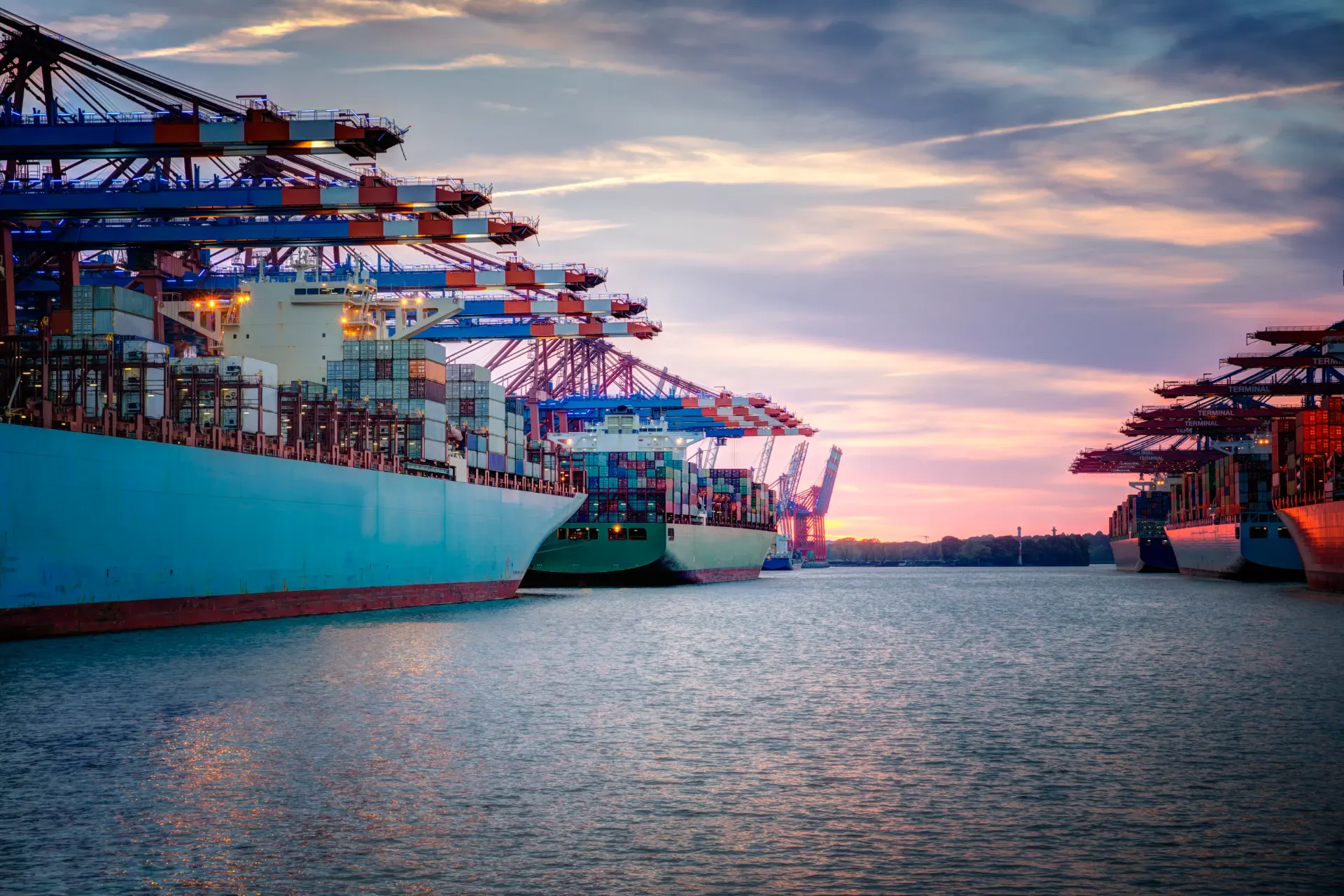
Delayed container capacity in Asia has reached about 2.4 million boxes following a typhoon that disrupted Chinese ports in the second week of August, and the resulting pressure is pushing container lines back towards a routing many had abandoned. Two of the largest carriers have returned three service loops to the Bab el Mandeb strait, with a third major operator expected to follow.
The economics behind the reversal are straightforward. Routing around southern Africa adds roughly ten to fourteen days to an Asia-Europe voyage, which absorbs ships, burns bunkers and ties up capacity that is suddenly needed elsewhere. When a typhoon removes a week of loading from the Chinese coast and leaves more than two million boxes waiting, the shortest route becomes valuable enough that the risk calculation shifts, even though nothing about the security situation itself has improved.
Rates tell the same story. Spot pricing to North Europe has been running between about 4,300 and 4,900 dollars per forty-foot container, with Mediterranean destinations near 5,800 dollars. Those levels reward operators who can offer the shorter transit, and they punish those still committed to the long way round. A carrier that keeps every string on the Cape route while competitors shave two weeks off the schedule loses on both cost and service.
Separately, two carriers operating a joint network have moved another loop back to the Suez routing, effective immediately from specified voyage numbers, following an earlier loop that returned by the same reasoning. Their published saving is up to seven days westbound and up to fourteen eastbound, which is a substantial reduction in the working capital tied up in cargo at sea as well as in the tonnage required to maintain a weekly service.
The unresolved question is durability. Returning to the Red Sea is a commercial decision made against a security situation that no carrier controls, and reversing it again is expensive and disruptive to customers who have planned around published transit times. Lines that move loops back and forth in response to freight rates rather than to a change in the threat risk teaching shippers that their schedules are provisional, which is corrosive to the reliability that liner shipping sells.