VLCC Freight Adds $26 a Barrel and Starts to Shrink US Gulf-Asia Crude
TD3C reached $1.2125m a day on 17 September, and Americas-Asia flows have already turned down
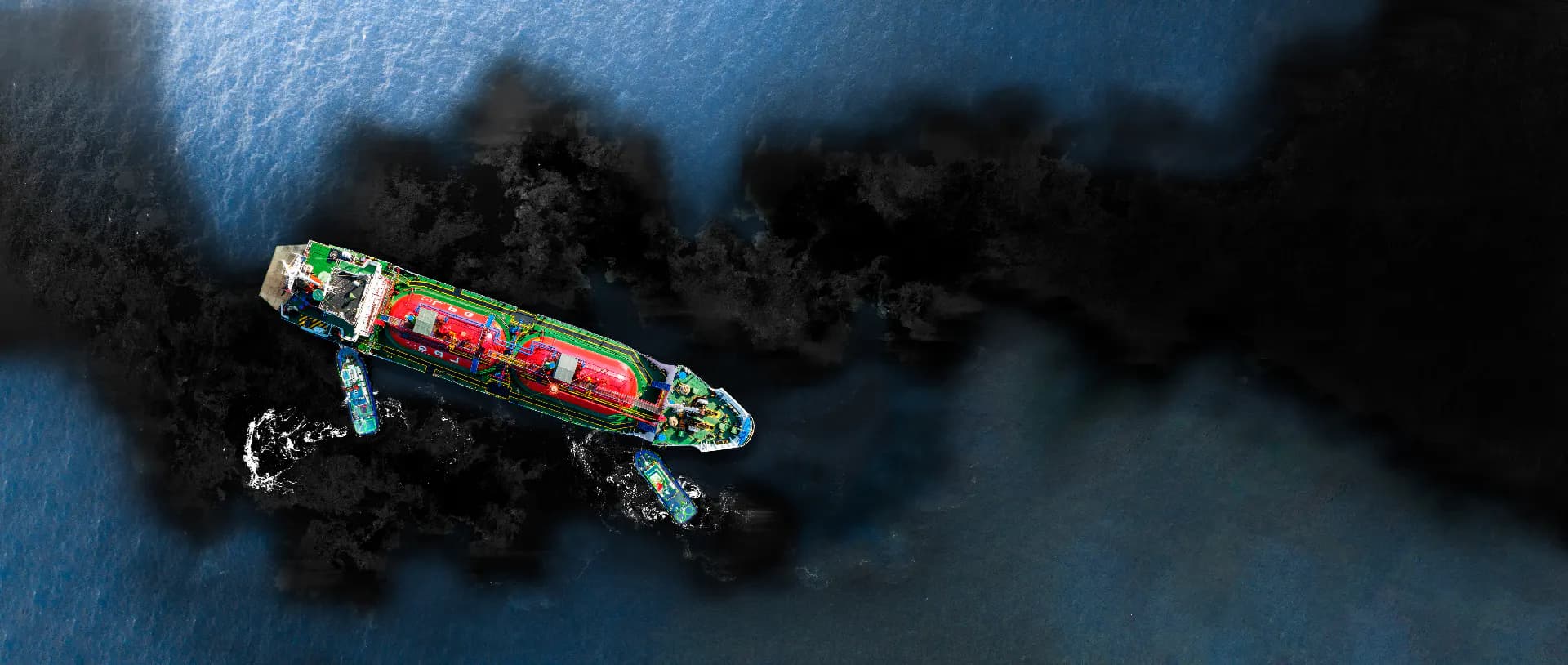
The Baltic Exchange's TD3C route from the Middle East Gulf to China reached a time charter equivalent of $1.2125m a day on 17 September, up 40.64 percent on the week. Before the conflict between the United States and Iran broke out in February the same route earned $117,400 a day, so the core pricing anchor of the crude trade has multiplied roughly tenfold in a little over half a year.
The move is not confined to one route. TD15 from West Africa to the Far East reached $524,500 a day, up 48.3 percent, and TD22 from the US Gulf to the Far East reached $388,400 a day, up 51.1 percent. The China Crude Oil Tanker Freight Index stood at 14,575 points on 16 September, about 83 percent above its level in early September.
The mechanism behind the rise is distance rather than demand. With passage through the Strait of Hormuz obstructed, cargoes from Saudi Arabia's Yanbu terminal are being diverted to Ain Sokhna and piped through SUMED to Sidi Kerir for loading on the Mediterranean, but that pipeline moves 2.4m to 2.8m barrels a day against export potential of 15m barrels. The balance goes around the Cape of Good Hope, which stretches a Yanbu to Far East voyage from about 55 days to between 80 and 110, cutting the number of round trips a ship can complete in a year by at least a third. Analyst estimates put close to 10 percent of the VLCC fleet trapped inside the region, with another 10 percent idled in standby.
Supply cannot answer quickly. The global VLCC fleet numbers just over 900 ships and needs at least 40 deliveries a year to hold its size; the combined total for 2024 and 2025 was eight. Projected deliveries run to 39 this year, 64 in 2027 and 102 in 2028, a three-year total of roughly 205 that barely covers baseline replacement. Ships aged 15 years or more account for 41 percent of the fleet, and CITIC Securities expects the share aged 20 or more to rise four percentage points to 23 percent by 2027 as carbon intensity ratings and EU emissions charges push the oldest hulls out.
Demand has moved in the same direction. Japanese and South Korean refiners once took more than 90 percent of their crude from the Middle East; in early April, buyers in Japan, South Korea, Singapore and Thailand contracted for at least 60m barrels of US Gulf crude for the following month, on a route 2.6 times the sailing distance of the Middle East run. Saad Rahim, chief economist at Trafigura, told a commodities forum on 17 September that it has never been more expensive to move oil, adding that freight is becoming a much bigger problem from a logistics standpoint.
That cost is now large enough to bite back. Vortexa vessel-tracking data shows crude flows between the Americas and Asia declining in recent weeks as freight roughly tripled. A US Gulf cargo to Asia costs about $52m more to move, or roughly $26 a barrel, close to a quarter of the West Texas Intermediate futures price. One Japanese refiner bought a cargo of Alaskan crude, a grade poorly matched to its refinery configuration, because the voyage was short. Brent futures approached $110 this week while physical prompt cargoes traded above $131, and Saudi Arabia supplied no cargoes to European buyers under October term contracts.
Scarcity is cascading down the size curve. Suezmax earnings have passed $300,000 a day, Asian refiners are lifting some US barrels on 700,000-barrel Aframaxes, and Atlantic cargoes are being split across two 1m-barrel Suezmaxes rather than loaded on a single VLCC. Sumit Ritolia, senior modelling manager at Kpler, said current freight levels may be self-limiting in the long run and will eventually shut down arbitrage routes and reduce demand for the most expensive long-distance crude.
The earnings effect depends on how much spot tonnage an owner holds. China Merchants Energy Shipping, which runs about 52 VLCCs with a high share of spot and short-term charter employment, posted first-half attributable net profit of CNY 6.96bn, up 227.57 percent, with the tanker segment contributing CNY 6.189bn and 89 percent of the group total. Sinolink Securities estimates that every $10,000 a day of TCE adds CNY 1.211bn to its after-tax profit. COSCO Shipping Energy, which operates 53 VLCCs on a heavier mix of long-term contracts, lifted first-half attributable net profit 141 percent to about CNY 4.5bn and told its earnings briefing that most of September's increases would land in fourth-quarter results.
This story is part of the Maritime Briefing of 22 September 2026.