US aircraft disable bulk carrier Huda as Hormuz tanker crew abandons a burning ship
Two tankers were hit within an hour off Khasab on 7 November, and a Filipino seafarer died on Velos Sapphire
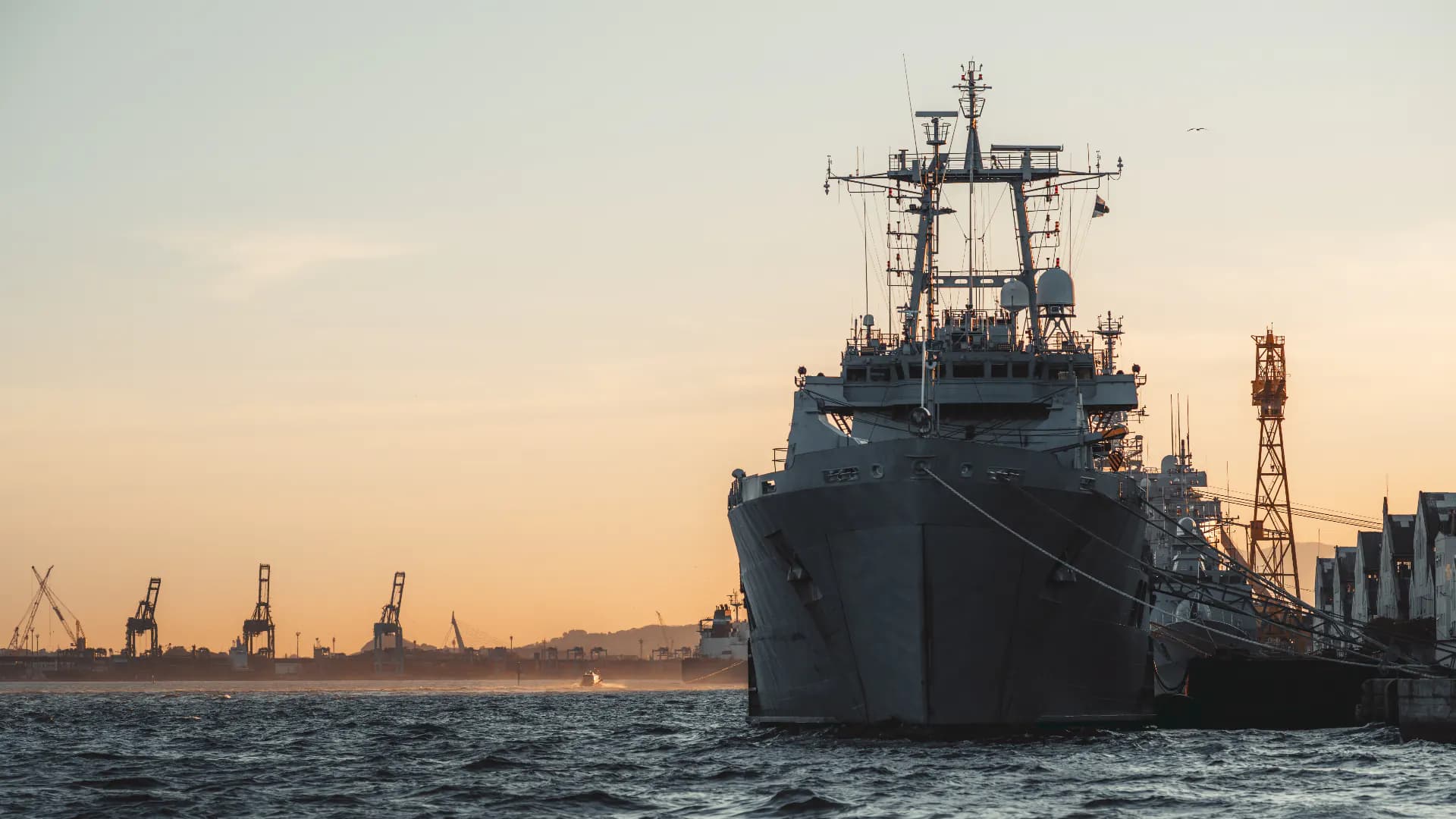
A US military aircraft fired precision munitions at the stern of the St Kitts and Nevis-flagged bulk carrier Huda in the Gulf of Oman on 7 November, disabling the 1999-built ship as it tried to leave regional waters after calling at an Iranian port. US Central Command said the crew had ignored repeated warnings and made several attempts to pass through the naval blockade of Iranian ports. US forces told the crew to leave the targeted spaces before the strike. Pole Star Global links the ship to Turkey-based Embrace Shipping Management.
UKMTO separately logged an incident involving a bulk carrier and military forces about 18 nautical miles east of Khor Fakkan, with damage unknown. It has not said whether that report refers to Huda.
CENTCOM says that since the blockade was reimposed in July its forces have redirected 147 vessels, disabled five merchant ships that refused to comply and destroyed 10 tankers in Iran's shadow fleet. It estimates the blockade has kept more than $25bn of Iranian crude off the market. Over the weekend it set up Task Force Iron Gate to target Iranian weapons supplies and sanctioned trade over land borders and the Caspian Sea.
What happened inside the strait?
Two tankers were hit within an hour of each other on the evening of 7 November. At 19:20 UTC, 8 nautical miles north-west of Khasab, a tanker caught fire and military authorities told UKMTO that its crew had abandoned the vessel. At 20:20 UTC an outbound tanker was struck by an unknown projectile in the strait; all crew were accounted for and no environmental damage was found. Neither ship has been officially named.
Iran's Revolutionary Guards Navy said two tankers had struck mines after using an "unauthorized route" with their navigation systems switched off, and Iranian media reported a third tanker on fire after an explosion. None of these claims has been independently confirmed. On 8 November the UAE National Guard rescued 22 seafarers from a burning cargo vessel in the Gulf of Oman. The ship was not identified, and it is not known whether the fire was linked to the conflict.
On 5 November the Vanuatu-flagged VLCC Vieira reported an explosion at the waterline on her port side about 16 nautical miles east of Khasab. She stayed under her own power and continued her voyage. Nine vessels have now been confirmed attacked in the strait and the Gulf since the start of November.
Who was killed on Velos Sapphire?
The Marshall Islands-flagged product tanker Velos Sapphire, a 74,998 dwt ship built in 2007, was struck by two projectiles about 50 nautical miles north of Madinat ash Shamal, Qatar, at 23:20 UTC on 4 November. The explosion set a fire on her aft port side, which was later put out. The Philippines Department of Migrant Workers has confirmed that one Filipino seafarer died and that the other 21 Filipino crew on board were unharmed.
"We will provide all the support and guidance the bereaved family needs during this difficult time," Migrant Workers Secretary Hans Leo J. Cacdac said.
How is tanker trade adapting?
BRS Shipbrokers counts 141 tankers now shuttling crude and products from Gulf terminals through Hormuz to the Gulf of Oman or India's west coast for transfer onto other ships. VLCCs make up 72% of them. Crude sold for lifting inside the Gulf has traded at discounts of up to $45 a barrel to Gulf of Oman delivery, and with the grey fleet included, only 639 VLCCs, or 68% of active tonnage, remain available for mainstream trade.
This story is part of the Maritime Briefing of 9 November 2026.
Ships in this story