Urals Crude Returns to VLCCs for Asia as Freight Costs Climb
A ship-to-ship transfer off Suez put 200,000 tonnes on a sanctioned VLCC bound for Singapore
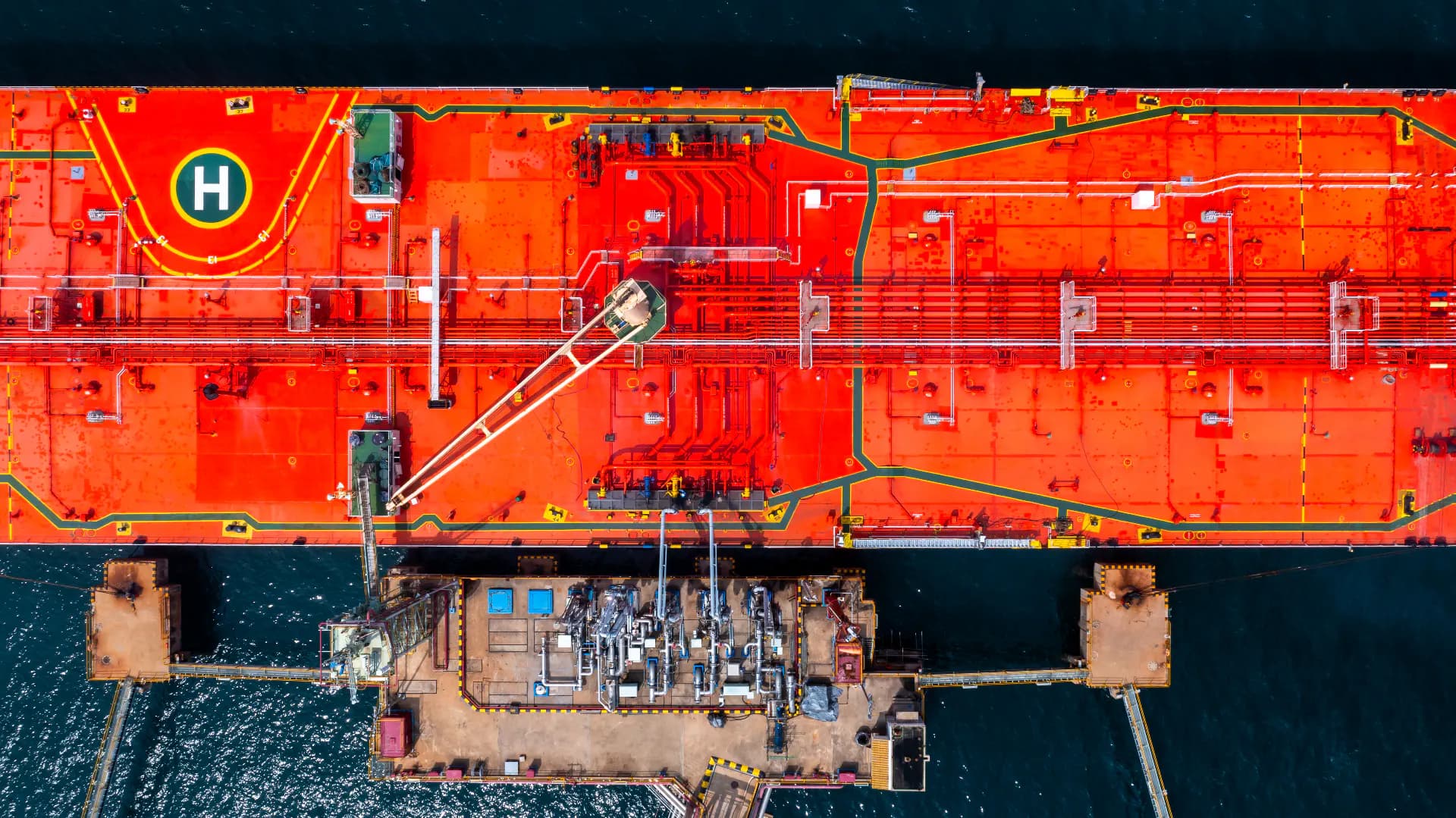
Russian traders have resumed transferring Urals crude onto VLCCs for delivery to Asia through ship-to-ship operations, a practice that had lapsed since the winter, as stronger Chinese demand and higher freight costs make the larger units worth the extra handling.
Terminal data shows the VLCC Della leaving waters near Suez on 21 August bound for Singapore with about 200,000 tonnes of Urals, loaded onto the sanctioned vessel by ship-to-ship transfer. At least two further VLCCs have been booked to load Russian crude for China through the same method later this month or early next.
Russia supplies crude to China by pipeline, by sea from the Pacific port of Kozmino, and from its western ports through the Red Sea and the Northern Sea Route during the summer navigation season. Chinese buying is expected to rise as disruption in the Middle East tightens regional supply.
The economics run on the spread between voyage lengths. Urals normally goes to India, where the shorter passage from Russian export terminals keeps transport costs down. Shipping the same grade from Primorsk, Ust-Luga or Novorossiysk to China through the Suez Canal on 100,000 to 140,000 tonne tankers costs around $20 a barrel, roughly $2 more than delivery to India's west coast. Consolidating cargo onto a VLCC offsets part of that gap.
Freight for Urals from the western ports to India has surged through August, driven by demand for tonnage and by the security risk premium attached to carrying Russian oil.
The supply of suitable ships has also shifted. Reduced traffic through the Strait of Hormuz and the easing of measures against Venezuela have freed up part of the shadow VLCC fleet, and traders in the market place that spare capacity at the disposal of the Russian oil trade.
The pattern is a familiar one in reverse. Ship-to-ship transfers are normally a winter practice, used to move crude off costly ice-class tankers loading in the Baltic and onto larger units for the long leg. Running them in late summer, off Egypt rather than in Baltic anchorages, is a response to freight economics rather than to ice.