Engine shortage returns to haunt shipyards — now with AI bidding for the same parts
Two-stroke main engines are once again the bottleneck in the newbuilding boom — and this time data-centre demand is competing for the same industrial power supply chain.
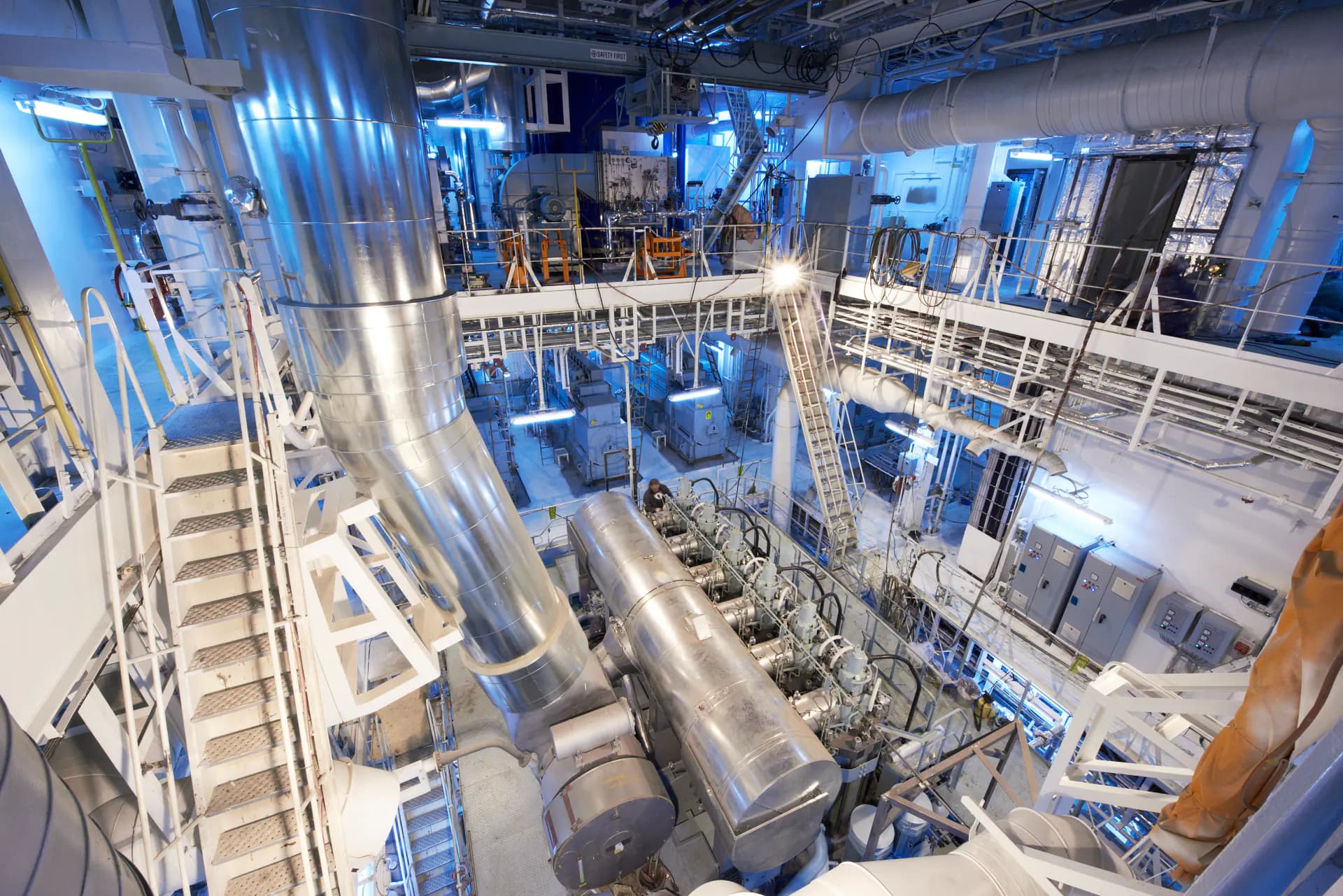
Shipping has a habit of repeating its supply-chain mistakes, and one of the most familiar is back: the world's yards are running short of engines.
According to information gathered by Splash, a lack of available main engines is now trimming shipyard output at the margins — the same squeeze last felt during the 2007 ordering frenzy. The tightest point is in dual-fuel low-speed two-stroke engines, where a record newbuilding wave and ever more complex specifications are stretching production lines thin.
The pinch is showing up in the container sector too. Alphaliner reports that several mid-sized boxship projects of around 6,000 teu have stalled in recent months because main-engine slots could not be locked in on time. Some Chinese second- and third-tier yards, which had been dangling relatively quick deliveries for internationally specified ships, are understood to have pulled their initial offers once the true engine-availability picture became clear.
Delays, not cancellations
For now, most analysts frame the problem as a timing issue rather than a wall.
"We've certainly heard that the availability of engines is having an impact on some yards, in terms of output," said Adam Kent, managing director of consultancy Maritime Strategies International. "However, I think this is ultimately leading to delays and pushing out deliveries rather than yards not taking orders." Kent added that engine prices are helping to prop up already elevated newbuilding prices.
Established builders with deep supplier relationships are still getting their equipment, and some slippage can be absorbed into build schedules. Even so, the constraint is now significant enough to start moving delivery assumptions.
The AI factor
What makes this cycle different is where the competition is coming from. The strain is no longer limited to main propulsion: owners report it is getting harder to source auxiliary diesels and generator sets, with lead times lengthening and prices climbing. And that is precisely where shipbuilding's equipment cycle has begun to overlap with the artificial-intelligence build-out.
Data centres need vast amounts of reliable backup power, much of it from large industrial diesel or gas generator sets in the 1 MW to 4 MW band — the same broad ecosystem that serves marine and industrial customers.
The capacity numbers tell the story. Wartsila said in May it would lift technical production capacity by a further 30%, on top of a 35% expansion announced in February, for a planned total increase of 65% versus 2025 — citing demand from both energy and marine customers. Rolls-Royce is raising output of its mtu Series 4000 generator sets in the US, where a new Minnesota logistics centre is expected to more than double capacity against 2024 levels on the back of record data-centre demand. Further down the chain, Accelleron said it shipped a record 8,000 TPX44 turbochargers for data-centre and critical-infrastructure use in 2025, more than tripling year-on-year output.
None of that proves data centres are displacing marine orders one-for-one. But it does show shipbuilding is now bidding against AI infrastructure for slices of the same industrial power supply chain. Kent said he has read that auxiliary-engine makers are favouring data-centre sales at premium prices, though he has not heard it directly from owners.
Not everyone is convinced
Others urge caution before declaring a structural shortage. Roar Adland, head of research at broker SSY, noted that bottlenecks tend to clear when the incentives are right. "I'd ask whether increasing Chinese domestic production of international brand engines on licence would solve this too," he said. "Such bottlenecks tend to be resolved if the economic incentives are there."
Burak Cetinok, his counterpart at fellow British house Arrow, argued that longer lead times should not be mistaken for a systemic crunch. "We are not aware of any widespread shortages or delays in main engine deliveries that are materially disrupting shipyard delivery schedules," he said. "There may well be isolated cases, but we do not believe this is having a meaningful impact on overall shipyard output." Cetinok accepted that sustained ordering has stretched procurement times for engines, generators and other critical kit, and that data-centre demand has tightened some generator-set supply. Established yards keep receiving equipment, he said, while newer or reactivated yards are more exposed — "joining the back of the queue".