Two VLCCs Struck Minutes Apart in Hormuz as Washington Hits Iranian Tankers
Senegal Prosperity is abandoned and listing off Oman while transits fall to five confirmed vessels in a day
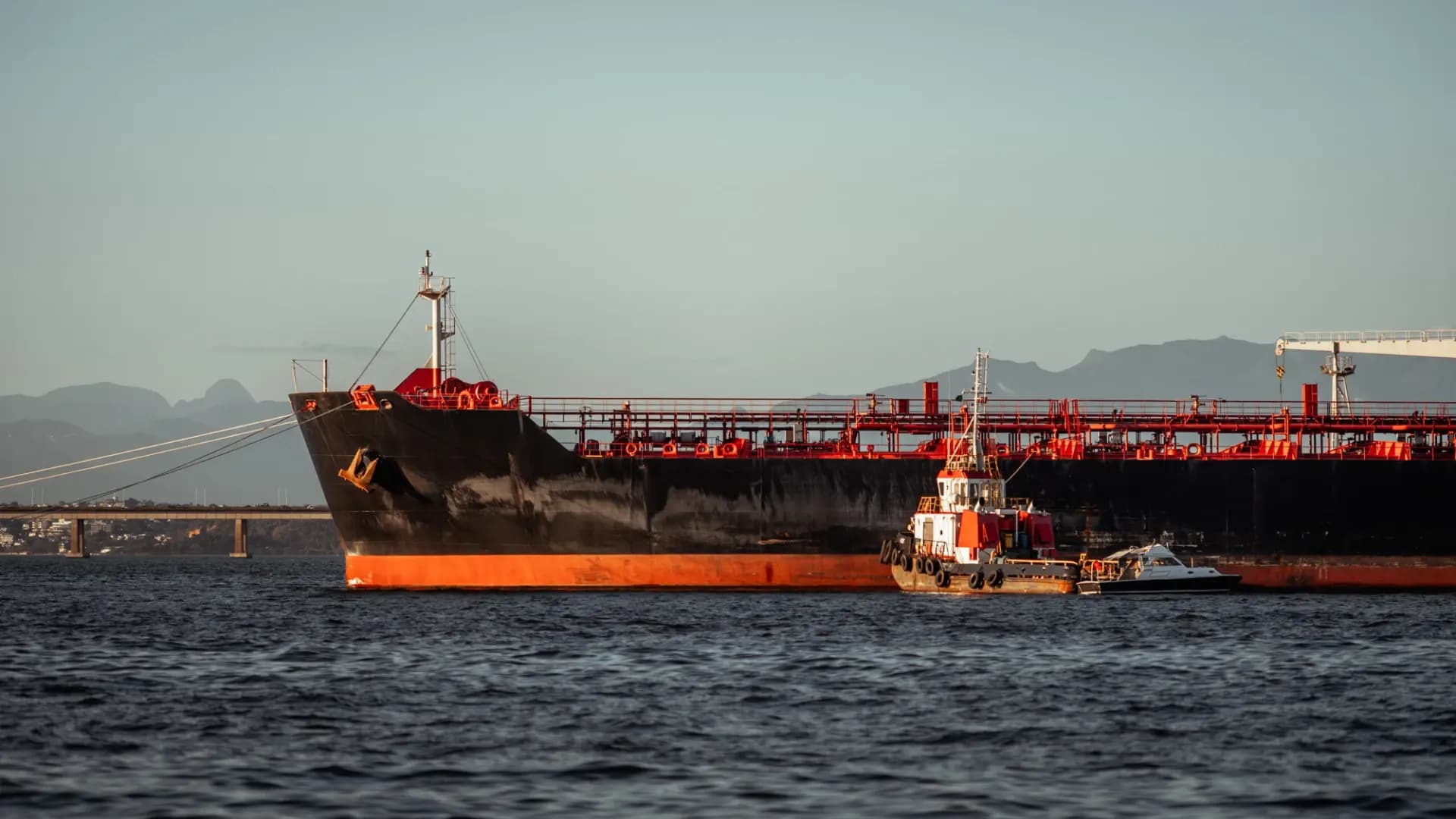
Two very large crude carriers were struck within minutes of each other at the southern end of the Strait of Hormuz on the evening of 31 August, and the United States has answered by striking Iranian state tankers under what its officials describe as a tanker-for-tanker policy.
The VLCC Senegal Prosperity, of 320,780 dwt and controlled by South Korea's Sinokor Maritime, was hit by three projectiles on her port side while completing an outbound transit. The strike damaged the engine room and a ballast tank, all communication was lost, and the vessel went dead in the water with a list to port. Local authorities took the crew off and the ship is now anchored close to the Omani coast. She had loaded in Saudi Arabia, and no pollution has been reported. Sinokor became the largest tanker operator by fleet count earlier this year, as set out in its purchase of 73 VLCCs.
Minutes earlier the Saudi-flagged Sidr, of 300,759 dwt and managed by Bahri, was attacked about 17 nautical miles north-east of Khasab in Oman. That vessel had been sailing dark on her way out of the strait, was last seen at the Fujairah anchorage almost two weeks previously and is believed to have loaded at Juaymah. Security consultants Marisks place her at anchor near the Omani coast after the attack. The Joint Maritime Information Center and UK Maritime Trade Operations both logged the Senegal Prosperity incident; the Sidr appears to have gone unreported.
The two attacks follow a run of strikes on ships using the southern route. The aframax Metro Venetian was hit on 24 August and disabled by an engine room fire, Al Salam II was struck the following day, and a further unidentified tanker was hit near Khasab on 29 August. Ships hugging the Omani shore have repeatedly proved to be within reach.
US Central Command confirmed a wave of strikes on 1 September against IRGC air defence sites, radars, ports, minelaying capability and communications infrastructure, saying they followed attempted attacks on commercial shipping and on American forces. Two National Iranian Tanker Company vessels have also been struck. The exchange comes after the American attack on Larak Island and Iranian attacks on US bases in Jordan and Kuwait, and the earlier dispute over what is actually stopping ships is covered in the CENTCOM fact-check.
The traffic numbers remain the sharpest measure of the disruption. Donald Trump said on Monday, "We have the Strait of Hormuz in extremely good shape. You know, we're taking over," and put the American escort effort at an average of 30 ships a night. Kpler counted five confirmed vessels on Monday, four inbound and one outbound, after a sharp decline on 31 August. Windward puts the highest figure in the past week at 21 ships in a day. Crude rose about two percent on each of two consecutive days.
Bahri has meanwhile been changing the identity of part of its fleet. Bahri-controlled ships, mostly built between 2009 and 2011, have been switching from the Saudi registry to Liberia and taking a common naming theme, with Sahba becoming Ruby Shine, Arsan becoming Silver Shine and Awtad becoming Gold Shine. Several are positioned around Fujairah and Khorfakkan. Washington says it has cleared the internationally recognised traffic separation scheme of mines, while the Joint Maritime Information Center continues to warn of drifting or uncharted devices elsewhere, and INTERTANKO has cautioned owners against reading the clearance as a return to normality.