Russian Shipping Adopts Cages And Convoys Against Drone Threat
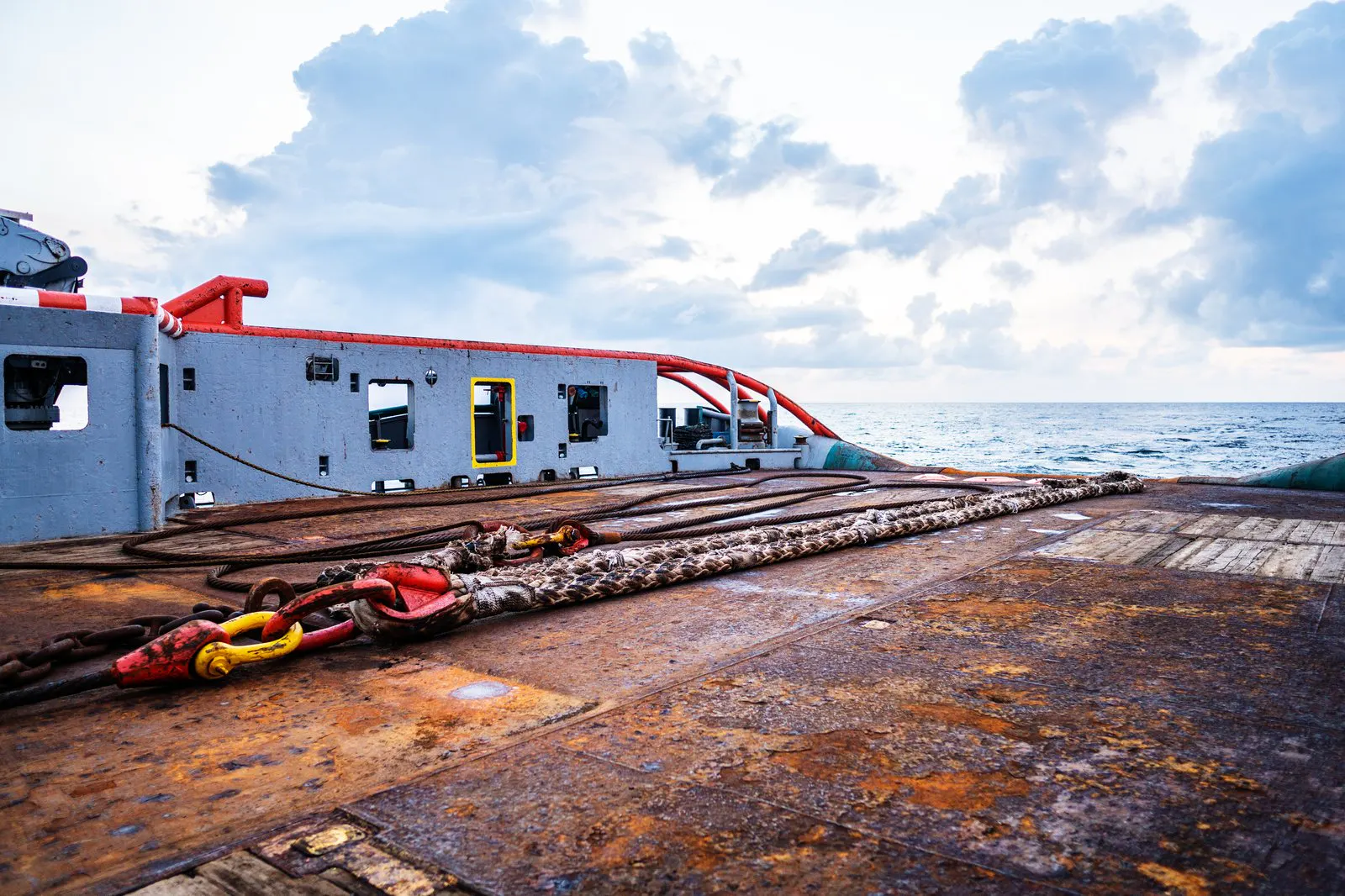
Russia-linked shipping is adapting physically to Ukraine's maritime drone campaign, with vessels appearing with anti-drone cages, armed guards aboard, coastal routings that hug the Turkish shore and proposals for escorted convoys. The most recent evidence is a twenty-eight-year-old sanctioned Suezmax photographed passing Istanbul carrying what analysts described as protective structures.
Cage-type protection has migrated to shipping from land warfare, where improvised screens over vehicles are intended to make a drone detonate at a standoff distance rather than against the hull or a critical component. On a tanker the logic is the same and the application is harder: a ship presents an enormous surface, the components worth protecting are dispersed between the bridge, the accommodation and the machinery spaces, and anything welded above deck has to survive a seaway.
Routing changes are the cheaper adaptation. Hugging the Turkish coast keeps a vessel inside or close to the territorial waters of a state that is not party to the conflict, which raises the political cost of a strike without reducing its technical feasibility. That option exists in the Black Sea because the geography allows it; it does not exist in the Sea of Azov, where the campaign began, and where there is no neutral coastline to shelter against.
Convoy proposals are the most consequential of the measures under discussion, and the least likely to be adopted. Convoying works when escorts can detect and engage the threat before it reaches the merchant ships, which is a demanding requirement against small, cheap, low-signature surface drones that can be launched in numbers. It also concentrates value: a convoy that is successfully attacked loses several ships rather than one, and every escort committed to protecting tankers is an escort not available for anything else.
The adaptations should be read as an admission rather than a solution. A fleet fitting cages, embarking guards and considering escorts is a fleet that has concluded the threat is persistent and that its insurers and charterers require visible mitigation. None of these measures stops a drone that reaches the hull; they raise the number of attempts required. That may be enough, since the campaign's economics depend on cheap weapons achieving results, and anything that lowers the hit rate shifts the exchange. It is not, however, protection in the sense that the crews sailing these ships would understand the word.