Felixstowe and Charleston Join a Pink Corridor Study for Nuclear Powered Box Ships
Lloyd's Register and Maersk will examine security, safeguards and insurance across the Atlantic
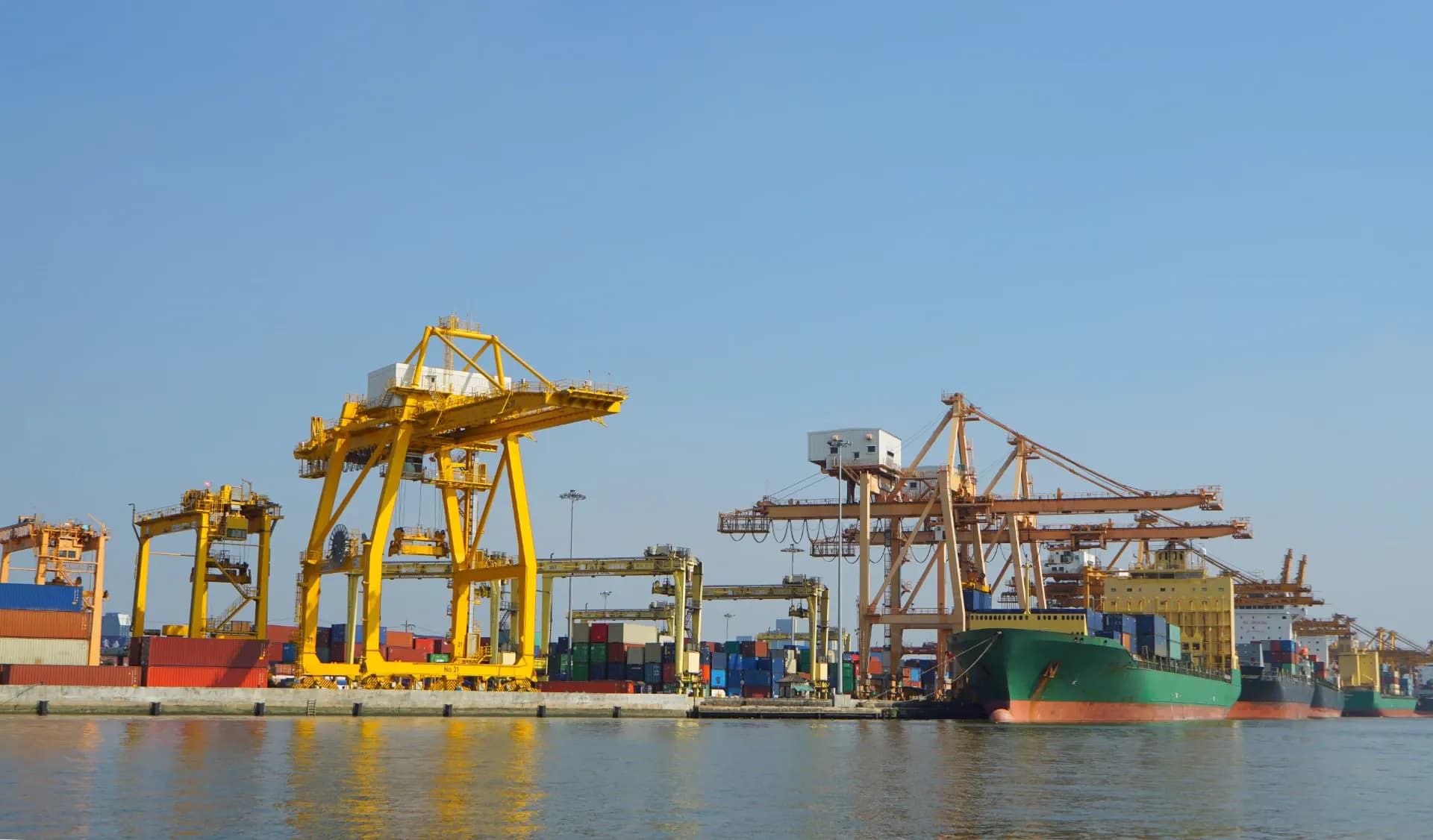
Shipping's proliferation of green corridors is acquiring a new hue, with plans unveiled for a pink corridor between the United Kingdom and the United States designed to explore what running nuclear-powered container ships across the Atlantic would require.
Lloyd's Register, Maersk, the Port of Felixstowe and South Carolina's Port of Charleston are joining forces to examine the operational, security and regulatory requirements for a theoretical nuclear-powered box ship trading between the two gateways.
The study will cover ship and port security, nuclear safeguards, cyber resilience, emergency response, insurance and the difficult task of aligning maritime and nuclear regulatory regimes. Those last two are the practical obstacles rather than the reactor itself: a container ship is only employable if a port state will accept the call and an underwriter will price the risk.
The project comes as nuclear propulsion moves from the fringes of the future-fuels debate towards something governments, class societies, owners and ports treat seriously.
The United States has become one of the centres of that revival. In May the administration launched a formal initiative to develop small modular reactors for commercial shipping, instructing the Maritime Administration to investigate how nuclear propulsion could be deployed across American fleets at scale. MARAD subsequently signed up the ports of Long Beach and Corpus Christi to explore how small modular reactors could be integrated into ships, terminals and the wider marine transportation system.
Late last month MARAD went further, agreeing with CORE POWER to accelerate a US-flagged fleet of nuclear-powered merchant ships. That memorandum of cooperation, covered in the seven-year plan for 50 nuclear merchant ships, works through the obstacles that have kept nuclear propulsion confined to naval vessels. CORE POWER is targeting first construction from 2028, although the agreement commits MARAD to no funding, procurement or vessel acquisition.
Elsewhere, Scorpio Tankers invested $10m earlier this year in the US reactor developer Ampera, initially targeting floating nuclear power barges with nuclear-powered merchant ships as a longer-term ambition.
The regulatory machinery is starting to catch up as well. Last week the International Atomic Energy Agency used a gathering in Washington to launch ATLAS, or Atomic Technologies Licensed for Applications at Sea, bringing governments, regulators, owners and the nuclear industry together to develop the rules civilian nuclear shipping needs. That launch is set out in the IAEA initiative to bring nuclear power back to sea.
The pink corridor builds on work Maersk began with Lloyd's Register and CORE POWER in 2024 examining the regulatory and safety requirements of nuclear-powered container ships.