Wind-powered Neoliner Origin makes first Zeebrugge call
The 136-metre sail-assisted ro-ro adds a Belgian port to its five-port transatlantic rotation
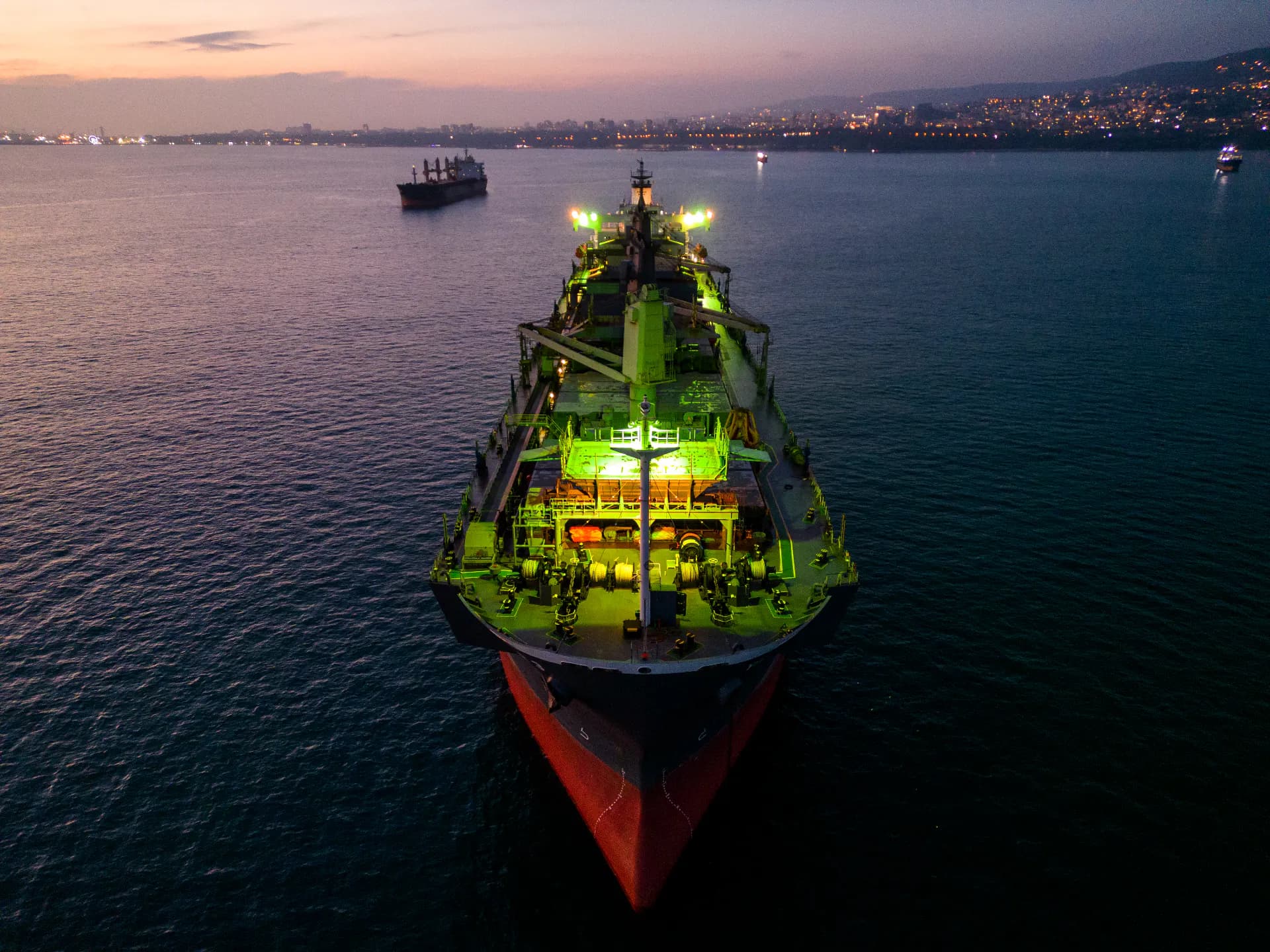
The sail-assisted ro-ro NEOLINER ORIGIN, IMO 1021829, arrived at Zeebrugge on Monday 21 September, the first large cargo ship working partly under sail to call at a Belgian port.
The call is not a one-off. Neoline, the French operator of the ship, added Zeebrugge to the scheduled rotation with effect from 18 September, taking the transatlantic line to five ports: Zeebrugge, Montoir-de-Bretagne, Saint-Pierre-et-Miquelon, Baltimore and Halifax. The operator's own service notice puts transit from Zeebrugge to Montoir at three days, to Saint-Pierre-et-Miquelon at 14 days westbound and 21 days eastbound, to Baltimore at 20 days out and 15 days home, and to Halifax at 24 days out and 11 days home.
The full rotation takes five weeks in summer and six in winter, which works out at roughly ten round voyages a year. That cadence is the commercial constraint of a wind-driven liner service: the schedule bends with the season in a way a conventionally powered ro-ro schedule does not, and the operator sells it as a fixed, published transit rather than a best-effort sailing.
Adding a Benelux call is aimed at return cargo. Jean Zanuttini, Neoline's president, said the move "allows us to expand our market and enhance our appeal for return cargo, while maintaining the quality of service we provide to existing customers." The line carries rolling stock, vehicles and out-of-gauge project cargo, the segments where a slower crossing is easiest to absorb.
The ship herself was delivered in 2025, built at RMK Marine in Turkey to a design by the French naval architects Mauric. She measures 136 metres by 24 metres and is registered under the French flag. CMA CGM, which supports the commercial marketing of the service, puts the emission reduction of a wind-driven crossing at up to 90% against a conventional ship.
For Zeebrugge the call adds a wind-assisted regular caller to a port whose ro-ro traffic is dominated by deep-sea car carriers and short-sea trailer services. For the wider trade it is a working data point rather than a demonstration voyage: a published schedule, a fixed rotation and a commercial partner selling the space.
This story is part of the Maritime Briefing of 23 September 2026.
Ships in this story