MAIB Traces the Holyhead Berthing Contact That Flooded Stena Estrid
Sharp protrusions on a turning fender holed the hull and put 500 tonnes of water into the engine room
British investigators have set out how a routine berthing manoeuvre at Holyhead put roughly 500 tonnes of water into the engine room of the ropax Stena Estrid, with 157 passengers and crew on board.
The serious marine incident occurred on 7 January, while the 215-metre ferry was berthing at Terminal 3 during a scheduled Holyhead to Dublin crossing carrying 95 vehicles, 91 passengers and 66 crew. Built in 2019 and registered in Cyprus, the 41,600 gt vessel is the first of the E-Flexer class and works the route daily. Contact with the jetty punctured the hull, flooding the engine room and an adjacent void space.
The crew's response prevented the incident from becoming considerably worse. They shored the hull below the waterline, pumped out the flooded spaces and transferred ballast to induce a port list, lifting the damage above the water. Berthing was completed, and all passengers and vehicles were disembarked. The jetty itself was not significantly damaged, though the port was closed for several hours.
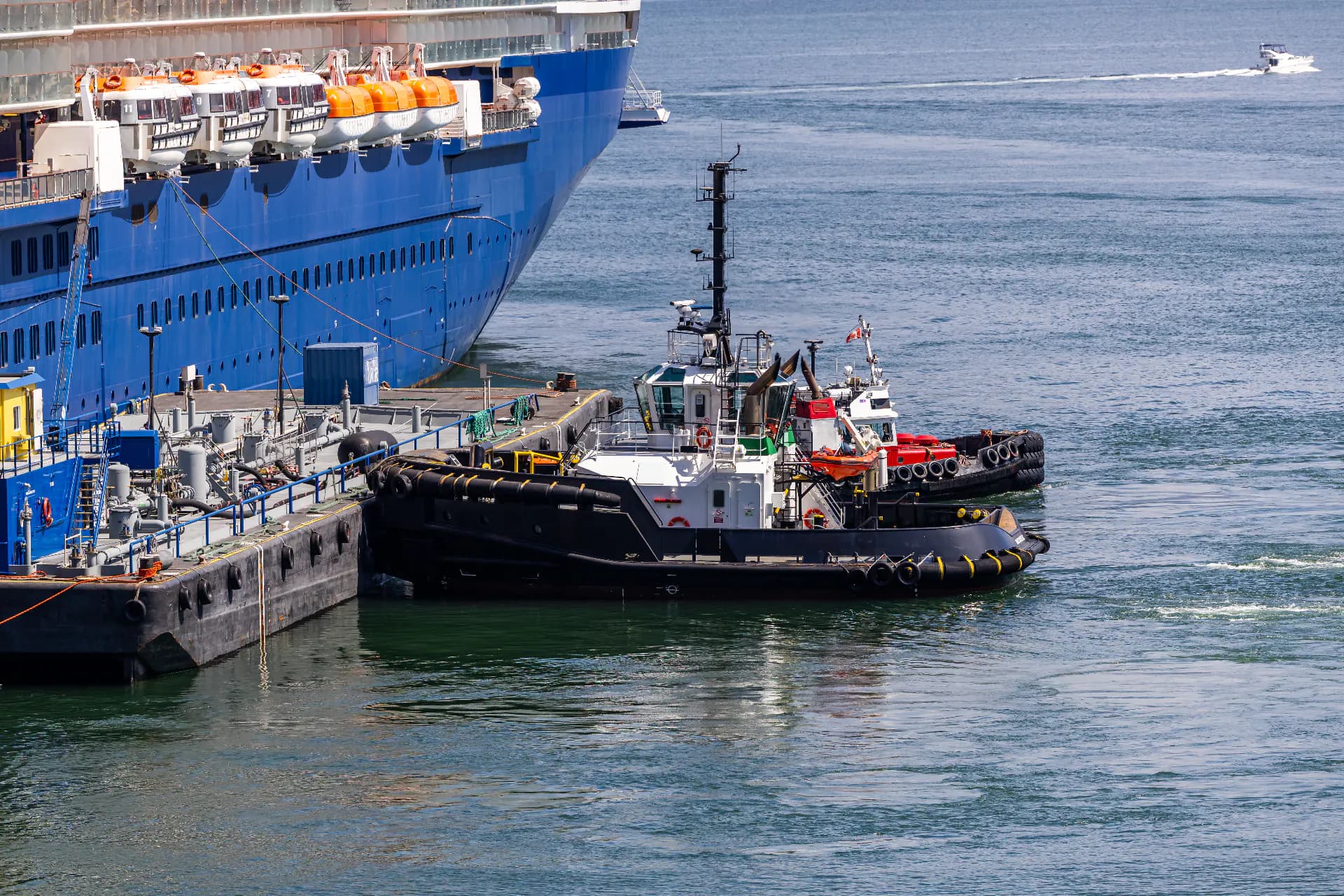
Several factors combined. A tug had been made fast on the ferry's port aft quarter after the vessel turned to port north of the jetty. Conflicting communications between ship and tug limited the tug's effectiveness, and its position meant that any further attempt to pull the vessel to port would probably have increased the force of the contact rather than reduced it.
The master was aware of a requirement to avoid the turning fender, but the ferry closed on the jetty faster than expected, a consequence of her position after turning off the jetty and of strong westerly winds.
The damage itself came from the fender. Investigators found several sharp protrusions on its face plate and no rubber fender structure in place. The ship's crew had no prior awareness of the protrusions, or of the extent of the damage that contact with them could cause.
Holyhead had already been carrying the consequences of an earlier berthing incident: Terminal 5 has been closed since December of the previous year, when severe weather caused significant damage. Following the Stena Estrid case, the protruding brackets have been removed from the turning fender and a wider investment programme is under way across Terminals 3 and 5, including new anodes, replacement of deficient and missing fenders and renewal of two mooring dolphins. For a ro-ro berth working to a fixed daily schedule, the fender condition survey is now part of the operating risk.