Maersk Overtakes COSCO to Lead the Intra-Asia Container Trade
340,000 teu deployed on the world's largest container trade, with the biggest average ship size
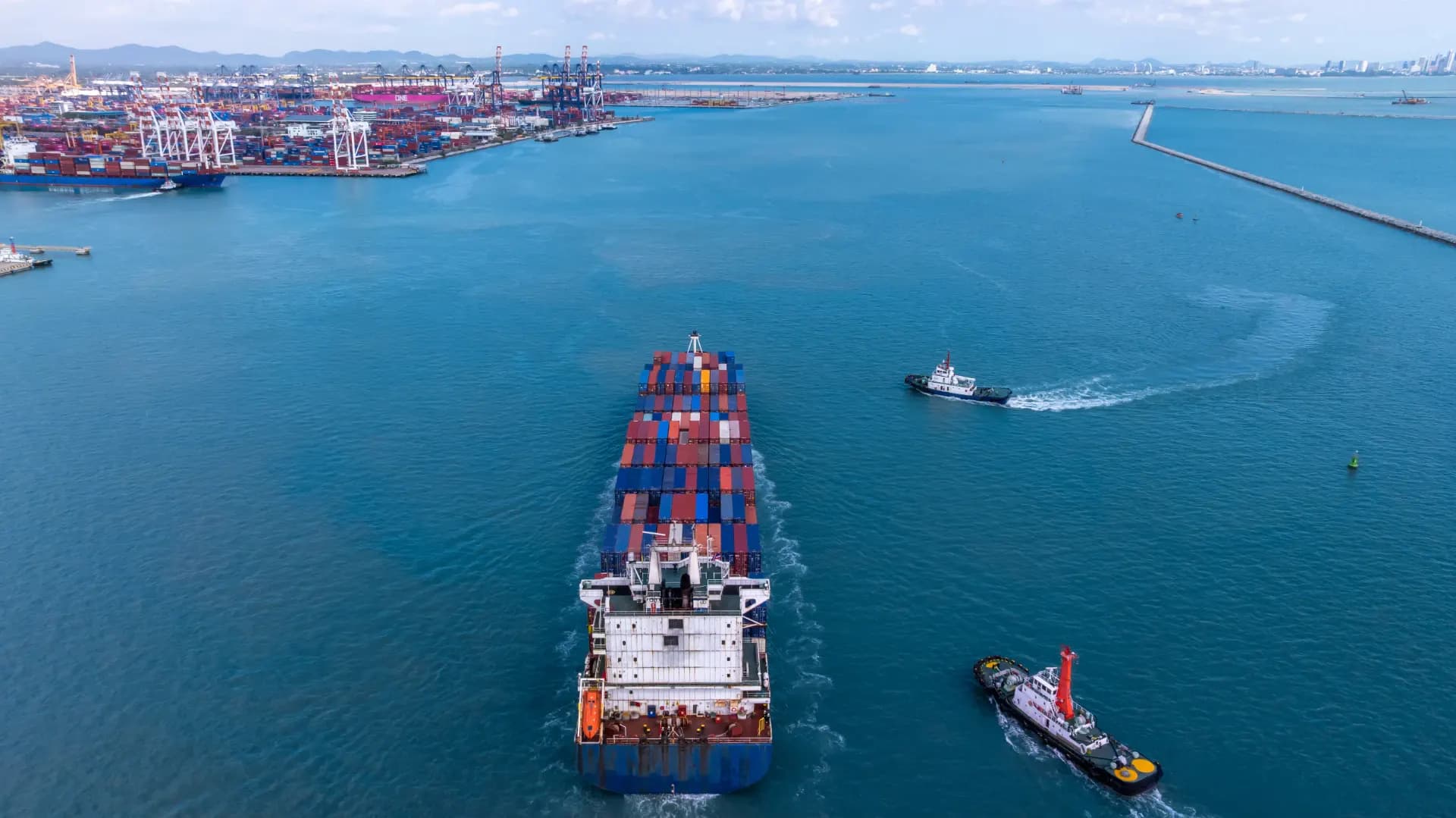
A.P. Moller - Maersk has overtaken Cosco Shipping Lines as the largest operator in the intra-Asia container market, the world's largest container trade, on the latest fleet survey from Alphaliner.
The Danish carrier had more than 340,000 teu deployed across intra-Asian services in mid-August, having added around 34,000 teu year-on-year — the largest nominal increase of any operator in the trade. Its 108 ships in the region averaged 3,176 teu, the biggest average vessel size among the leading intra-Asia operators.
Much of that growth is a by-product of the Gemini Cooperation's hub-and-spoke design, which needs a wider network of Asian shuttle services to feed the main east-west loops. The intra-Asia tonnage is not only serving intra-Asia demand; it is the collection system for the mainline network.
COSCO slipped to second despite running more ships, over 120 of them, because its deployed capacity was virtually unchanged on the year. CMA CGM recorded the second-largest gain, adding 15,000 teu and passing Evergreen into third.
Alphaliner puts total capacity on international intra-Asia services, excluding domestic trades, at just under 2.6m teu, up 6.2 percent year-on-year, with more than 80 carriers competing. The mainline operators hold 63 percent of that capacity while running fewer ships than the regional specialists, because their vessels average 2,699 teu against 1,338 teu for the regional carriers.
SITC remains the leading regional specialist with 109 ships and around 157,000 teu, and is the only regional carrier with more than 100 vessels active in the trade. Its strategy runs the other way from the mainliners: connect the smaller and niche ports rather than compete on vessel scale.
Rates have held up through the reshuffle. The Drewry Intra-Asia Container Index edged up 1 percent last week to $1,323 per feu, and the composite has been at all-time highs this month as geopolitical disruption and typhoon delays keep capacity tight.
This story is part of the Maritime Briefing of 17 September 2026.