Maersk Puts a Single 35-Metre Rotor Sail on an 8,700 teu Container Ship
Anemoi will supply one fixed rotor for a Maersk Lima class vessel, with installation scheduled for mid-2027
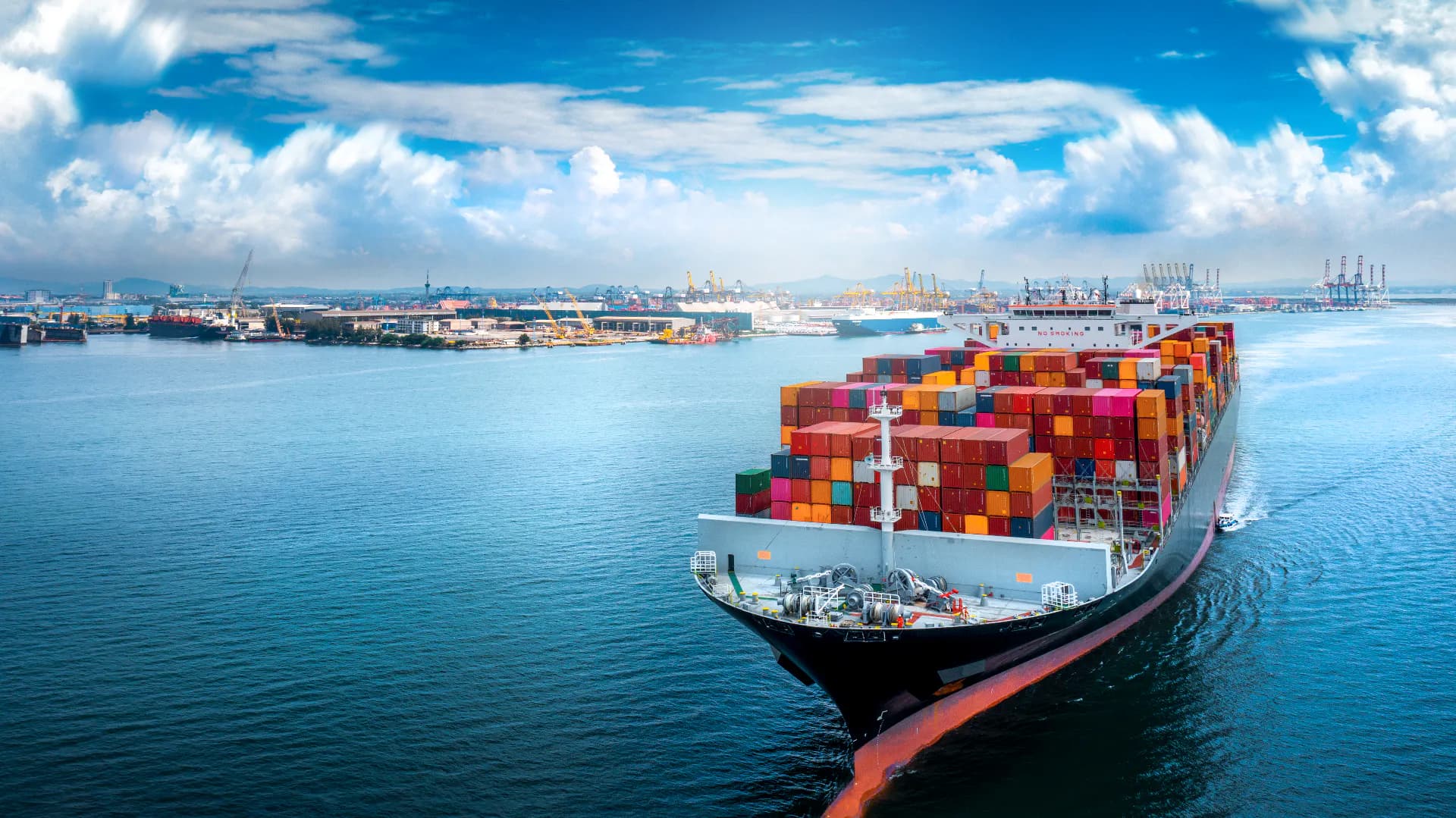
Maersk is taking wind-assisted propulsion into its container fleet, signing up to install a 35-metre rotor sail on one of its 8,700 teu ships next year.
The British supplier Anemoi Marine Technologies will design and manufacture a single fixed rotor measuring five metres in diameter and 35 metres high for a vessel from the Maersk Lima class. Installation is scheduled for the middle of 2027. Maersk plans to test the system during normal commercial operation, primarily on North and South Atlantic routes, to gather operating data before deciding whether the technology has wider relevance across its fleet.
Anemoi says the installation will be the first use of rotor sails on a container ship. The company typically fits three to five rotors on large vessels, which makes a single-sail project a deliberately contained pilot rather than a full-scale deployment. The commercial question the trial is designed to answer is not whether the physics works but whether the saving on a liner service, with its fixed schedules and its route geometry, is large enough to justify the deck space and the capital.
Rotor sails use the Magnus effect to generate additional thrust from wind, reducing the load on the main engine when conditions are suitable. Anemoi has already deployed the technology across bulk carriers and has been working on designs for tankers and gas carriers. Together with Hafnia and Guangzhou Shipyard International it secured approval in principle from DNV in June for integrating five-metre by 35-metre folding rotors into MR tanker designs, and it has developed installation concepts for ultramaxes with NACKS.
The wider group has been here before. An independent trial of two Norsepower rotor sails aboard a Maersk Tankers LR2 produced verified fuel savings of 8.2 percent over a year, equivalent to around 1,400 tonnes of carbon dioxide. Maersk Tankers is a separate business from the container line, which makes the new project the first such move into the liner fleet rather than a continuation of earlier work.
The timing places the pilot alongside the carrier's other efficiency measures rather than in place of them. A single rotor on one ship in a fleet of several hundred is a measurement exercise, and the newbuilding decisions that would follow a positive result sit several years beyond the 2027 installation date.