Klaveness Takes Delivery Of Final Third-Generation Combination Carrier
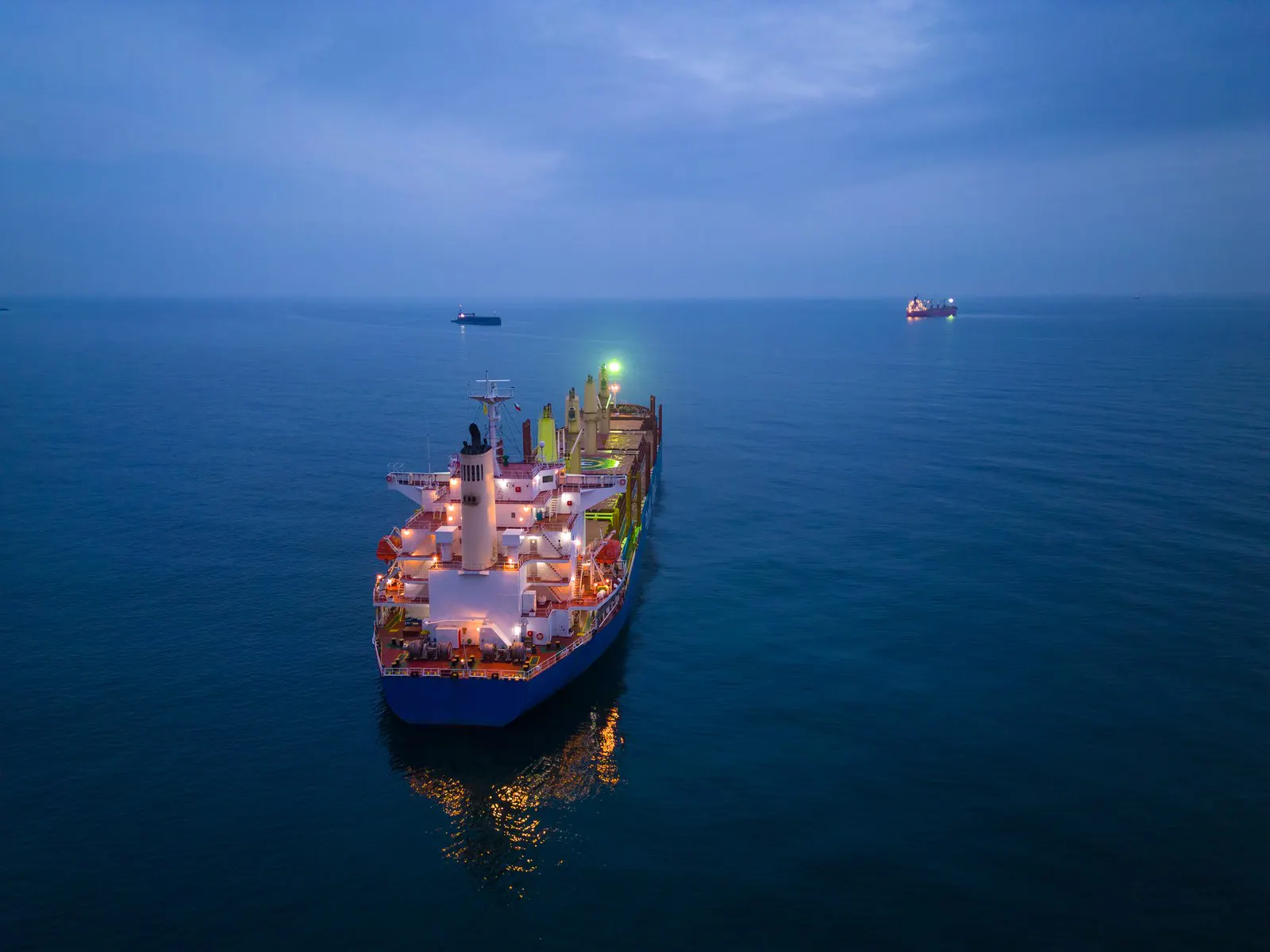
Klaveness Combination Carriers has taken delivery of MV Baltazar from New Yangzi Shipyard in China, completing the Norwegian owner's third-generation CABU newbuilding programme and lifting its operating fleet to nineteen combination carriers. The ship is the third and final vessel contracted under the series, and it arrives with a feature none of its predecessors carried: a wind-assisted propulsion system. It is the first vessel in the company's fleet to use wind as a supplementary source of thrust, a step the owner has been signalling for several years as its efficiency programme moved from hull and machinery measures towards renewable propulsion.
Combination carriers occupy an unusual niche. They are built to carry liquid cargo one way and dry bulk the other, eliminating the ballast legs that dominate the economics of conventional tankers and bulkers. The CABU design is configured around trades that move caustic soda solution to Australia and return with dry bulk commodities, so that a voyage that would otherwise be half empty instead earns freight in both directions. The owner puts the resulting advantage at roughly twenty percent higher earnings capacity than its first-generation ships, alongside a carbon footprint about thirty-five percent lower per tonne of cargo moved.
MV Baltazar carries the same package of efficiency measures fitted to its two sister vessels: an air lubrication system that reduces hull friction by blowing a carpet of bubbles beneath the ship, a shaft generator that takes electrical load off the auxiliary engines, a fuel-optimised main engine using exhaust gas recirculation, and a duct ahead of the propeller that improves the inflow of water. The addition of two suction sails on deck is what separates it from the rest of the series. Suction rigs draw air across a fixed aerofoil to generate lift, producing thrust without the moving spars or crew handling that traditional sail requires.
The vessel is also prepared for later conversion to zero or near-zero emission fuels, a hedge that has become standard specification on newbuildings ordered into a regulatory environment whose destination fuel remains unsettled. With the delivery complete, the fleet now consists of eleven CABU vessels and eight of the larger CLEANBU type, which can carry clean petroleum products in place of caustic soda and therefore reach a wider set of trades.
The company plans to hold a naming ceremony for the ship in Fremantle, Western Australia, in early September, after the vessel completes its maiden voyage. The choice of venue reflects where the trade actually happens: Western Australia is both a major destination for caustic soda used in alumina refining and a loading region for the dry bulk cargoes that fill the return leg. For an owner whose commercial case rests on eliminating empty voyages, staging the event at the pivot point of the round trip is a fair summary of the argument.
Ships in this story