One Worker Dies in Tanker Fire at Kanasashi Shipyard in Shizuoka
Nine others were taken to hospital with smoke inhalation after a blaze inside a 955-tonne tanker under repair.
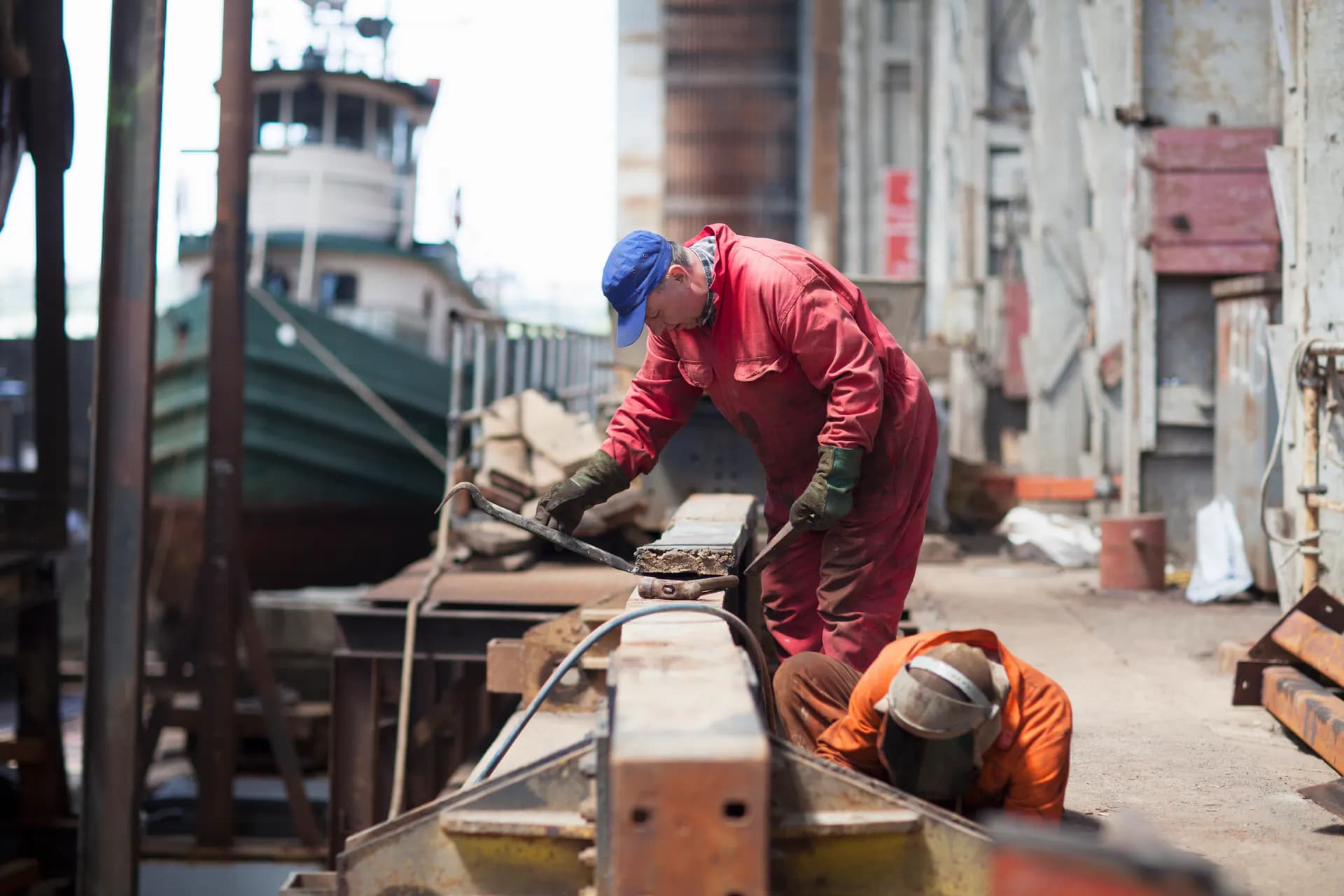
A man in his 40s died in a fire aboard a tanker under work at a shipyard in Shizuoka, central Japan, on Friday morning.
Local fire authorities received an emergency call from an employee at around 08:50, reporting that the inside of a ship had caught fire at the yard operated by Kanasashi Heavy Industries. The blaze was brought under control roughly three hours later.
The man who died is believed to have been a Chinese national. Nine other people were taken to hospital after suffering smoke inhalation; all were conscious.
Shizuoka prefectural police said 17 people were working inside the 955-tonne tanker when the fire started. Two of the group were welding with a burner low down in the bow section. A glove worn by one of that pair is believed to have ignited, and that is the suspected origin of the fire inside the hull.
Police are investigating the cause and the circumstances.
The sequence described is the recurring shape of yard casualties rather than an unusual one. Hot work in a confined space inside a tanker combines an ignition source, restricted egress and an atmosphere that can hold residues, and the difference between a smothered spark and a fatal fire is often only how quickly the space can be cleared. Seventeen people inside a hull of that size leaves little room to move once smoke fills the compartment.
Tanker repair work carries specific controls for exactly this reason, covering gas-freeing, permits for hot work and standby fire watches. What the investigation will establish is which of those were in place and whether they held.
Kanasashi Heavy Industries builds and repairs small and mid-sized tonnage from its Shizuoka base, and a 955-tonne hull is at the smaller end of what passes through a yard of that type. The size is relevant to the outcome rather than incidental: the smaller the tank, the shorter the distance smoke has to travel to fill it.