HD Hyundai Samho delivers first very large ammonia carrier
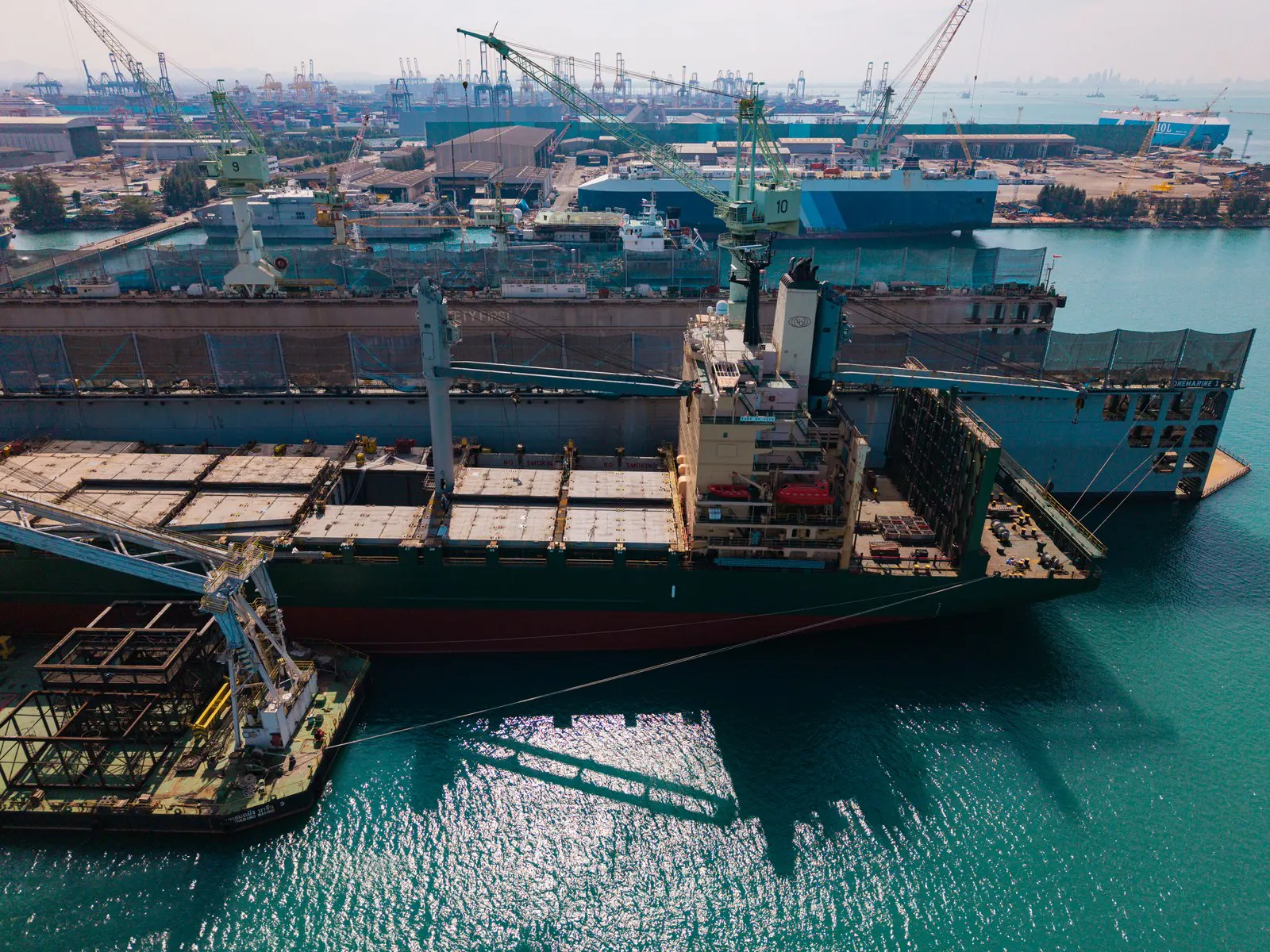
HD Hyundai Samho has delivered its first very large ammonia carrier, handing over the 93,000 cu m Jane Maersk to the Danish owner Maersk. The vessel is the first of five ordered in November 2023 and is designed to carry both liquefied ammonia and liquefied petroleum gas. The delivery marks a step in a market that has formed quickly around a cargo the industry expects to move in far larger volumes than it does today.
The design reflects what makes ammonia difficult rather than what makes it attractive. The cargo is highly toxic and corrosive, and the ship incorporates specialised safety systems accordingly, among them a dedicated high-level alarm system intended to reduce the risk of overfilling during loading. Overfill protection matters disproportionately with this cargo, because the consequence of a release is not primarily a pollution problem but an immediate hazard to anyone aboard or nearby.
Interest in the trade is being driven by two distinct expectations. Ammonia is attracting attention as a marine fuel in its own right and as a carrier for hydrogen, and both roles imply long-distance movement between regions with cheap low-carbon energy and regions that consume it. Most ammonia produced today still goes into fertiliser, and whether the fuel case materialises depends on production being genuinely low-carbon or renewable rather than made from unabated natural gas.
The orderbook indicates that owners are not waiting for that question to be settled. The builder has secured orders for nine of these vessels so far this year, taking its orderbook for the type to 22 ships with a combined value of approximately $2.55bn. That is a substantial commitment to a trade whose volumes remain modest, and it follows the pattern seen in LNG shipping, where specialised tonnage was ordered ahead of the export projects that eventually employed it.
The risk in that pattern is timing rather than direction. Ships of this kind are expensive, purpose-built and difficult to redeploy if the anticipated trade develops more slowly than expected, and the flexibility to carry liquefied petroleum gas is what gives the current generation a fallback. The builder says the delivery strengthens its position in the market for next-generation environmentally focused vessels, which is the commercial bet the whole segment is making: that the ammonia trade grows into the fleet being built for it.