Guangzhou Bunkers Green Methanol to a Bulker for the First Time
1,021 tonnes went ship-to-ship to the Ultramax Green Future at the Dayushan anchorage
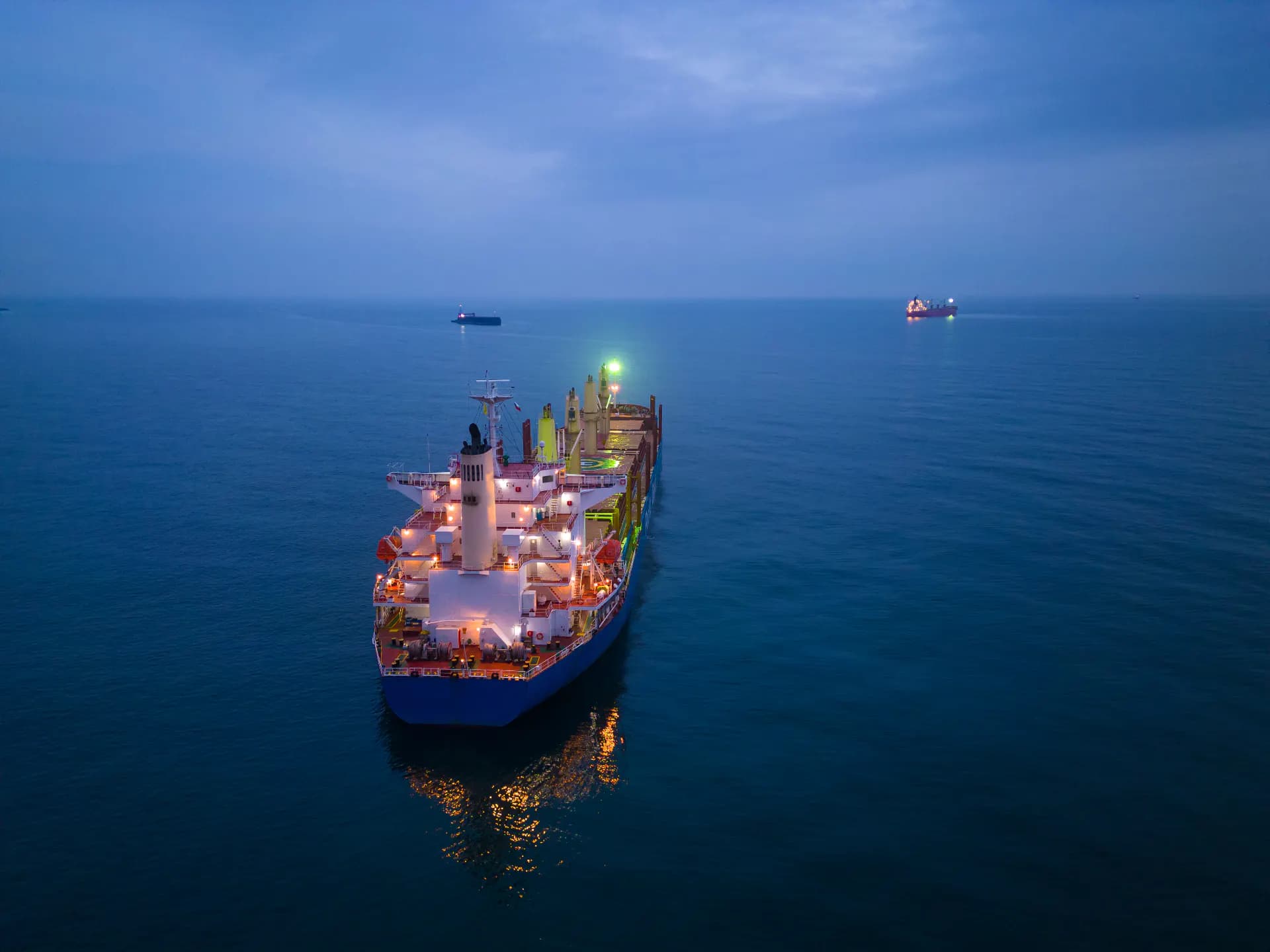
Guangzhou has completed its first ship-to-ship methanol bunkering, supplying 1,021 tonnes of ISCC EU-certified green methanol to the methanol dual-fuel Ultramax bulk carrier Green Future at the Dayushan anchorage on 6 September. It was also the first green methanol supply in China to a bulk carrier in international trade.
The transfer was carried out by Daqing 268, a purpose-built methanol dual-fuel bunkering vessel operated by China Shipping and SINOPEC Suppliers. The 7,500 dwt, 109.9-metre ship entered service in January 2026 and is authorised on routes connecting the mainland with Hong Kong and Macao. It had already carried out first green methanol ship-to-ship operations at Shenzhen, Hong Kong and Ningbo, which gives its operator experience across three port jurisdictions with different rules on bunkering at anchorage.
The operation extends China's methanol bunkering capability beyond Shanghai, Ningbo-Zhoushan, Shenzhen, Qingdao, Tianjin, Dalian and Yangpu, and adds a supply point in the Guangdong, Hong Kong and Macao Greater Bay Area. With Shenzhen, Hong Kong and now Guangzhou all able to supply, the estuary is closer to an alternative-fuel network than to a set of individual demonstrations.
The cargo type is the part that matters commercially. Methanol bunkering in China has so far been concentrated on containerships and vehicle carriers, which run fixed rotations through a small number of ports where a supplier can plan around them. Bulk carriers do not: they trade across a wider spread of routes and load where the cargo is, and they may need large volumes at a single call. Delivering more than 1,000 tonnes in one operation is evidence that the supply chain can serve that pattern rather than only scheduled liner calls.
Green Future is the world's first methanol dual-fuel Ultramax bulk carrier. The 65,700 dwt ship was delivered by Tsuneishi Shipbuilding in Japan in 2025, is owned by Kambara Kisen and chartered to NYK Bulk and Projects Carriers, and can run on methanol or conventional marine fuel.
For owners ordering dual-fuel tonnage, the question has never been whether the engines work. It is whether the fuel can be had at the ports their ships actually call at, in the quantities a voyage needs, without a diversion. Each operation of this kind narrows that gap slightly, and the dry bulk sector is where it has been widest.
This story is part of the Maritime Briefing of 14 September 2026.
Ships in this story